






The Core Problem Smart Luggage Solves
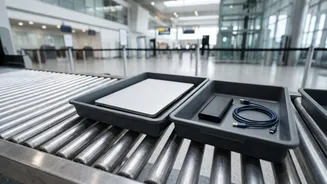
Every traveller knows the routine: approach the security belt, and begin the awkward process of decanting laptops, tablets, power banks, and liquid bags into separate trays. This ritual is a primary cause of delays and stress at airports across India
and the world. Smart luggage aims to solve this through intelligent design. It's not just about adding tech features like GPS; it's about re-thinking the bag's structure to work with, not against, security procedures. The goal is to keep your items organised and accessible, allowing for quicker screening without having to completely unpack and repack your life in front of a queue of impatient fellow travellers. These bags integrate features specifically for the two biggest slowdowns: electronics and liquids.
Hack 1: The Easy-Access Electronics Compartment
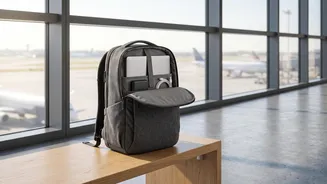
A key feature of modern travel bags is a dedicated, easily accessible, and often padded compartment for laptops and tablets. Security rules globally, including in India, require large electronics to be removed and screened separately. Smart luggage streamlines this by placing the laptop sleeve on the exterior or in a front-opening section. Instead of digging through clothes, you simply unzip one pocket and slide the device out. Some advanced designs feature TSA-friendly or 'checkpoint-friendly' laptop sections that fold out flat, theoretically allowing the device to be scanned while still inside the bag, though Indian airport security often still requires full removal. Regardless, having the device in a ready-to-go compartment saves crucial minutes and reduces the chaos of repacking.
Hack 2: Mastering the Removable Battery Rule
This is the most critical 'hack' for any smart luggage owner. The power banks and lithium-ion batteries that give these bags their 'smart' capabilities are also their biggest regulatory hurdle. Aviation authorities like India's DGCA and the US TSA have strict rules: all lithium-ion batteries must be removable from luggage that is being checked in. Furthermore, all power banks must be transported in carry-on luggage only. A bag with a non-removable battery is now banned from air travel entirely. A well-designed smart bag has a battery that pops out easily, often in seconds with one hand. This is a time-saver. If you have to gate-check your bag, you can remove the battery instantly and take it into the cabin with you, avoiding delays or the risk of your bag being denied boarding. Complying with this rule isn't a chore; it's the fastest way through.
Hack 3: Integrated and Transparent Liquid Pouches
Alongside electronics, the 100ml liquid limit is another common security checkpoint delay. Rummaging for various small bottles and stuffing them into a plastic bag at the last minute is a familiar sight. Many smart luggage designs now incorporate a dedicated, transparent, and often detachable toiletry pouch. This pouch is built to comply with the one-litre resealable bag rule. By having all your liquids pre-packed in this easy-to-grab module, you can pull it out for inspection in a single motion and place it in the tray, just like your laptop. It's a simple but effective organisational tool that removes one more step from the security scramble, ensuring you're not the one holding up the line.
Beyond the X-Ray: Other Time-Saving Features
While not directly related to the security scan, other smart features contribute to a faster overall airport experience. Built-in digital weight scales help you avoid the nasty surprise of an overweight bag at the check-in counter, saving you from frantic last-minute repacking that can make you late for security. GPS and Bluetooth trackers won't speed you through the checkpoint, but they provide peace of mind and can save immense time and stress if your bag is misplaced. Finally, TSA-approved smart locks, which can be opened by security agents with a master key, mean your bag won't be broken into for a random inspection, saving you from dealing with damaged luggage on arrival.