




Why Planets Beat the City Glow
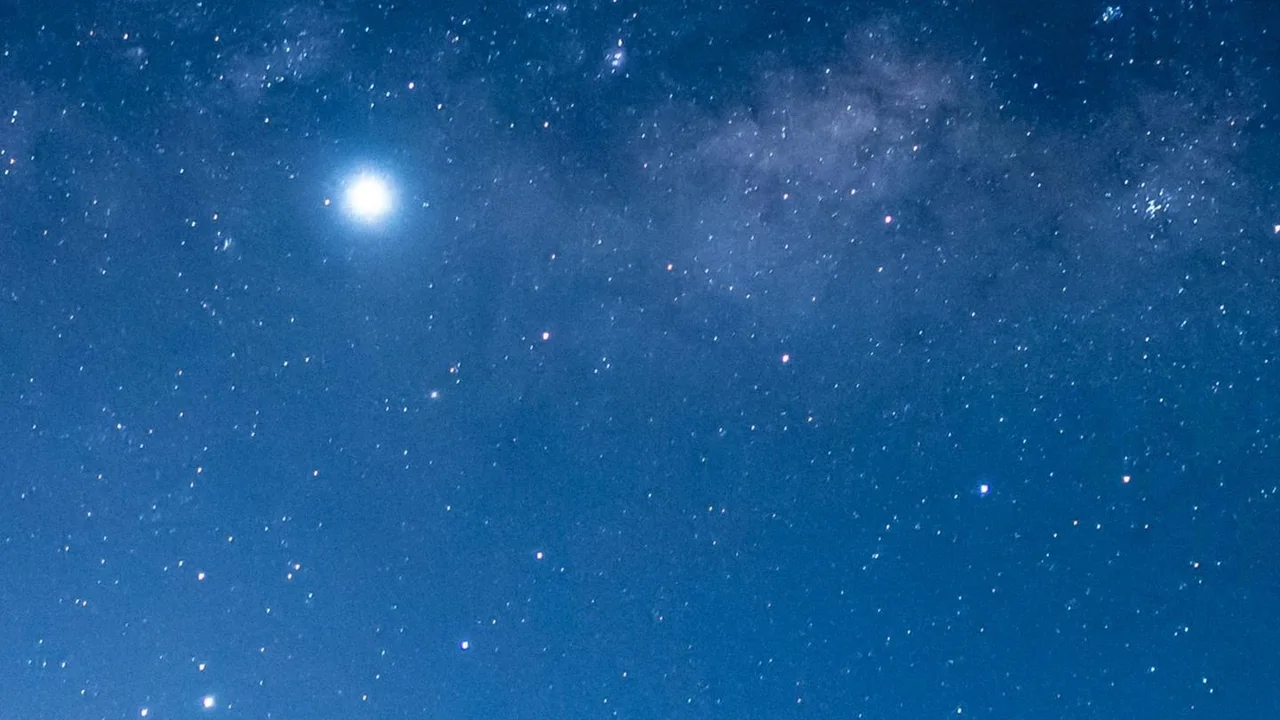
It might seem counterintuitive, but the same light pollution that washes out distant stars has less effect on our solar system’s neighbours. Unlike faint, faraway suns, planets like Jupiter and Saturn are relatively close and incredibly bright because
they reflect our own sun's light. To our eyes, they appear as brilliant, steady points of light that don't twinkle as much as stars do. This makes them perfect targets for urban stargazers. While the Milky Way may be hidden, these celestial giants are bright enough to punch through the haze. The challenge isn’t their brightness; it’s knowing exactly where to look. That's where a good app transforms the experience from a frustrating search into a moment of discovery.
Your Digital Toolkit: Essential Stargazing Apps
The single most important tool for a city-based astronomer is a reliable stargazing app. These apps use your phone's GPS and compass to create a real-time map of the sky. You simply point your phone upwards, and the app identifies the stars, constellations, and planets in your line of sight. For beginners, the most user-friendly options include SkyView Lite and Star Walk 2. Both have free versions with an augmented reality (AR) feature that overlays celestial information onto your camera's view, making identification effortless. Another excellent choice is Stellarium Mobile, which is praised for its realistic sky view and detailed information. Most of these apps also feature a search function; you can type "Jupiter" or "Saturn," and an arrow will guide you to their exact position in the sky.
Setting the Stage for Success
Before you even open the app, a little preparation goes a long way. First, find the best possible viewing spot. This doesn't have to be a remote park; a balcony, rooftop, or even a window with a wide view of the sky will work. The key is to block direct light sources. Position yourself so that a building or a tree obstructs the nearest streetlight. Second, give your eyes time to adapt. It takes about 20 to 30 minutes for your vision to adjust to the darkness, allowing you to see fainter objects. Avoid looking at your bright phone screen during this time. Many stargazing apps offer a 'red light mode' which helps preserve your night vision. Finally, check the weather. Clouds are a bigger obstacle than city lights, so a clear or mostly clear night is essential for success.
How to Find Jupiter
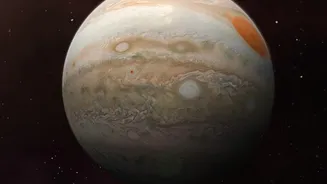
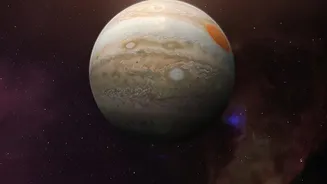
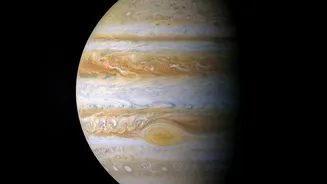
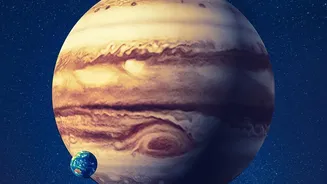
Jupiter is exceptionally bright and one of the easiest celestial objects to spot. For observers in September 2026, Jupiter is a brilliant morning planet, rising in the east a few hours before sunrise. To find it, open your chosen app and search for "Jupiter." An on-screen arrow will direct you to its location. As you pan your phone across the sky following the arrow, the app will show you when the planet is in your field of view. Now, put the phone down and look for it with your own eyes. You're searching for a strikingly bright, unwavering point of light. Once you've found it, take a moment to appreciate that you are looking at the largest planet in our solar system from your own home.
How to Find Saturn
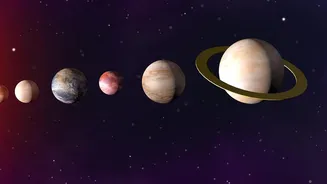
Saturn is a bit more of a challenge than Jupiter, as it's farther away and therefore fainter, but it's still readily visible to the naked eye. During September 2026, Saturn will be visible for most of the night, rising in the east shortly after sunset. It has a distinct, steady yellowish hue. Use the same process as with Jupiter: search for "Saturn" in your app and use the guide to locate it. Because it's not as dazzlingly bright as Jupiter, it's even more important to let your eyes adjust to the dark. What you see will be a bright, star-like object. While its famous rings are not visible without a telescope magnifying at least 30 times, just spotting the planet itself is a rewarding experience.
Beyond the Screen: Enhancing Your View
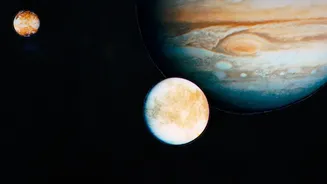
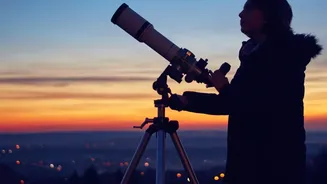
Once you've successfully used an app to find the planets, you might be curious to see more. The next simple step is a pair of binoculars. Even a standard pair will dramatically enhance your view, making the planets appear as clear, small discs rather than points of light. With a steady hand or a tripod, binoculars might even reveal Jupiter's four largest moons, known as the Galilean moons, appearing as tiny pinpricks of light in a line on either side of the planet. For Saturn, binoculars can help resolve its shape, making it look slightly elongated rather than perfectly round. This small upgrade can bridge the gap between simply spotting the planets and truly observing them, adding a new layer to your urban stargazing journey.