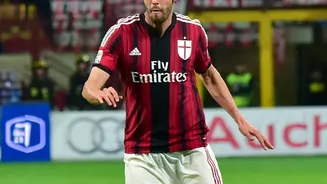




In 2009, Ricardo Kaká was on top of the world. A Ballon d'Or winner and Champions League champion with AC Milan, his move to Real Madrid was meant to launch a new era of dominance. But it never happened. What went wrong?
The Weight of a Galáctico Tag
When Kaká arrived at the Santiago
Bernabéu in the summer of 2009 for a then world-record fee of around €67 million, the expectations were astronomical. He was the centrepiece of Florentino Pérez’s second 'Galácticos' project, arriving alongside Cristiano Ronaldo, Karim Benzema, and Xabi Alonso. At AC Milan, Kaká was the undisputed star, the focal point of the attack. At Madrid, he was one of several superstars, under immense pressure to justify his price tag and deliver trophies instantly in an environment that is notoriously impatient. This shift from being 'the man' to 'one of the men' was a significant psychological adjustment.
A Body Betrayed by Injury
Perhaps the single biggest factor in Kaká's struggles was a relentless series of injuries. His problems began in his first season with a nagging groin and hip issue. He pushed his body to be fit for the 2010 World Cup, but this only worsened his condition. Shortly after the tournament, he underwent major surgery on his left knee, which sidelined him for months. For a player whose game was built on explosive, gliding runs from midfield, these injuries were catastrophic. They robbed him of the explosive pace that made him the world's best player, and he was never quite the same physically. A series of muscle issues and other setbacks further hampered any attempt to build momentum and find consistent form.
The Tactical Misfit under Mourinho
When José Mourinho took charge in 2010, Real Madrid’s tactical identity shifted. Mourinho favoured a high-octane, disciplined, counter-attacking system. While Kaká could operate in this setup, it didn't play to his primary strengths. At Milan, he thrived in a freer role, given the license to drift, pick up the ball deep, and drive at defences. Under Mourinho, the team was more structured, and the number 10 position demanded a different profile. Kaká himself later described his relationship with the coach as 'respectful but complicated,' admitting he spent years trying to convince Mourinho to give him a consistent chance but couldn't prove he was the right fit for the system.
The Rise of a New Playmaker
Kaká's extended absence after his knee surgery in 2010 created a vacuum in the team. Real Madrid filled it by signing a young German playmaker who had dazzled at the World Cup: Mesut Özil. Initially seen as a backup, Özil seized the opportunity, fitting seamlessly into Mourinho’s plans. His creativity, vision, and knack for assists made him the preferred choice in the attacking midfield role. Even when Kaká returned to fitness, he found himself in direct competition with a player who had earned the manager's trust and was performing at a consistently high level. Mourinho often preferred Özil, leaving Kaká, the former Ballon d'Or winner, on the bench, further eroding his confidence and rhythm.