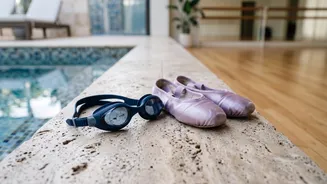



Choosing between the rhythm of the dance floor and the tranquility of the swimming pool can be a tough fitness decision. Each offers unique benefits, but the core difference lies in a simple matter of physics: floor movement versus water resistance.
The Core Difference: Impact vs. Buoyancy
At
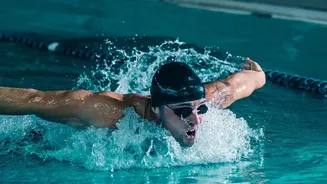
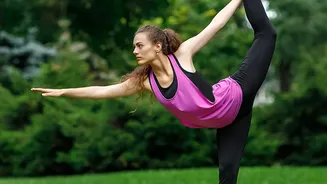
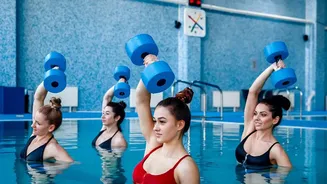
its heart, the comparison between dancing and swimming is a story of two opposing forces. When you dance, you're working against gravity on a solid surface. Every step, jump, and turn involves impact. In contrast, swimming means moving through water, a medium that is about 800 times denser than air. This density creates a buoyant environment that supports up to 90% of your body weight, taking significant pressure off your joints. While dancing is defined by impact and gravity, swimming is defined by constant, fluid resistance.
Cardiovascular Health and Endurance
Both dancing and swimming are excellent forms of aerobic exercise that get your heart rate up and improve circulation. Swimming laps provides a steady, rhythmic cardio workout that strengthens the heart and improves endurance. The consistent effort against water resistance forces your heart and lungs to work efficiently. Vigorous dancing, like hip-hop or salsa, can also be a high-intensity workout, increasing your heart rate and boosting stamina. Some studies have even found that certain high-energy dance styles can burn more calories per hour than a moderate swim. Ultimately, the cardiovascular benefit of either activity depends heavily on the intensity you bring to it.
Muscle Strength and Toning
Here, the two disciplines offer very different approaches to building strength. Water provides resistance in all directions, meaning every movement in the pool is a form of resistance training. Swimming engages nearly every major muscle group—from your arms and shoulders to your core and legs—for a true full-body workout. Dancing, on the other hand, often involves more targeted and explosive movements. It’s fantastic for building power and strength in the legs, glutes, and core, while also enhancing balance and coordination. While swimming creates long, lean muscle tone through consistent resistance, dancing builds strength through dynamic, weight-bearing motions.
Joint Health and Injury Prevention
This is perhaps the clearest distinction between the two activities. Swimming is the undisputed champion of low-impact exercise. The buoyancy of water cushions the body, making it an ideal workout for individuals with arthritis, joint pain, or those recovering from injury. It allows for a full range of motion without the jarring force associated with land-based exercise. Dancing, which involves repeated impact on floors, carries a higher risk of stress on the knees, ankles, and hips. However, this impact also helps improve bone density. For those whose joints can handle it, dancing can be a great way to build strength and coordination, but for anyone seeking a gentle workout, swimming is the safer bet.
Calorie Burn and Weight Management
When it comes to burning calories, the winner isn't so clear-'cut' and depends entirely on intensity. A leisurely swim might burn fewer calories than an energetic, hour-'long' dance class. Conversely, vigorous lap swimming, especially strokes like the butterfly, can burn a tremendous number of calories. One study from the University of Brighton found that contemporary, street,' and swing dance styles burned more calories than swimming at a moderate pace. Both activities are effective for weight management when performed consistently and with sufficient effort,' as they elevate your heart rate and engage large muscle groups.
The Fun Factor and Sustainability
The best exercise is the one you'll actually stick with. Dancing is often a social activity,' driven by music and creativity,' which can be highly motivating. The variety of styles means there's a type of dance for almost every personality. Swimming can be a more meditative and solitary exercise,' offering a chance to clear your head while getting a full-'body' workout. For some,' the rhythmic repetition of laps is calming;' for others,' it might become monotonous. Consider what environment best motivates you:' the energy of a group dance class or the quiet focus of the pool.