




An Introduction to Astrotourism
Before we journey to these pristine locations, it's worth understanding what makes them so special. The growing phenomenon of astrotourism is all about travelling to remote areas specifically to experience the night sky, free from the effects of artificial
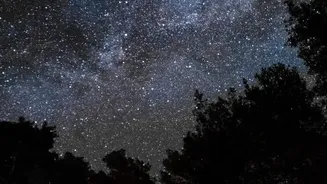
light. Light pollution, the excessive and poorly directed artificial light from cities, creates a bright haze or 'sky glow' that obscures our view of stars, planets, and galaxies. To truly witness the celestial wonders, one needs to find a 'dark sky' location, places with minimal light pollution, often found in remote, high-altitude, or protected areas. These spots allow the universe to reveal itself in breathtaking clarity. India, with its diverse geography, offers a spectacular array of such destinations for both budding astronomers and casual admirers.
Hanle, Ladakh: India's First Dark Sky Reserve
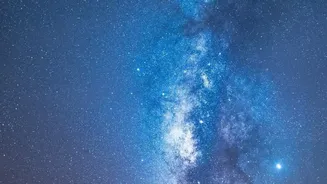
Nestled high in the Changthang Plateau, Hanle is officially recognised as India's first Dark Sky Reserve. At an altitude of nearly 15,000 feet, its dry, cold air and over 300 clear nights a year provide some of the purest sky-watching conditions on Earth. The area is home to the Indian Astronomical Observatory, one of the world's highest. For visitors, this translates to unparalleled views of the Milky Way, which is often bright enough to cast a faint shadow. Local villagers are trained as astronomy guides, offering tours with telescopes, making it a unique, community-driven astrotourism experience. The best time to visit for the clearest skies is between September and March.
Spiti Valley, Himachal Pradesh: A Himalayan Haven
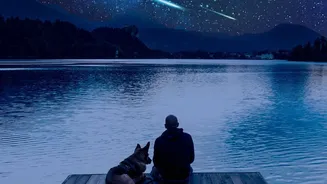
A remote cold desert high in the Himalayas, Spiti Valley is a dream destination for stargazers. Its high altitude, sparse population, and dry climate result in almost zero light pollution, providing a high-definition celestial experience. On a clear, moonless night, the Milky Way is easily visible to the naked eye, alongside countless constellations and frequent shooting stars. Villages like Langza, Komic, and Kibber are particularly renowned for their dark skies. Camping under this star-studded canopy is a popular activity. The best time for a stargazing trip to Spiti is from May to October, when the roads are accessible and the skies are generally clear.
Rann of Kutch, Gujarat: Desert Cosmos
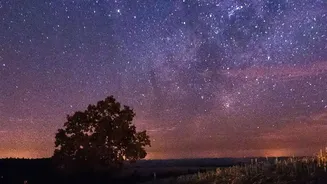
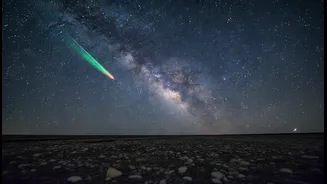
The vast, white salt desert of the Rann of Kutch offers a surreal and magical stargazing experience. Far from major cities, its flat, featureless landscape provides an uninterrupted 180-degree view of the heavens. During the winter months, especially during the Rann Utsav festival, the clear, dry air creates perfect conditions for astronomy. A unique feature here is the reflection of the starlight on the salt crust on moonless nights, creating an otherworldly atmosphere. It's an accessible yet profound way to witness the cosmos, with the months from November to February being ideal.
Coorg, Karnataka: Stars of the South
Proving that you don't have to head to the Himalayas for dark skies, Coorg in the Western Ghats offers some of the best stargazing in southern India. The region's high altitude, misty coffee plantations, and distance from major urban centres create pockets of darkness perfect for astronomy. While the monsoons cloud the skies, the season from November to May is excellent for stargazing. The southern valleys near Srimangala and Kutta are particularly dark, achieving a Bortle 2 classification, which is dark enough for the Milky Way to be seen in detail. Several homestays and observatories in the area cater specifically to astrotourists.
Jaisalmer, Rajasthan: Under the Desert Sky
The Thar Desert near Jaisalmer provides another excellent opportunity for a celestial escape. The dry desert air and minimal light interference, especially in areas like the Sam Sand Dunes, make for crystal-clear night skies. Camping under the stars is a quintessential Jaisalmer experience, offering magical views of the Milky Way stretching across the endless dunes. Many desert camps offer guided stargazing sessions, sometimes with telescopes, combined with cultural performances. The best time for this desert stargazing adventure is during the cooler, clearer winter months, from October to February.