

Goodbye to the Showroom
The era of buying a complete, matching five-piece furniture set is officially on its way out. Designers and homeowners are moving away from the 'fast furniture' model, where entire rooms look like they were purchased in a single shopping trip from one
store. This approach, while convenient, often results in spaces that feel impersonal, predictable, and lacking in character. When every piece matches perfectly, the room can feel static and flat, missing the warmth and personality that makes a house a home. The trend is shifting from consumption to curation, prioritizing longevity and individuality over mass-produced uniformity.
What is a 'Collected' Home?
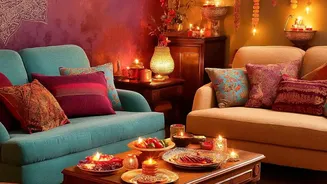
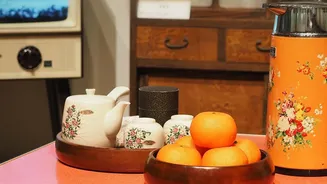
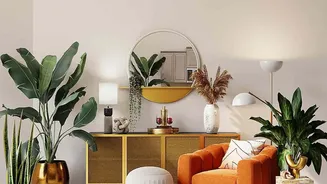
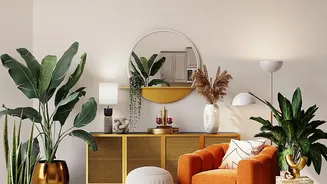
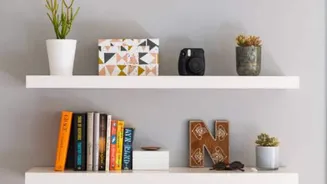
The new ideal is a 'collected' or 'eclectic' space, but don't mistake that for chaos. It's not about throwing random items together; it's the art of mixing different styles, eras, and textures to tell a story. Think of your home as a collection of things you love, acquired over time. A cohesive personal space finds harmony not through matching, but through a unifying thread. This could be a consistent color palette, a repeated material like warm wood or brass, or a shared feeling that ties a modern sofa to a vintage armchair. The goal is to create a layered, authentic environment that reflects your life, travels, and personality.
Start with Your Story, Not a Store
Before you even think about shopping, look inward. The foundation of a personal space is you. What objects do you already own that have meaning? That could be an heirloom dresser, artwork from a local artist, or a collection of pottery from your travels. These pieces are your narrative anchor points. This approach is about building a room that reflects a life, not just a trend. Your home should evolve with you, so start by 'shopping' your own house and identifying the pieces that tell your story. They are the most valuable items you have.
The Art of the Mix
Mixing furniture may seem daunting, but it's where the magic happens. A great rule of thumb is to avoid pairing items from the same collection. Instead, create interest by contrasting shapes and styles. Pair a curvy, upholstered sofa with a clean-lined, modern coffee table. Surround a rustic wooden dining table with sleek, minimalist chairs. The key is to create a conversation between the pieces. While there are no hard rules, finding a balance is crucial. One common guideline is to have a primary style as your foundation and then introduce accent pieces from other eras to add depth and personality.
Find Cohesion with Color and Texture
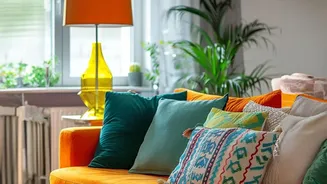
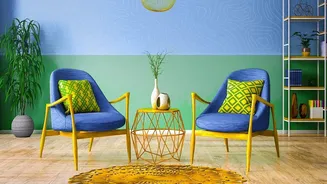
How do you make a room with a dozen different styles feel cohesive? The answer lies in color and texture. Establishing a consistent color palette is one of the most effective ways to unify a space. Choose two or three main colors and a few neutral tones, and weave them throughout the room in your furniture, textiles, and accessories. Similarly, repeating textures can tie a room together. If you have a leather sofa, for instance, you might echo that material in a picture frame or a small decorative box. Mixing textures like soft bouclé, smooth leather, and natural linen adds depth and keeps the space from feeling flat.
Embrace the Slow Build
Perhaps the most important aspect of this trend is patience. A collected home is not built in a weekend. It evolves over months and years, as you find pieces that genuinely speak to you. This approach is more sustainable and ultimately more satisfying than the instant gratification of a total room makeover. Allow your space to be a work in progress. It's better to have an empty corner than to fill it with something you don't love. Enjoy the process of finding that perfect lamp or the ideal rug, knowing that each meaningful addition makes your home more uniquely yours.