







What Exactly Is a Local API Endpoint?
Think of an API (Application Programming Interface) as a messenger that takes a request from your application, delivers it to an AI model like GPT-6 Luna, and brings back the response. Previously, that messenger had to travel to servers located outside
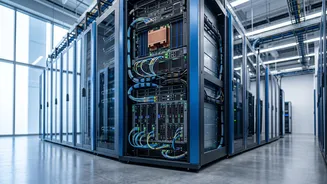
India, causing delays. A local endpoint means the entire process—the request, the AI computation (inference), and the response—happens on servers located within India. This move, part of the 'OpenAI for India' initiative, significantly changes how Indian companies can interact with OpenAI's powerful models. Initially, this service is available for the GPT-6 Luna model via the Chat Completions and Responses APIs.
The Crucial Advantage of Data Residency
For many Indian companies, especially in regulated sectors like financial services and healthcare, the biggest hurdle to adopting AI has been data residency. Regulations, such as those from the Reserve Bank of India (RBI), and the broader Digital Personal Data Protection Act (DPDPA), often mandate that sensitive customer data cannot leave the country. By ensuring that both API data and the AI inference workloads are handled on Indian soil, OpenAI is directly addressing this barrier. Nitin Bawankule, OpenAI's Head of Enterprise in India, noted that some businesses delayed AI deployment specifically because they needed information processed within the country. This launch unlocks new possibilities for using AI in core business operations that handle sensitive data.
Faster Performance and Lower Latency
Speed is critical for user experience. When a chatbot takes too long to reply or an analysis tool lags, users get frustrated. Sending data to and from servers in North America or Europe creates a noticeable delay, known as latency. Studies have shown that API response times from Mumbai could be significantly slower than from cities closer to OpenAI's primary data centers. A local Indian endpoint dramatically reduces this round-trip time. Faster response times, or lower latency, make applications feel more immediate and responsive. This is vital for real-time applications like customer service bots, interactive content creation tools, and dynamic data analysis, directly improving the end-user experience and enabling new, more demanding use cases.
Boosting the Indian AI Ecosystem
This move is about more than just a single feature; it's a catalyst for the entire Indian AI ecosystem. By providing local infrastructure, OpenAI is empowering Indian developers and startups to build more sophisticated and compliant AI-powered applications for the Indian market. The announcement builds on OpenAI's broader strategy for India, which includes a partnership with Tata Group to develop domestic AI data center capacity. This commitment signals a long-term investment in the country's technological future, giving local innovators the tools to compete on a global scale while solving local problems. It lowers the barrier to entry for creating enterprise-grade, secure, and high-performance AI solutions.
How Businesses Can Get Started
Accessing the new local processing capabilities requires a few specific steps. Businesses and developers must create a new API project within their OpenAI account and explicitly select 'India' as the region for both data storage and processing. Once configured, they must use the designated India regional endpoint for their API calls. It's important to note that initially, this feature is available on a standard pay-as-you-go basis for the GPT-6 Luna model. This makes it accessible for companies to start experimenting with and integrating local AI processing into text-based applications like document summarization, drafting emails, or analyzing internal data.