






What Are Production Loans?
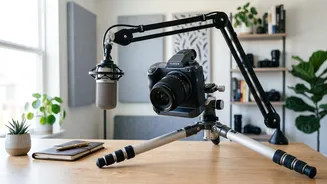
A production loan is a form of debt financing specifically designed to cover the costs of creating digital content. Unlike a generic personal loan you might use for any purpose, these funds are earmarked for project-specific expenses like equipment rental,
hiring crew, location fees, or post-production work. For larger projects like films or web series, these are structured business loans. For smaller independent creators, like YouTubers or podcasters, financing often comes in the form of personal or small business loans tailored to the creator economy, which can be used for production costs like buying new cameras or marketing. The core idea is to provide the upfront capital needed to produce content that will generate revenue later.
Who Offers These Loans in India?
The lending landscape for creators is diversifying. While traditional banks have been cautious due to the perceived risks of creative projects, they are a potential source for established production houses with a solid track record. The more significant players for many creators today are Non-Banking Financial Companies (NBFCs) and specialised fintech platforms. These institutions are often more flexible and have developed models to assess the viability of a creator or a project based on factors beyond tangible collateral. Several digital lenders offer collateral-free loans ranging from ₹50,000 to ₹5 lakh, assessing eligibility on metrics like monthly income and credit score, with quick digital application processes. Government schemes like MUDRA can also be an option for creators registered as micro-enterprises.
The Creator's Application Checklist
Securing a loan requires more than just a great idea. Lenders need to see a viable business plan. For larger project-based loans, be prepared to present a detailed script and concept, a line-item budget, a distribution or monetisation strategy, and contracts with key talent or distributors, if available. Your track record matters; a portfolio of successful past projects can significantly strengthen your application. For personal loans aimed at creators, the requirements are more straightforward but still rigorous. You'll typically need to provide identity proof (Aadhaar, PAN card), address proof, and income proof through bank statements. A strong credit score, often 700 or higher, is crucial for approval and for securing a favourable interest rate.
Understanding the Cost of Debt
A loan is not free money; it's leverage that comes with significant responsibility and risk. The most apparent cost is the interest rate, which can vary widely. While loans backed by strong collateral might have rates between 8-12%, riskier unsecured or mezzanine loans can see rates climb much higher. Beyond interest, you must account for processing fees, legal fees, and other charges that add to the total cost. The primary risk is the obligation to repay the loan regardless of your project's success. If your web series doesn't find a buyer or your YouTube revenue dips, the loan payments are still due. Defaulting can damage your credit score and your professional reputation, making future financing much harder to secure.
Is a Loan the Right Choice for You?
Deciding to take on debt is a major strategic decision. The main advantage of a loan is that you retain full creative control and ownership of your project, unlike with equity investors who take a stake in your intellectual property. It can also be a faster way to get funded compared to long-drawn-out equity fundraising. However, you must weigh this against the financial pressure of repayment. If you are confident in your project's ability to generate predictable revenue to cover the monthly instalments, a loan can be a powerful accelerator. If the revenue streams are highly uncertain, the risk might be too great. Carefully evaluate your cash flow projections and your personal risk tolerance before signing any agreement.
Exploring Alternatives to Debt
Loans are just one tool in the funding toolkit. Before committing, consider all your options. Crowdfunding platforms like Indiegogo, Ketto, or FuelADream allow you to raise funds directly from your audience, which also validates your idea. Grants, such as the Auster Fund, offer no-strings-attached funding for creative projects. For larger productions, equity financing, where you sell a stake in the project to investors, is a common route. Other options include securing advances from distributors, brand sponsorships, and co-production deals. Many creators also start by bootstrapping—using personal savings and credit cards—to maintain complete control, though this carries its own personal financial risks.