



The Cosmic Speed Limit
Everything you see is thanks to light. But light, while incredibly fast, doesn't travel instantaneously. It moves at a finite speed: about 2,99,792 kilometres per second. This cosmic speed limit means that it takes time for light to travel from its source
to our eyes. For things on Earth, this delay is so tiny it’s unnoticeable. But in the vast emptiness of space, the distances are so immense that this delay becomes significant. Scientists measure these colossal distances in 'light-years.' A light-year isn't a measure of time; it's a measure of distance. It's the distance light travels in one year, which is a staggering 9.46 trillion kilometres. When a star is one light-year away, the light you see from it tonight started its journey a year ago.
Messages from Our Neighbours
Let’s start close to home. The Sun, our very own star, is about 150 million kilometres away. Its light doesn’t reach us instantly. It takes approximately 8 minutes and 20 seconds for a sunbeam to travel from the Sun’s surface to Earth. This means if the Sun were to magically disappear, we wouldn't know about it for over eight minutes. The next nearest star to us is Proxima Centauri. It’s about 4.2 light-years away. The faint reddish sparkle you might see from it (with a telescope) is light that left when you were about four years younger. You are literally seeing the star as it was in the past.
Starlight from Another Era
This is where the headline's 'centuries' comes into play. Many of the familiar stars that form our constellations are much farther away. Take Rigel, the bright blue-white star in the Orion constellation. It is estimated to be about 860 light-years from Earth. The light we see from Rigel tonight began its journey around the year 1164 AD. It was travelling through space long before the Mughal Empire was founded in India, and it's only just arriving now. Polaris, the North Star, is about 433 light-years away. The light you use to navigate by started its journey around the time Shah Jahan was beginning construction of the Taj Mahal. Every star in the night sky is a tiny portal to a different moment in history.
Gazing Millions of Years into the Past
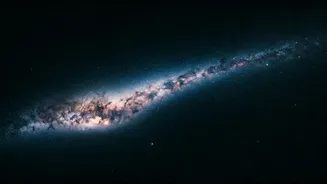
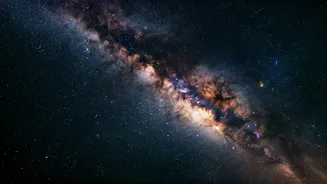
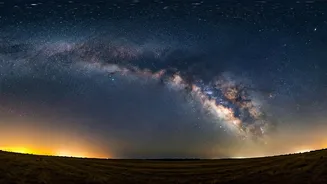
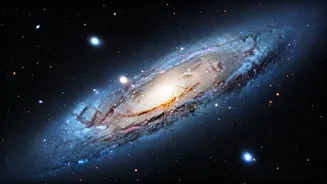
The story gets even more mind-bending when we look beyond the stars in our own galaxy. On a clear, dark night, far from city lights, you might be able to spot a faint, fuzzy patch of light. That is the Andromeda Galaxy, the closest major galaxy to our own Milky Way. That faint smudge is an entire galaxy containing a trillion stars. And it is 2.5 million light-years away. The light you are seeing from the Andromeda Galaxy started its cosmic voyage 2.5 million years ago. At that time on Earth, our early human ancestors, like Homo habilis, were first learning to use stone tools. We are seeing a galaxy as it existed long before modern humans walked the planet.
Telescopes as Time Machines
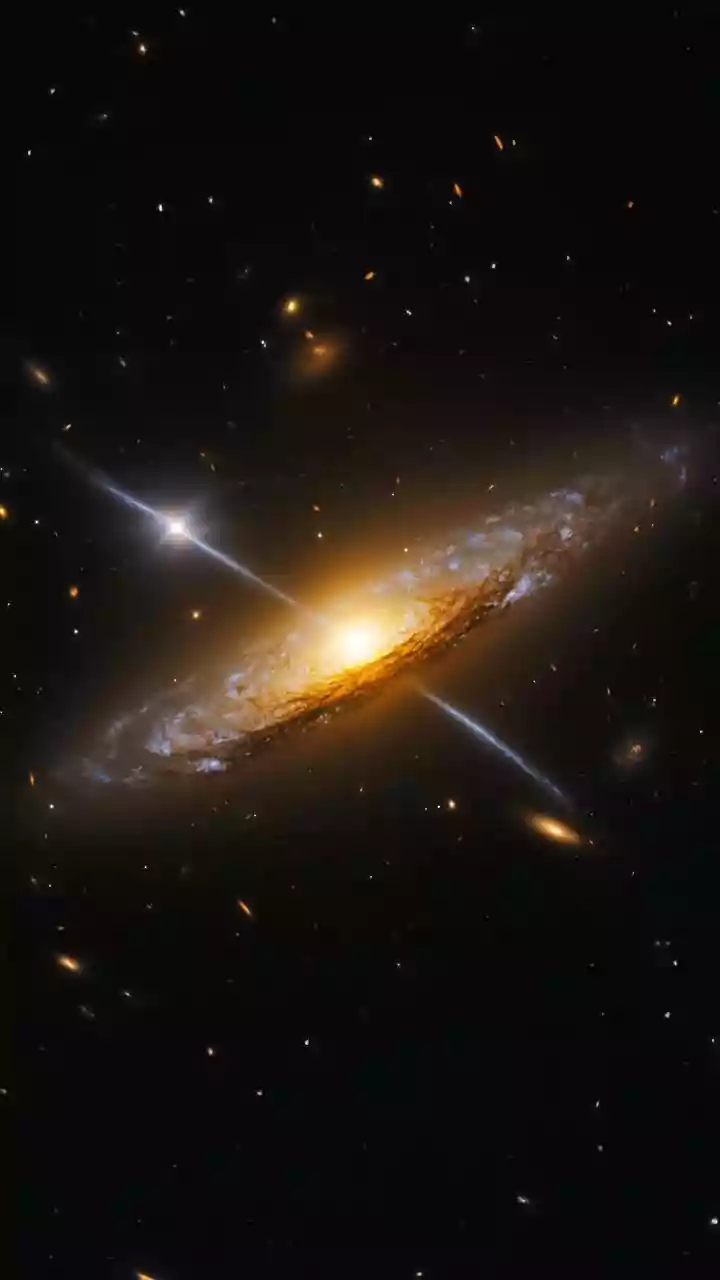
This effect makes astronomy a unique form of archaeology. The farther we look into space, the further back in time we see. Powerful instruments like the Hubble Space Telescope and the James Webb Space Telescope are, in essence, time machines. They are designed to capture the faint, ancient light from the most distant objects in the universe. Some of the galaxies observed by these telescopes are over 13 billion light-years away. This means we are seeing them as they were just a few hundred million years after the Big Bang, offering us a glimpse into the dawn of the universe itself.