



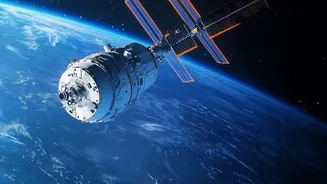
Meet Pushpak, India's Space Shuttle
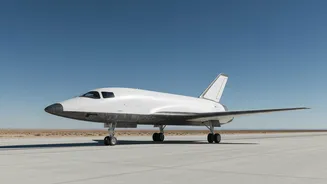
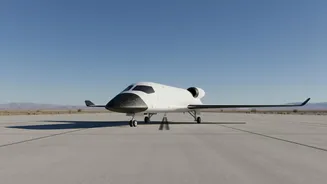
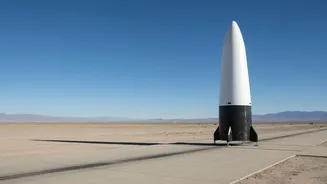
At the heart of this ambition is the Reusable Launch Vehicle–Technology Demonstrator (RLV-TD), affectionately named 'Pushpak' after the mythical flying chariot. Unlike conventional rockets that are discarded after a single use, the RLV is designed to fly back
to Earth and land on a runway, much like an airplane. This reusability is the key to drastically reducing the cost of launching satellites. For decades, ISRO has relied on its workhorse rockets like the PSLV and GSLV, which are highly reliable but expendable. The RLV represents a fundamental shift in strategy, aiming to recover and reuse the most expensive parts of the launch system, which can account for up to 80% of the total cost. The goal is to eventually create a Two-Stage-to-Orbit (TSTO) vehicle where the first stage flies back to Earth for reuse after launch.
Acing the Ultimate Landing Test
The most critical part of this vision is mastering the art of autonomous landing. To validate this technology, ISRO conducted a series of three Landing Experiments (LEX). In the most recent and final test in June 2024, the Pushpak vehicle was carried to an altitude of 4.5 kilometres by an Indian Air Force Chinook helicopter and released. From there, it was on its own. The vehicle had to autonomously navigate, correct its course against challenging wind conditions, and align itself with the runway at the Aeronautical Test Range in Chitradurga, Karnataka. It executed a flawless landing, touching down at a speed of over 320 kmph before using a brake parachute and its landing gear brakes to come to a stop. This final test was deliberately made more difficult, with the vehicle being released 500 meters to the side of the runway, forcing it to perform significant cross-range manoeuvres to find its target.
Why Autonomous Landing is So Difficult
Landing a space vehicle is not like landing a commercial airplane. Pushpak is an unpowered glider during its descent, meaning it has no engine to make a second attempt or correct a flawed approach. Its low lift-to-drag ratio means it descends at a much steeper angle and higher speed than conventional aircraft. The entire sequence, from release to touchdown, must be performed autonomously by its onboard computers. These computers fuse data from a suite of sensors—including ISRO's own NavIC satellite navigation system—to make real-time decisions, correcting for wind, altitude, and its position relative to the runway. Successfully performing this high-speed, high-stakes manoeuvre without any human intervention is a monumental technological achievement that validates ISRO's expertise in advanced guidance and control systems.
The Billion-Dollar Payoff
The primary driver behind the RLV program is economics. Access to space is incredibly expensive. By reusing the launch vehicle, ISRO aims to slash launch costs by a significant margin, with some estimates suggesting a potential 80% reduction. This would make India an even more formidable player in the global commercial satellite launch market, an industry where it already competes strongly on cost. Cheaper access to space also has profound domestic implications. It will make it more affordable for India to launch its own satellites for communication, weather forecasting, disaster management, and national security. The technology developed for the RLV, from its autonomous navigation to its advanced materials, will also trickle down to make other ISRO launch programs more efficient and cost-effective.
What Comes Next for RLV Pushpak
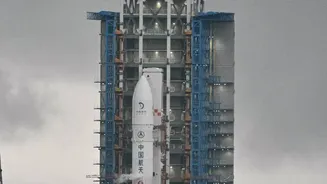
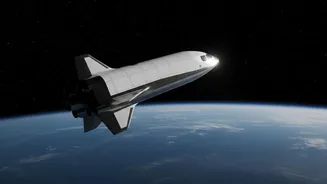
With the crucial landing experiments now complete, ISRO has proven the vehicle's ability to land safely from a high altitude. The next giant leap for the program is the Orbital Re-entry Experiment. In this future mission, a version of Pushpak will be launched into orbit on top of a conventional rocket, circle the Earth, and then re-enter the atmosphere at hypersonic speeds. It will have to withstand scorching temperatures exceeding 1,200°C before gliding back for an autonomous runway landing. This test will simulate the full mission profile of a reusable spaceplane. While this ultimate goal is still several years away, the successful LEX series has laid a solid foundation, proving that India has mastered one of the most critical pieces of the reusability puzzle.