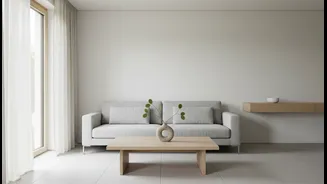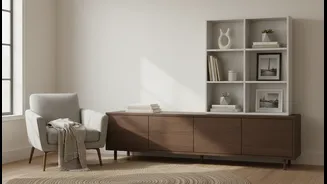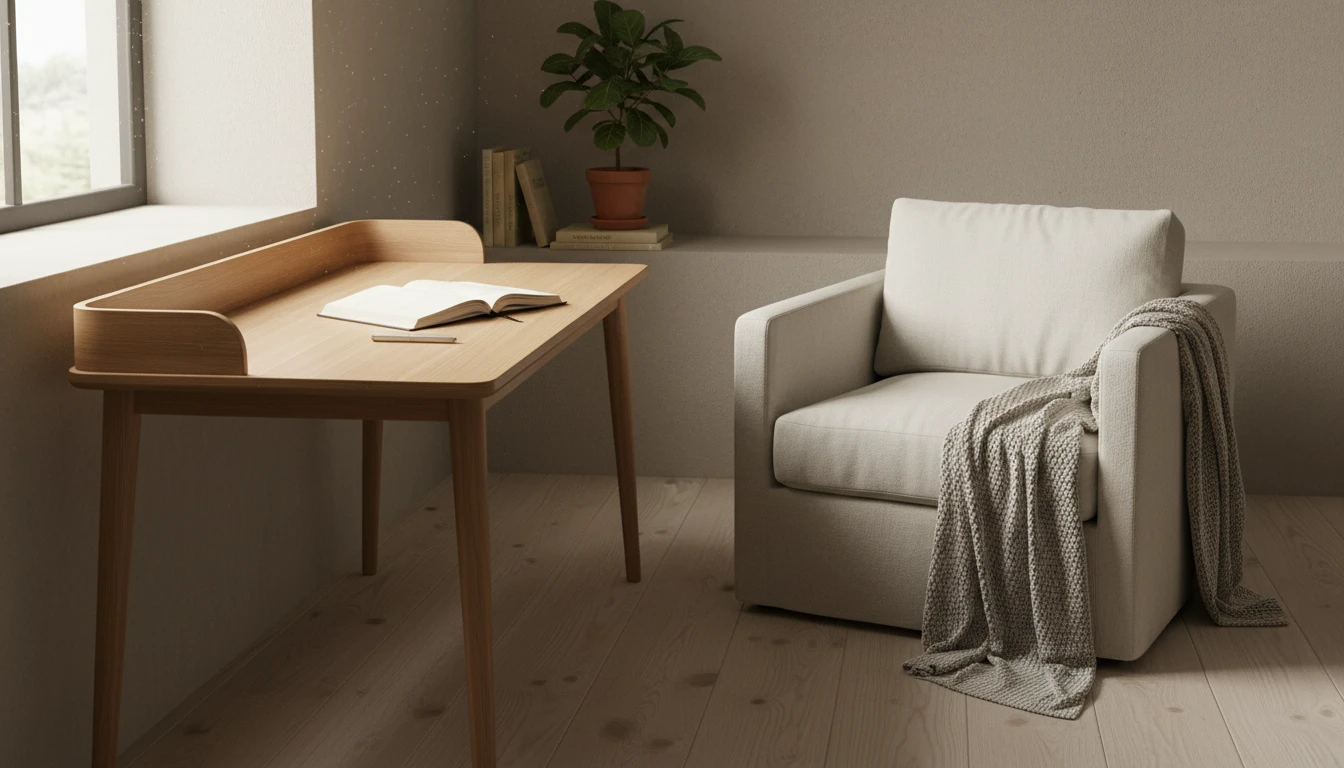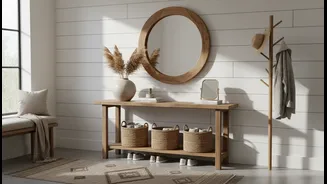




Redefining 'Clutter-Free'
Let's debunk a common myth: clutter-free is not the same as minimalism. While minimalism is a lifestyle choice centered on owning fewer possessions, creating a clutter-free home is simply about organising your space so that it works for you. The goal
isn't to get rid of everything you love but to ensure that the things you own serve a purpose, are easy to find, and don't create unnecessary stress. It's a shift in mindset from focusing on what to discard to deciding what truly deserves a place in your home. The end result isn't an empty house; it's a home where every item is intentional, making daily life feel more seamless and less chaotic.
The Psychology of a Usable Space
Our physical environment has a profound impact on our mental state. Studies have shown that cluttered spaces can increase levels of the stress hormone cortisol, making it difficult to relax and focus. When your home is filled with visual noise and unfinished tasks—piles of paper, overflowing shelves—your brain is constantly bombarded with stimuli, which can lead to mental fatigue and reduced productivity. By contrast, a well-organised space promotes a sense of calm and control. When everything has a designated home, you spend less time searching for lost items and more time enjoying your surroundings. This cognitive ease translates to better sleep, improved focus, and a greater sense of overall well-being.
Function Over Picture-Perfect Aesthetics
It’s easy to fall into the trap of wanting a home that looks like a magazine spread, but true organisation prioritises function over form. A usable space is designed around your actual life and routines. For example, if you drink coffee every morning, a dedicated coffee station with mugs, beans, and your coffee maker in one accessible spot is more functional than storing those items in three different cupboards. The key is to store items as close as possible to where you use them. This might mean keeping a few essential cooking utensils in a container on the counter instead of hidden in a drawer, or placing a basket for blankets next to the sofa. The most effective systems are the ones that are easy to maintain because they align with your natural habits.
Actionable Steps to a More Usable Home
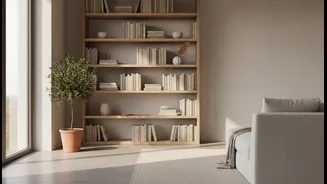
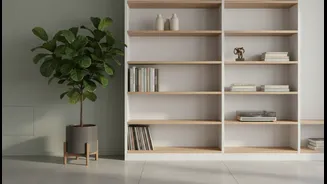
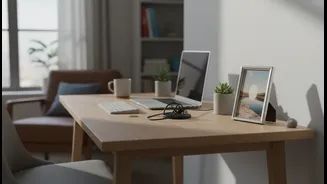
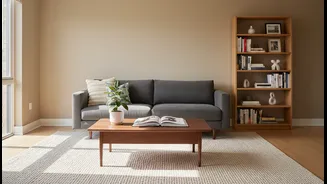
Creating a functional home doesn't require a complete overhaul overnight. Start small to build momentum. One powerful strategy is creating 'zones' for different activities—a reading nook, a workspace, a spot for mail. This helps contain items related to specific tasks. Another effective principle is the "one in, one out" rule: for every new item you bring into your home, one must go. This prevents the slow accumulation of clutter. To make things easier to find and put away, use clear containers or labels so you can see what's inside at a glance. Maximising vertical space with shelving can also free up valuable floor and counter space, making rooms feel larger and more open. Finally, before you even begin to organise, take the time to declutter. You can't organise things you don't need.