







The New Creative Co-pilot
For years, digital design has been a hands-on process of pushing pixels and manipulating vectors. But a new paradigm is here. Major design platforms are embedding AI assistants directly into their software, transforming them from passive tools into active
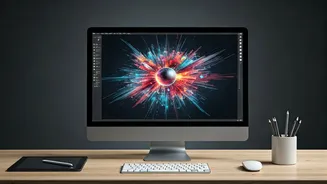
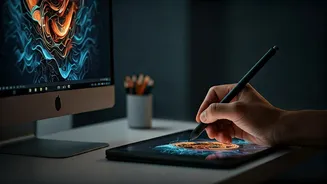
collaborators. Instead of just executing commands, these AI partners can understand natural language prompts, generate entire design concepts, suggest layout variations, and automate tedious tasks. This shift positions the designer less as a manual laborer and more as a creative director, guiding their AI co-pilot to realize a vision. The goal is to close the gap between idea and execution, allowing creators to focus on high-level strategy and taste rather than time-consuming mechanical work.
Industry Giants Lead the Charge
Adobe, the longtime industry hegemon, is at the forefront of this evolution with its Firefly family of AI models. Integrated across its Creative Cloud suite, including Photoshop, Illustrator, and Premiere Pro, Firefly is positioned as a comprehensive creative assistant. It can generate commercially safe images from text, extend video clips, create sound effects, and even translate audio while preserving the speaker's voice. This 'orchestration layer' allows a user to perform complex, multi-app tasks from a single conversational interface, like creating a video title card in Illustrator's style and enhancing its audio with Premiere's tools, all through text commands. This deep integration aims to keep professional workflows locked within Adobe's ecosystem, leveraging decades of dominance in creative software.
Democratizing Design with AI
It isn't just the professional-grade software that's getting an AI upgrade. Platforms like Canva and Figma are also aggressively integrating AI, making powerful design capabilities more accessible than ever. Canva's Magic Studio is an all-in-one suite of AI tools aimed at everyone from social media managers to small business owners. Features like Magic Write for generating copy, Magic Design for creating full templates from a prompt, and Magic Switch for reformatting a design for multiple platforms automate what was once hours of work. Meanwhile, Figma, the go-to tool for UI/UX design, uses AI to help generate layout drafts, automatically rename layers, write placeholder text, and even check for accessibility issues like poor color contrast, streamlining the product design process.
A Fundamental Shift in the Designer's Role
The rise of the AI assistant inevitably raises questions about the future of the design profession. While some fear job replacement, the prevailing view is that AI is reshaping, not eliminating, the designer's role. The focus is shifting from technical execution to strategic thinking and creative direction. Repetitive tasks like removing backgrounds, resizing images, and creating simple templates are now largely automated, freeing up designers to concentrate on problem-solving, brand strategy, and curating the best of what AI generates. The new essential skills are becoming prompt engineering—learning to communicate effectively with AI—and critical judgment. Designers who can effectively partner with AI to produce superior work faster will be in high demand.
The Road Ahead: Opportunities and Challenges
This new era is not without its challenges. Concerns about the potential for AI-generated designs to feel generic or lack emotional depth are valid. There are also risks of over-reliance on the technology, which could stifle the development of fundamental design skills. However, the opportunities are vast. AI assistants can serve as a powerful tool to break creative blocks by suggesting unexpected ideas. They can handle the tedious aspects of production, enabling creatives to tackle more projects and innovate faster. For businesses, this translates to increased efficiency and the ability to produce personalized content at scale. As the technology matures, these AI assistants will likely become even more personalized and seamlessly integrated into our creative workflows.