





Understand and Recognise the Panic
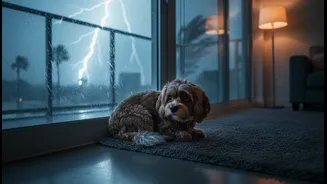
Before you can help, it's crucial to know what pet panic looks like. Dogs and cats can't tell us they're scared, but their behaviour speaks volumes. Common signs include excessive panting, trembling, hiding in unusual spots, whining or howling, and pacing
restlessly. In more severe cases, a pet might experience loss of bladder control or become destructive. This isn't disobedience; it's a genuine fear response. Pets are incredibly sensitive to changes in the atmosphere, often detecting shifts in barometric pressure and static electricity long before we hear the first thunderclap. This pre-storm anxiety means they can become stressed well before the rain begins.
Create a Safe Den in Your Apartment
In the wild, animals seek out small, enclosed spaces to feel safe. You can replicate this instinct in your apartment. Designate a “safe haven” for your pet. This doesn't have to be anything fancy. A crate with the door left open, a closet, a bathroom, or even a space under a bed can work perfectly. Make it inviting by filling it with their favourite soft bedding, a familiar toy, and an item of your clothing that carries your scent. The key is to make this space accessible at all times, not just during a storm, so they associate it with comfort and security. Covering a crate with a heavy blanket can also help muffle sounds and block out scary flashes of lightning.
Mask the Sounds and Sights
The limited space of an apartment can make the sound of a downpour and thunder feel inescapable. Your goal is to gently mask these overwhelming noises. Playing calming classical music, turning on the television, or using a white noise machine can help create a consistent, soothing soundscape that drowns out the storm. Close the curtains or blinds to block out the sudden, startling flashes of lightning that can add to your pet's distress. By controlling the sensory input in their environment, you significantly reduce the triggers for their panic.
Your Calm Is Their Calm
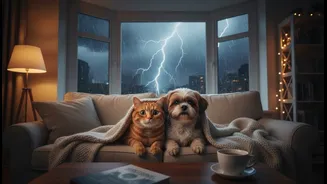
Pets are masters at reading our emotions. If you are anxious and jumpy during a storm, your pet will feed off that energy, confirming their suspicion that there is something to fear. It's important to project an air of calm confidence. Speak to your pet in a steady, reassuring voice. It's a myth that comforting a scared pet reinforces the fear; you can't reinforce an emotion. Gentle petting and simply being present can provide immense comfort. However, don't force interaction. If your pet prefers to hide in their safe den, allow them that space.
Use Distractions and Positive Association
Redirecting your pet's attention can be a powerful tool. Before the storm gets too intense, engage them in a gentle indoor game of fetch or tug-of-war. Interactive puzzle feeders or a long-lasting chew toy can also keep their mind occupied. The goal is to help them associate the distant rumble of thunder with something positive, like a special treat or playtime. This process, known as counter-conditioning, can slowly help to change their emotional response to storms over time.
Consider Calming Aids
For pets with severe panic, several products may offer additional support. Anxiety wraps or shirts, such as a ThunderShirt, apply gentle, constant pressure that has a calming effect on many animals, similar to swaddling a baby. Pheromone diffusers, which are available for both dogs and cats, release synthetic calming scents that can help reduce stress levels in the environment. There are also various natural calming supplements available. However, it is essential to discuss these options with your veterinarian before use to ensure they are safe and appropriate for your pet.