






A New Policy Universe
The driving force behind this transformation is a fundamental shift in policy. The Indian Space Policy 2023 has officially opened the final frontier to private enterprise, a domain once exclusively managed by the Indian Space Research Organisation (ISRO).
This move creates a clear framework for Non-Government Entities (NGEs) to participate in everything from building satellites to providing space-based services. The establishment of IN-SPACe (Indian National Space Promotion and Authorisation Centre) as a single-window agency is crucial. It acts as a facilitator and regulator, helping private companies, from startups to large corporations, navigate the sector and even use ISRO's world-class facilities. This has catalyzed a vibrant startup ecosystem, which has grown from just a handful of companies to over 400 in recent years, attracting significant investment.
Satellite Communications: Connecting the Unconnected
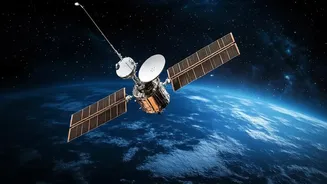
A massive opportunity lies in satellite communications (SatCom). This sector is expected to grow significantly, with some forecasts projecting the Indian market to reach over $8 billion by 2033. The primary driver is the demand for reliable connectivity, especially in remote and rural areas that are difficult to connect with terrestrial infrastructure. Private players like OneWeb (backed by Airtel) and Jio Satellite are entering the market to provide satellite-based broadband services. This will not only bridge the digital divide but also provide critical backup for existing telecom networks, support in-flight connectivity, and enhance communication services for defense and disaster management. As India aims to connect thousands of remote villages, satellite networks are set to become an indispensable part of the national infrastructure.
Earth Observation: Data from the Sky
Earth Observation (EO) is another powerhouse sector, transforming satellite imagery into actionable intelligence. This market is projected to see a compound annual growth rate of over 12% through 2030. EO applications are incredibly diverse, impacting key areas of the Indian economy. In agriculture, satellite data helps with crop monitoring, yield prediction, and optimizing irrigation. For urban planning, it aids in infrastructure mapping and managing city growth. In disaster management, it provides critical information for early warnings, monitoring floods or cyclones, and assessing damage. Private companies like Pixxel are developing advanced hyperspectral satellite constellations that can provide data with unprecedented detail, creating high-value analytics for various industries.
Launch Services and Manufacturing: India as a Global Hub
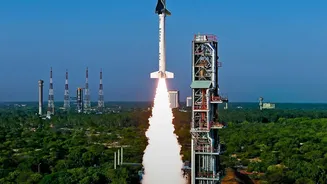
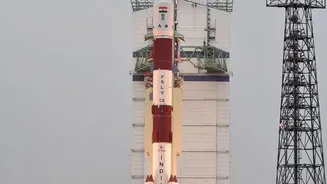
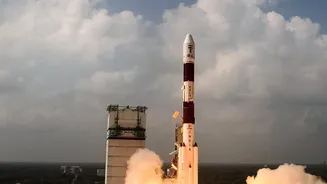
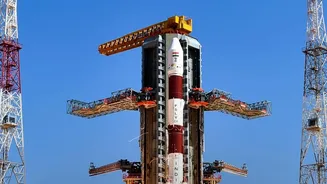
For decades, ISRO has been known for its reliable and cost-effective launch vehicles like the PSLV. Now, the private sector is stepping in to build on this legacy. The goal is to establish India as a global hub for manufacturing and launching satellites. Startups such as Skyroot Aerospace and Agnikul Cosmos are developing their own launch vehicles, with some already achieving successful launches. Skyroot's Vikram-1 launch, for instance, marked a major milestone for the private industry. The Indian Space Policy 2023 encourages private companies to take over the manufacturing of mature systems like the PSLV, freeing ISRO to focus on advanced research and deep space missions. This will increase India's launch capacity, cater to the growing global market for small satellite launches, and build a robust domestic supply chain for space hardware.
Downstream Applications: The Next Frontier of Value
While rockets and satellites (the 'upstream' segment) are crucial, a significant portion of the future space economy will be 'downstream'—creating services and applications from space-based assets. This is where raw satellite data is converted into decision-ready tools. Think about geospatial analytics for logistics companies to optimize delivery routes, data services for financial firms to monitor economic activity, or navigation services that go beyond simple GPS. The Indian Space Policy identifies the scaling of these downstream applications as the largest economic opportunity. It involves integrating space technology with other national missions like Digital India and Smart Cities, creating a seamless ecosystem where space-derived insights improve everyday life and industrial productivity.