

The Science of Starch Retrogradation
The secret begins with a process called starch retrogradation. When you cook rice, the starch granules absorb water and swell up in a process called gelatinization. This makes the rice soft, fluffy, and a bit sticky. However, as the rice cools down in the refrigerator,
the magic happens. The starch molecules, primarily the straight-chain ones called amylose, begin to realign and rearrange themselves into a more ordered, crystalline structure. This re-crystallization process is retrogradation. It makes the individual rice grains firmer and less sticky, giving them a more defined, separate character. This transformation is precisely what you want for certain dishes, preventing the final product from becoming a mushy, clumpy mess.
Moisture on the Move
Along with the changes in starch, there's a significant shift in moisture. Freshly cooked rice is full of steam and surface moisture, which is why it clumps together. When you refrigerate it, the cooling process not only firms up the grains but also causes a redistribution of the water content. The surface of each grain dries out, while some moisture gets locked inside the newly formed crystalline starch structures. This is a crucial step. That drier exterior is what allows the rice to actually fry in a hot wok or pan, rather than just steaming itself into a sticky paste. The result is distinct grains that can absorb sauces and flavours more effectively while developing a delightfully chewy texture.
The Fried Rice Advantage
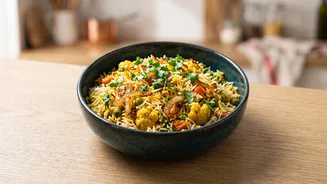
This combination of firm, separate grains and reduced surface moisture is the holy grail for making perfect fried rice. When day-old rice hits a hot, oiled pan, the individual grains can tumble and toast, developing a subtle, nutty flavour known in Chinese cooking as 'wok hei'. Fresh, moist rice would immediately lower the pan's temperature, steaming instead of frying and leading to a soggy texture. Because the cooled grains are more robust, they can withstand the vigorous stirring and high heat of a stir-fry without breaking down or losing their shape, ensuring each bite is a perfect blend of chewy rice and other ingredients.
A Bonus for Your Health
Interestingly, this transformation isn't just about taste and texture. The process of retrogradation increases the amount of 'resistant starch' in the rice. As the name suggests, this type of starch resists digestion in your small intestine. Instead, it travels to the large intestine where it acts as a prebiotic, feeding beneficial gut bacteria. Studies have shown that cooled and reheated rice may have a lower glycemic impact compared to its freshly cooked counterpart, meaning it can cause a smaller spike in blood sugar. Even reheating the rice doesn't destroy all the resistant starch formed during cooling.
Handling Leftover Rice Safely
While leftover rice is a culinary hero, it requires proper handling to be a safe one. Uncooked rice can contain spores of a bacterium called Bacillus cereus, which can survive the cooking process. If cooked rice is left at room temperature for too long (more than two hours), these spores can germinate and produce toxins that are heat resistant. This can cause food poisoning, sometimes called 'fried rice syndrome'. To prevent this, always cool cooked rice quickly and store it in the refrigerator. Spreading it on a baking sheet can speed up the cooling before you place it in an airtight container. When you reheat it, ensure it reaches an internal temperature of at least $165$°F ($74$°C).