
The Sun's Inevitable Decline
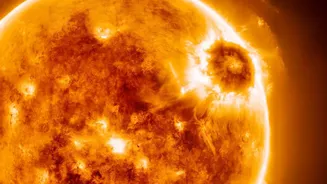
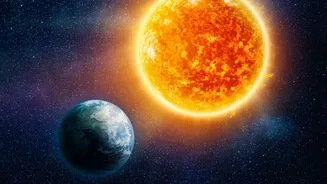
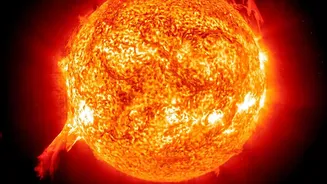
Like all stars, our Sun is a massive nuclear reactor, fusing hydrogen into helium in its core. This process has powered our solar system for about 4.6 billion years, but the fuel won't last forever. In another 5 billion years or so, the hydrogen in the core will
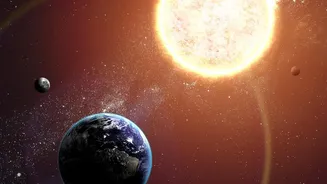
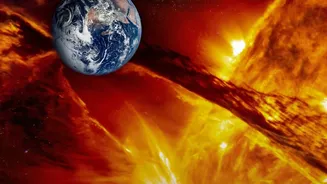
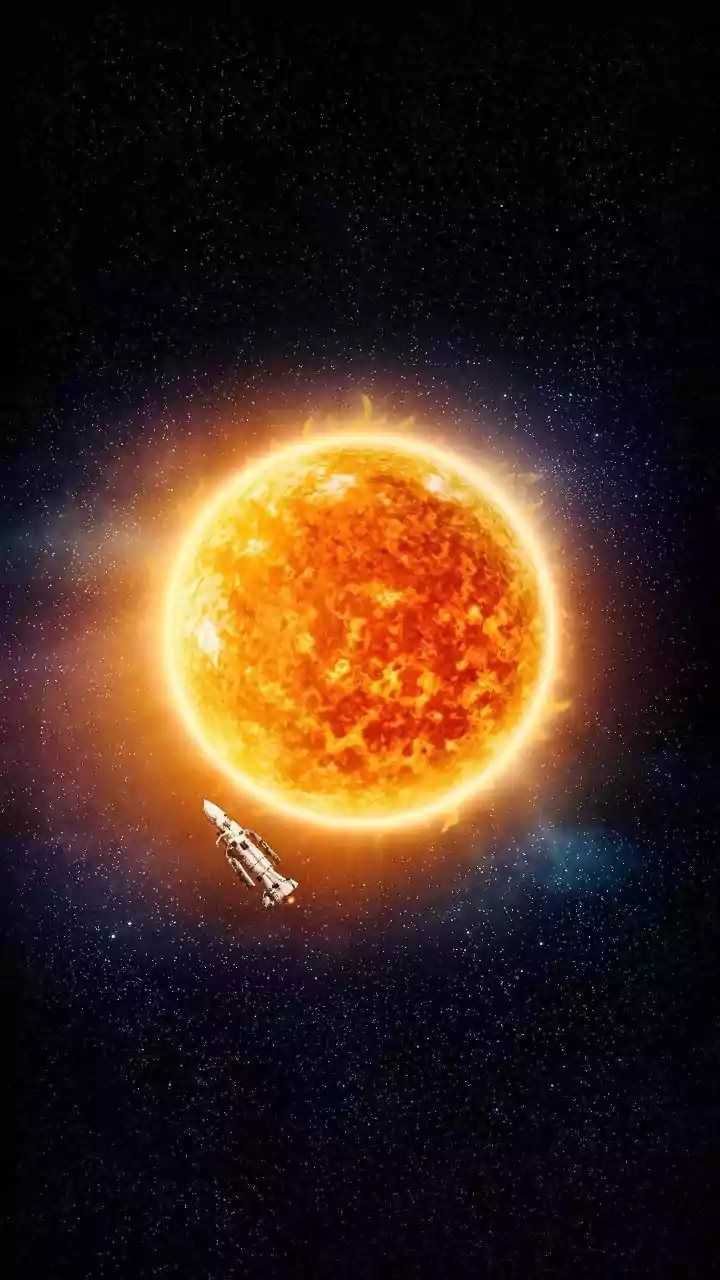
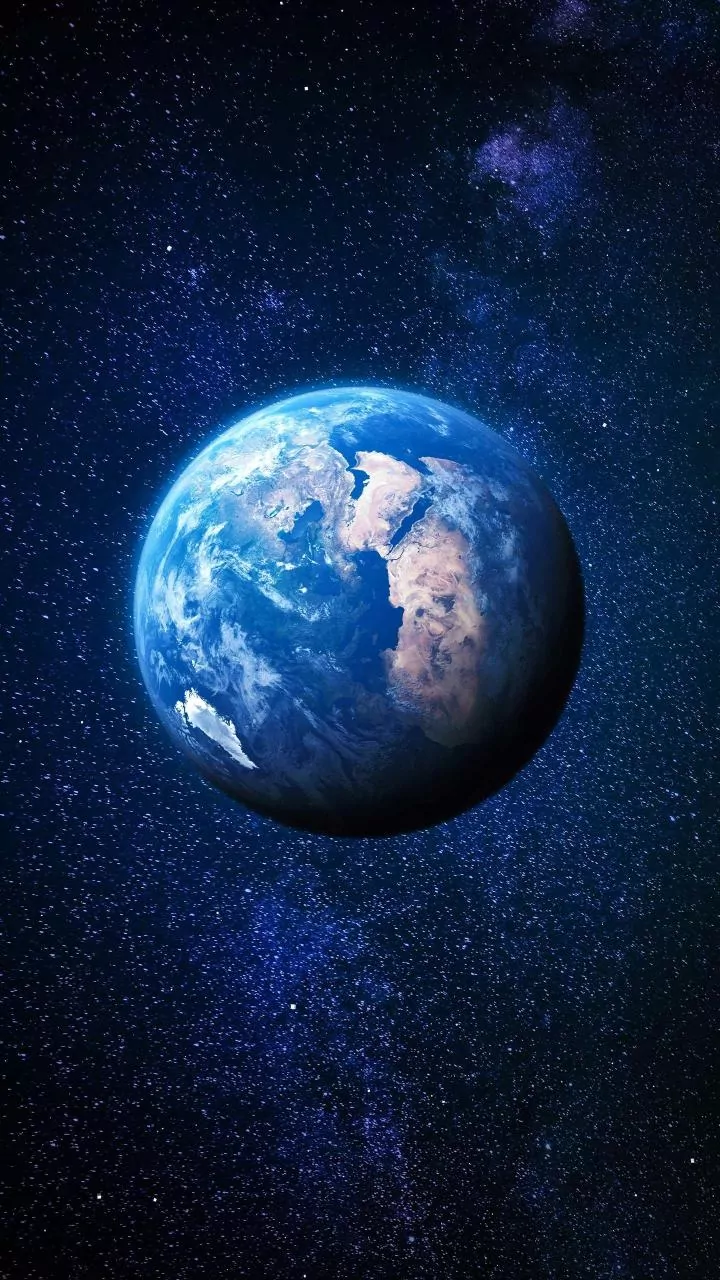
run out. This will trigger a dramatic transformation. The Sun will swell into a red giant, its outer layers expanding possibly as far as the orbit of Mars, engulfing Mercury, Venus, and almost certainly Earth in the process. This marks the beginning of the end, a phase where the Sun's stable, life-giving nature gives way to a slow, dramatic death.
What is Solar Mass Loss?
As the Sun becomes a red giant, it will shed a huge portion of its mass. This 'mass loss' happens when the star's outer layers are blown away into space. For a long time, scientists modeled this process as a smooth, continuous outflow, like a slow and steady leak. However, a groundbreaking study published in The Astrophysical Journal Letters suggests a much more violent and chaotic process. New evidence and simulations from researchers at Caltech and the University of Michigan propose that the Sun will lose its mass in thousands of separate, uneven bursts. Think less of a gentle breeze and more of a series of powerful, lopsided explosions ejecting gas and dust into the solar system.
Simulating the Final Act
How can scientists predict an event billions of years away? They use sophisticated computer simulations. Researchers ran hundreds of different models—672 in this recent study—to test various scenarios. They altered the size and frequency of the mass-loss bursts to see how each would affect the solar system's delicate gravitational balance. By modeling these powerful, sporadic ejections, they could simulate the 'kicks' and nudges the remaining planets would experience. These simulations track the planets' orbits for billions of years after the Sun becomes a white dwarf, offering a probabilistic forecast of our cosmic neighborhood's future.
A Chaotic Future for the Outer Planets
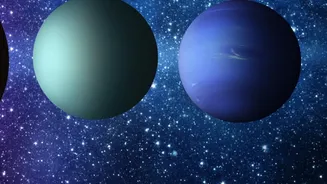
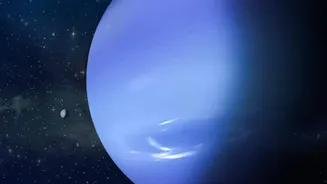
The results of these new simulations paint a picture of chaos. Previous models of smooth mass loss suggested the outer planets' orbits would expand but remain stable for an incredibly long time. However, the new 'bursty' model dramatically shortens this timeline. The simulations show that the violent, uneven mass loss will destabilize the clockwork orbits of the gas giants. In roughly 90% of the simulated systems, the planets' orbits fell into disarray within 3 billion years of the Sun becoming a white dwarf. The consequences were dramatic: in some scenarios, Uranus and Neptune swapped places, while in others, a planet like Saturn could be ejected from the solar system entirely, doomed to wander the galaxy as a rogue world.
The Ghost of a Solar System
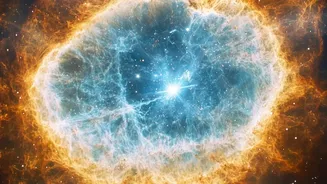
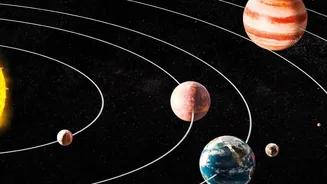
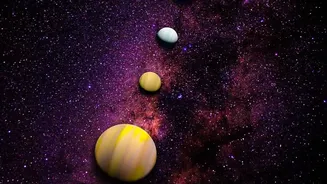
After the Sun has shed nearly half its mass, all that will remain is its hot, dense core: a white dwarf about the size of Earth. The surviving planets—Jupiter, Saturn, Uranus, and Neptune—will settle into much wider, more distant orbits due to the Sun's weakened gravity. But the new research suggests this stability is an illusion. The chaos induced during the Sun's death throes means our solar system's demise will not be caused by a passing star billions of years from now, but will be triggered by the Sun itself. It transforms the end of our solar system from a distant accident into a final, violent chapter written by its own star.