





Spoilage vs. Pathogens: An Invisible Threat
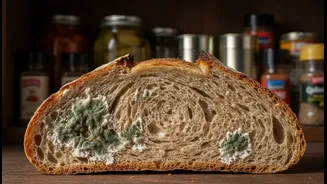
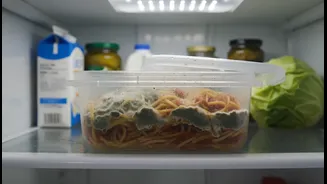
The fundamental reason the smell test fails is the difference between spoilage bacteria and pathogenic bacteria. Spoilage bacteria are the organisms that cause food to develop off-putting odours, tastes, and textures, like slimy vegetables or sour milk.
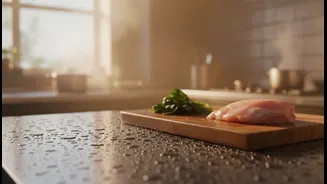
While they make food unappetizing, they generally don't cause serious illness. Pathogenic bacteria, on the other hand, are the true culprits behind food poisoning. Germs like Salmonella, E. coli, and Listeria can thrive in food without producing any smell, taste, or change in appearance. This means a portion of leftover chicken could look and smell perfectly fine but still be contaminated with enough harmful bacteria to make you sick.
Mind the 'Danger Zone'
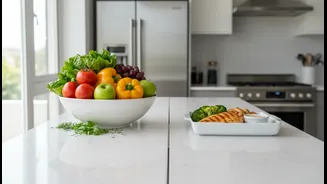
The key to keeping leftovers safe is managing time and temperature. Food safety experts identify a temperature range known as the "danger zone," which is between 4°C and 60°C (40°F and 140°F). Within this range, pathogenic bacteria can multiply rapidly, sometimes doubling in number in as little as 20 minutes. Leaving perishable food at room temperature for too long is a major cause of foodborne illness. The crucial guideline to follow is the two-hour rule: get your leftovers into the refrigerator within two hours of cooking. If the ambient temperature is high, such as over 32°C (90°F), this window shrinks to just one hour.
The Clock is Ticking in the Fridge
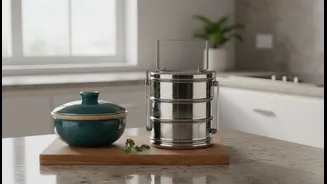
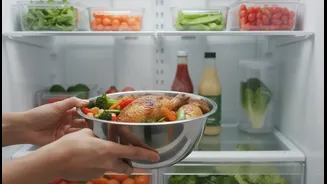
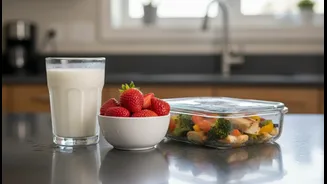
Refrigeration slows down bacterial growth, but it doesn't stop it completely. So, how long are leftovers actually good for? According to the U.S. Department of Agriculture (USDA) and other health agencies, most cooked leftovers can be safely kept in the refrigerator for three to four days. After this point, the risk of food poisoning increases, even if the food looks and smells fine. To make storage easier and safer, divide large batches of food into smaller, shallow containers. This helps the food cool down more quickly and evenly, limiting the time it spends in the temperature danger zone. Ensure your containers are airtight to maintain quality and prevent cross-contamination.
Reheat Right for Total Safety
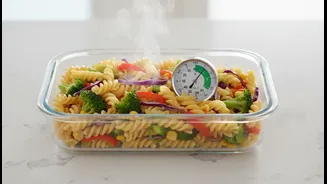
Properly reheating leftovers is the final critical step to ensure they are safe to eat. The goal is to kill any bacteria that may have developed during storage. Food safety guidelines recommend reheating all leftovers to a uniform internal temperature of 74°C (165°F). The best way to confirm this is by using a food thermometer. When using a microwave, cover the food to retain moisture and ensure it heats evenly, stirring it partway through. Let the food stand for a moment after reheating to allow the temperature to distribute throughout. Experts advise against using slow cookers for reheating, as they may not heat the food quickly enough to prevent bacteria from multiplying.
When in Doubt, Throw It Out
It can be hard to discard food, especially when trying to reduce waste. However, when it comes to food safety, it is always better to be cautious. If you can't remember how long something has been in the fridge or are unsure if it was stored correctly, the safest choice is to throw it away. The symptoms of food poisoning—which can include vomiting, diarrhea, abdominal cramps, and fever—are unpleasant at best and can be severe or even life-threatening for vulnerable individuals like young children, older adults, and those with weakened immune systems. Your health is worth more than a serving of questionable leftovers.