




More Than Just a Six-Pack
When most people hear “core,” they picture a chiselled six-pack. While the rectus abdominis muscles are part of the equation, your true core is a complex system of muscles that wraps around your entire torso. It includes your deep abdominal muscles, obliques
along your sides, muscles in your lower back, and even your pelvic floor and diaphragm. Think of it as a natural corset that stabilises your spine and pelvis. A strong core is the foundation for almost every movement you make, from bending down to pick up groceries to maintaining good posture while sitting at a desk. The benefits go far beyond aesthetics; a stable core can reduce your risk of injury, alleviate back pain, and improve your balance and overall athletic performance.
Master the Fundamentals First
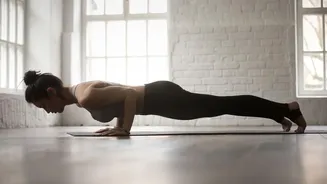
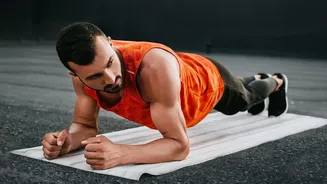
Forget endless crunches and complicated routines. True core strength is built on a foundation of simple, controlled movements that teach your muscles to work together. Focus on mastering a few key exercises with perfect form before you even think about adding difficulty. Here are three essentials: 1. The Plank: Lie face down and prop yourself up on your forearms and toes, keeping your body in a straight line from head to heels. Engage your abs and glutes, and avoid letting your hips sag or rise too high. Hold for as long as you can maintain perfect form. 2. The Glute Bridge: Lie on your back with your knees bent and feet flat on the floor, hip-width apart. Tighten your abdominal and glute muscles, then lift your hips off the floor until your body forms a straight line from your shoulders to your knees. Hold for a moment before lowering back down with control. 3. The Bird-Dog: Start on all fours with your hands directly under your shoulders and knees under your hips. Keeping your back flat, extend your right arm straight forward and your left leg straight back simultaneously. The key is to keep your torso completely still, avoiding any rocking. Hold for a second, then return to the start and alternate sides.
Consistency Over Complexity
The fitness industry often promotes the idea that you need to constantly “shock” your muscles with new exercises. For building a functional, stable core, the opposite is often more effective. Repeating the same basic exercises allows you to build a strong mind-muscle connection and truly perfect your form. When you perform a movement consistently, your body becomes more efficient at it, allowing you to engage the target muscles more effectively. Aim to perform your core routine two to three times a week on non-consecutive days. This frequency provides enough stimulus for your muscles to adapt and grow stronger, while also giving them adequate time to recover. Progress isn't found in a new workout every week, but in getting better at the one you’re doing.
The Art of Gradual Progress
Once you can comfortably perform your basic exercises with excellent form, it's time to make them a little harder. This principle is called progressive overload, and it's the key to getting stronger over time. The goal is to challenge your muscles just enough to stimulate adaptation, without sacrificing form. You don't need fancy equipment to do it. Here’s how you can gradually adjust the fundamentals: For the Plank: Increase the duration. If you can hold it for 30 seconds, aim for 35, then 40. You can also make it more dynamic by adding shoulder taps or lifting one leg off the floor for a few seconds at a time. For the Glute Bridge: Progress from a double-leg bridge to a single-leg bridge, which dramatically increases the stability challenge. You can also add a resistance band around your thighs to further engage your glutes. For the Bird-Dog: Slow the movement down to increase time under tension. You can also add a light weight to your hand or ankle, but only if you can maintain perfect stability.
Your Simple Weekly Blueprint
Putting it all together doesn't require a complicated schedule. Here is a sample blueprint for a beginner focused on building a strong foundation. Perform this routine three times a week, with at least one day of rest in between (e.g., Monday, Wednesday, and Friday). Glute Bridges: 2 sets of 12-15 repetitions. Plank: 2 sets, holding for as long as you can with good form. Bird-Dog: 2 sets of 10-12 repetitions per side. Focus on the quality of each repetition, not the quantity. As the weeks go on and these movements become easier, begin to incorporate the gradual adjustments mentioned above. Listen to your body; muscle fatigue is expected, but sharp pain is a signal to stop. This simple, repeatable plan is designed for sustainable, long-term results.