








A Greener Journey Through History
Indian Railways has embarked on an ambitious mission to become a net-zero carbon emitter by 2030, a goal that requires a significant shift away from fossil fuels. While widespread electrification is tackling emissions on the main broad-gauge network,
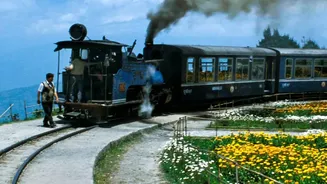
a unique challenge remains: the iconic, often narrow-gauge heritage lines that wind through ecologically sensitive areas. These routes, such as the Kalka-Shimla Railway and the Darjeeling Himalayan Railway, are major tourist attractions. Under a project dubbed 'Hydrogen for Heritage', the railway is introducing trains powered by hydrogen fuel cells, aiming to preserve both the heritage of these lines and the pristine environment they traverse.
What is Green Hydrogen?
So, what makes this technology a game-changer? It starts with hydrogen, the most abundant element in the universe. A hydrogen train uses a fuel cell to generate electricity through a chemical reaction between stored hydrogen and oxygen from the air. The crucial part is the 'green' prefix. Green hydrogen is produced using renewable energy, like solar or wind power, to split water into hydrogen and oxygen through a process called electrolysis. This means the entire energy cycle, from production to consumption, is clean. The only byproduct from the train's operation is water vapour, making it a zero-emission mode of transport at the point of use.
The Technology on the Tracks
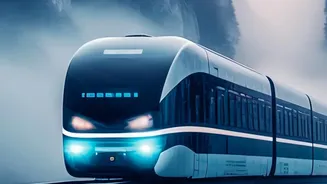
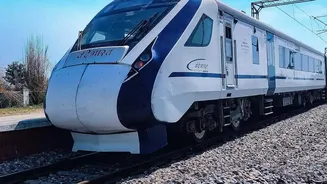
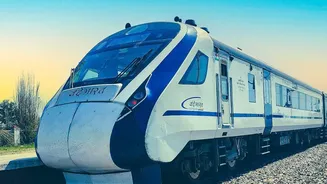
These new trains are essentially electric multiple units (EMUs) that carry their own power source onboard, eliminating the need for overhead wires or diesel engines. An existing Diesel Electric Multiple Unit (DEMU) was first retrofitted for a pilot project on the Jind-Sonipat section in Haryana. This prototype, developed indigenously, consists of coaches with hydrogen fuel cells, batteries for energy storage, and hydrogen storage cylinders. The fuel cell generates electricity to power the motors, and any excess energy or power captured during braking is stored in the batteries for use during acceleration. This hybrid system ensures efficient and silent operation, a stark contrast to the noise and fumes of traditional diesel engines. India's first indigenous hydrogen train was launched on the Jind-Sonipat route on July 17, 2026.
Targeting India's Crown Jewels
The 'Hydrogen for Heritage' initiative specifically targets eight historic routes. These include the Matheran Hill Railway, Darjeeling Himalayan Railway, Kalka-Shimla Railway, Kangra Valley, Bilmora Waghai, Patalpani-Kalakund, Nilgiri Mountain Railways, and the Marwar-Goram Ghat railway. The plan involves running 35 new hydrogen train sets across these corridors. The Kalka-Shimla line, a UNESCO World Heritage site, is a key focus, with plans for hydrogen fuelling stations at Kalka, Shimla, and Barog. By replacing diesel locomotives on these beloved tourist lines, Indian Railways aims to offer a journey that is not only nostalgic and scenic but also environmentally responsible.
The Road Ahead and Its Challenges
The journey to a fully hydrogen-powered heritage railway is still in its early stages. The initial pilot on the Jind-Sonipat route has provided valuable operational data, though it has seen lower-than-expected passenger numbers, prompting a potential extension to Delhi. Successful speed trials have been conducted, reaching up to 120 kmph, demonstrating the technology's capability. However, scaling up the project involves significant investment. The cost includes not just the trains themselves but also the ground infrastructure for hydrogen production, storage, and refuelling at multiple points along these remote hill routes. Despite these hurdles, the initiative is a crucial step, placing India among a select group of nations pioneering hydrogen rail technology and aligning with the country's broader National Green Hydrogen Mission.