
Early September: A Pre-Dawn Planetary Dance
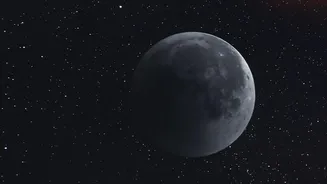
Set your alarms for the mornings of September 6 and 7 for a beautiful celestial gathering. In the pre-dawn hours, a slim crescent Moon will appear very close to Mars in the eastern sky. Look for the pair around 3 a.m. local time. Just a day later, on September 8,
the Moon continues its journey, cozying up to the giant planet Jupiter. This planetary-lunar alignment offers a great photo opportunity and is easily visible to the naked eye, even as the sky begins to lighten before sunrise. Saturn will also be visible in the southwest, completing a grand tour of our planetary neighbours.
September 9: The Epsilon Perseid Meteor Shower
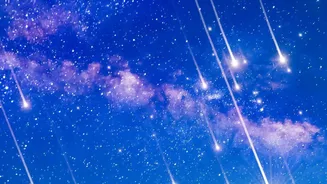
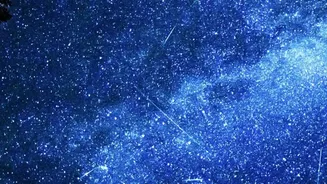
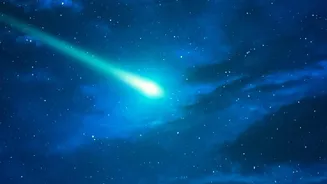
While not as famous as its August counterpart, the September Epsilon Perseid meteor shower provides a wonderful chance to see some shooting stars. Peaking on the night of September 9, this minor shower produces around five to eight meteors per hour. What makes 2026 special is that the peak coincides with excellent viewing conditions, as the Moon will be a thin crescent and won't wash out the display with its light. For the best experience, find a dark location away from city lights after 10 p.m., let your eyes adjust for about 20 minutes, and look towards the constellation Perseus.
September 11-12: The Best Nights for Stargazing
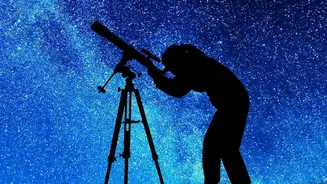
The period around the New Moon on September 11-12 marks the darkest nights of the month. With no moonlight to interfere, it's the ideal time to hunt for faint, deep-sky objects. For those in the Northern Hemisphere, this is one of the last prime opportunities in 2026 to see the dense, glowing core of our own Milky Way galaxy before it sinks below the horizon until next spring. Head to a designated dark-sky park or a rural area, and give your eyes plenty of time to adapt to the darkness to see the star-filled band of the Milky Way stretching overhead.
September 18: Venus Shines at Its Brightest
Often called the "Evening Star," Venus will reach its peak brilliance for its 2026 evening appearance on September 18. It will be unmistakably bright, shining with a dazzling magnitude of -4.8. Look for it in the west just after sunset. Due to its incredible luminosity, Venus is one of the easiest celestial objects to spot, even from brightly lit urban areas. On the same evening, you might also catch a glimpse of the elusive planet Mercury nearby, close to the horizon.
September 26: The Full Harvest Moon and a Distant Planet
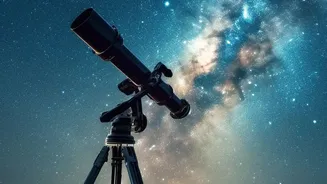
September's grand finale is the full Harvest Moon on Saturday, September 26. This full Moon is the one closest to the autumnal equinox, which occurs on September 22. Traditionally, its bright light helped farmers work late to bring in their crops. The best time to watch is as it rises around sunset, when an optical effect called the "moon illusion" makes it appear enormous and vibrantly orange on the horizon. But the Moon won't be alone; the ringed planet Saturn will be its celestial companion for the night, trailing nearby. On the same night, far-flung Neptune will be at opposition, its closest and brightest point to Earth for the year. While you'll need at least a good pair of binoculars or a small telescope to spot Neptune's faint, blue-green dot in the constellation Pisces, it's a rewarding challenge for dedicated skywatchers.