








The Real Science of Muscle Growth
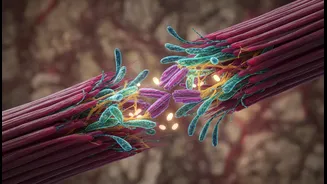
It might sound counterintuitive, but the magic of muscle building doesn't actually happen while you're lifting weights. That intense gym session is just the trigger. When you perform strenuous exercise, you're creating microscopic tears in your muscle fibres.
This is a normal and necessary part of the process. The real growth and strengthening occur after your workout, during the recovery period. It's when you rest that your body gets to work repairing these tiny tears, fusing the fibres back together and making them thicker and stronger than before to withstand the next challenge. Without this crucial downtime, you're only breaking down muscle, not building it.
Sleep: The Ultimate Performance Enhancer
If there's one non-negotiable tool for recovery, it's sleep. This is when your body's repair shop is truly open for business. During the deep stages of sleep, your pituitary gland releases Human Growth Hormone (HGH), which is vital for tissue repair and muscle growth. Studies have shown that a lack of sleep can significantly reduce the production of this hormone, which can lead to loss of muscle mass and reduced exercise capacity. Furthermore, poor sleep can increase levels of cortisol, a stress hormone that breaks down muscle tissue. Aiming for 7-9 hours of quality, uninterrupted sleep per night isn't just good for your mind; it's essential for rebuilding your body and ensuring your hard work in the gym pays off.
Fueling the Rebuild: What to Eat
Your muscles can't rebuild themselves out of thin air. Post-workout nutrition is a critical part of the recovery equation, following what experts often call the '3 Rs': Rehydrate, Refuel, and Rebuild. Rehydrating with water is crucial to replace fluids lost through sweat. Refueling involves consuming carbohydrates to replenish your muscle's primary energy source, called glycogen, which gets depleted during exercise. Finally, and most famously, rebuilding requires protein. Consuming high-quality protein (like that from eggs, milk, yoghurt, or lentils) within a couple of hours after exercise provides your body with the necessary amino acids to repair those muscle micro-tears and synthesise new muscle tissue.
The Art of the Rest Day
Rest days are not a sign of weakness; they are a sign of smart training. But a rest day doesn't have to mean being completely sedentary. This is where the concepts of 'active' and 'passive' recovery come in. Passive recovery is complete rest—no physical exertion. This is necessary when you are injured, exhausted, or after a particularly grueling workout. Active recovery, on the other hand, involves low-intensity movement like a gentle walk, stretching, or a relaxed yoga session. This type of activity can actually aid recovery by increasing blood flow to the muscles, which helps deliver nutrients and clear out metabolic waste products faster than complete rest. Alternating intense training days with active recovery days can be a powerful strategy for consistent progress.
Listen to Your Body: Avoiding Overtraining
More is not always better. Pushing your body too hard without adequate rest can lead to Overtraining Syndrome (OTS), a state where your body is under so much stress that your performance declines. Signs of overtraining include persistent muscle soreness, chronic fatigue, a decline in performance, mood changes like irritability, poor sleep quality, and even an increase in getting sick. If you notice these symptoms, it's a clear signal from your body that it needs more rest. True fitness is a long-term journey, and learning to listen to your body's signals for rest is just as important as pushing your limits.