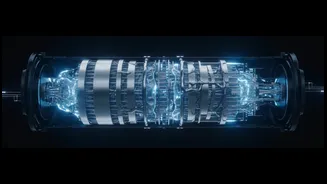







The Promise of Pure Lithium
For decades, lithium-ion batteries have been the gold standard, powering everything from smartphones to electric cars. They work by shuttling lithium ions between a graphite anode and a cathode. But this chemistry is approaching its theoretical limits.
To achieve a true step-change in performance, researchers are turning to the holy grail of battery anodes: pure lithium metal. Using lithium metal instead of graphite could dramatically increase energy density, a key metric for EV range. A lithium-metal anode has a theoretical capacity nearly ten times higher than graphite, meaning it can store significantly more energy in the same amount of space, or the same energy in a much lighter package.
The Gains for EV Drivers
If successfully commercialized, a new generation of rechargeable lithium-metal batteries could transform the EV experience. The primary benefit is a massive boost in energy density. Current lithium-ion cells in EVs top out around 250-300 watt-hours per kilogram (Wh/kg), while some new lithium-metal designs have demonstrated energy densities exceeding 450 or even 500 Wh/kg in a lab setting. For a driver, this could translate directly into much longer driving ranges, potentially pushing past 1,000 kilometres on a single charge. Beyond range, these new designs also promise faster charging. Some prototypes have shown the ability to charge to 80% in as little as 10 to 15 minutes, addressing one of the major pain points for current EV owners.
A Breakthrough in Dendrite Control
The main reason lithium-metal batteries have remained experimental for so long is a problem called dendrites. During charging, tiny, needle-like whiskers of lithium can grow on the anode. These dendrites can pierce the separator between the anode and cathode, causing a short circuit, which can lead to battery failure and even fire. Recent breakthroughs have focused on finally taming this issue. One promising approach involves using a solid-state electrolyte—a thin, solid material that replaces the flammable liquid electrolyte used in conventional batteries. This solid barrier is physically better at blocking dendrite growth. Other new designs focus on creating intelligent protective layers or engineering the surface of the anode itself to encourage lithium to deposit smoothly, preventing dendrites from forming in the first place.
What Still Needs Checking: The Reality List
Despite exciting lab results, several major hurdles must be cleared before these batteries are in your next car. The first is cycle life. While some new designs show impressive stability, they must prove they can withstand thousands of charge and discharge cycles over a 10-to-15-year lifespan without significant degradation. Real-world performance is another question; a battery that works well in a lab must also function safely and reliably in extreme heat and cold. Finally, there is the challenge of cost and scale. New materials and complex manufacturing processes often start out extremely expensive. Building factories to produce these advanced cells at a giga-scale is a monumental task that requires immense investment and solving engineering problems that don't exist in a lab. Existing manufacturing knowledge from lithium-ion doesn't always translate well to these new designs, especially solid-state batteries.