






The Problem Beneath Our Cities
Many of India's major metropolitan areas, including Delhi, Bengaluru, Chennai, and Hyderabad, are facing a severe water crisis. These cities depend heavily on groundwater, which is stored in natural underground reservoirs called aquifers. However, rapid
urbanisation and relentless extraction mean we are pumping out water much faster than nature can put it back. This over-extraction leads to dangerously low water tables, forcing municipalities to ration supplies and residents to rely on expensive water tankers. In some cities, the groundwater extraction rate is over 100%, meaning the resource is being actively depleted, a situation described by authorities as 'over-exploited'. This not only threatens our water security but can also cause the land itself to sink, a phenomenon known as subsidence.
How Simple Pipes Offer a Solution
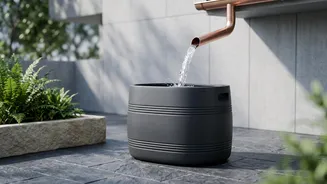
Rainwater harvesting (RWH) is a straightforward process: instead of letting precious rainwater run off concrete surfaces and into drains, you capture it. A basic system for a home involves connecting the gutters on your rooftop to a series of pipes. These pipes direct the water through a simple filter to remove leaves and debris and then into a storage tank. This collected water can be used for a variety of non-potable needs like gardening, washing cars, and flushing toilets. The setup is relatively simple and doesn't require major structural changes, making it viable for both independent houses and apartment complexes.
Directly Reducing Your Reliance
The most immediate benefit of an RWH system is the reduction in your household's demand for municipal or tanker water. An average urban Indian household can consume between 500 to 800 litres of water daily. By using stored rainwater for tasks that don't require potable water, you directly lower the amount you draw from the grid. This can lead to a significant reduction in your monthly water bills, with some households reporting savings of up to 50%. In cities like Bengaluru and Chennai, where tanker dependency is high, the return on investment for an RWH system can be as short as two to three years. This creates a self-sufficient water source for many of your needs, providing a buffer during periods of water shortage or supply cuts.
Giving Back to the Ground
Beyond just storing water for personal use, RWH plays a crucial role in actively replenishing the depleted aquifers. This process is called groundwater recharge. When a storage tank is full, the overflow can be channelled into a specially designed recharge pit or percolation well. This structure allows the excess rainwater to slowly seep into the earth, bypassing dense layers of clay and concrete to reach and refill the underground aquifers. By facilitating this recharge, homeowners are not just taking pressure off the system; they are actively helping to restore it. Many housing societies have reported that their borewells, which had previously run dry, became productive again after implementing rainwater harvesting with recharge pits.
Is It Practical for Your Home?
The idea of installing a new system can seem daunting, but modern RWH solutions are designed to be practical and adaptable. The cost for a basic residential system in India can range from ₹15,000 to ₹40,000, depending on the roof size and tank capacity. More comprehensive systems with larger storage and filtration can cost more, but many state governments offer subsidies and incentives to encourage adoption. Maintenance is also relatively low, typically involving cleaning the filters and tank before and after the monsoon season. In fact, in over 15 major cities, including Delhi, Mumbai, and Chennai, rainwater harvesting is now mandatory for new buildings above a certain size, highlighting its importance in urban planning.