



Embrace Hyper-Local Flowers
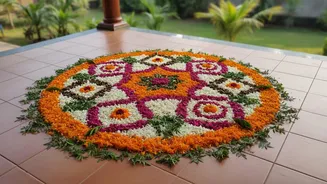
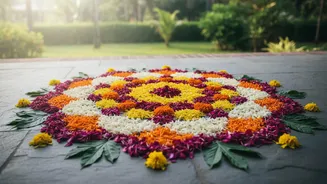
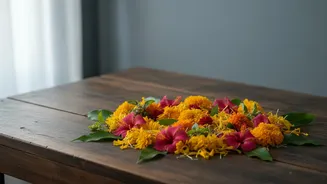
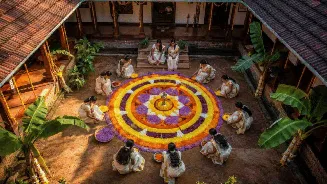
The most authentic pookkalams have always used flowers that grow locally. Traditionally, children would gather blooms from their own gardens and neighbourhoods. Revive this practice by looking for traditional Onam flowers like the white Thumba (Leucas
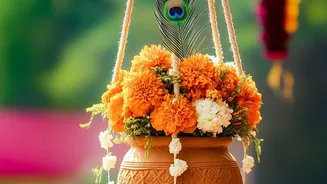
aspera), red Chethi (Ixora), and yellow Mukkutti. Unlike commercially grown flowers that are often transported over long distances, using flowers from your garden or local community reduces your carbon footprint. This approach not only connects you to the original spirit of the festival but also supports local biodiversity. Marigolds, hibiscus, and jasmine are also wonderful, widely available options that add vibrancy.
Go Beyond Petals: Use Nature’s Full Palette
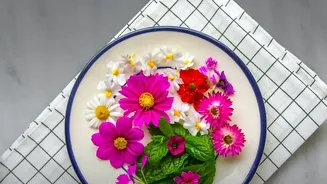
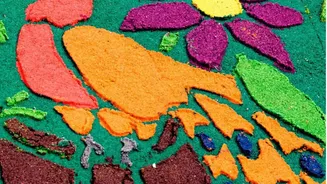
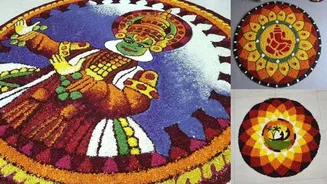
A sustainable pookkalam isn't limited to just flower petals. Nature offers a diverse palette of textures and colours. Incorporate various leaves for shades of green and interesting shapes. Fallen leaves, beads, and even colourful seeds can be used to create an earthy and unique design. Think about using coloured rice, pulses, or lentils for sections of your design. These materials are fully biodegradable and add a wonderful mosaic-like quality to your artwork. This practice reduces flower consumption and encourages creativity with everyday natural items.
Choose a Biodegradable Base
Modern pookkalams are sometimes laid out on plastic sheets for convenience, but these contribute to waste. The traditional method is to prepare a clean patch of earth or a floor, sometimes plastered with cow dung. For a clean and eco-friendly alternative in an apartment or modern home, consider using a large banana leaf, a woven grass mat, or a plain cardboard sheet as your base. You can draw your outline directly on these surfaces with chalk or rice flour. These materials will break down naturally after the festival, leaving no trace behind.
Create Your Own Natural Colours
If you are using materials like rice or sawdust to fill parts of your design, avoid synthetic dyes. You can create your own beautiful, subtle colours from common kitchen ingredients. Turmeric powder mixed with water creates a brilliant yellow, while beetroot juice provides a deep pink or red. Spinach or mint leaves can be crushed to make a green dye. These natural pigments are completely safe, non-toxic, and free from chemicals, making your pookkalam safer for children and pets who may be nearby.
Light It Up with Earthen Lamps
To add a festive glow to your pookkalam, especially in the evening, skip the electric fairy lights. Instead, use traditional terracotta or earthen diyas. Placing these small lamps around your floral carpet enhances its beauty with a warm, flickering light that feels both authentic and spiritual. You can fill them with plant-based oils, making them a much more sustainable lighting option than battery-operated or electric decorations. This simple switch honours tradition while conserving energy.
Mindful Disposal: Complete the Green Cycle
The sustainability of your pookkalam extends to how you dispose of it. A truly eco-friendly floral carpet should not end up in a plastic garbage bag. Since you've used only natural and biodegradable materials, the flowers, leaves, and other elements can be returned to the earth. Gather the used materials and add them to your compost bin. If you don't have a compost system, you can simply scatter them in your garden. This act of returning organic matter to the soil is a perfect end to a festival that celebrates nature's harvest.