





The Facts: What Are the Current Rules for Indians?
The era of visa-free travel to Thailand for Indian passport holders has ended. As of mid-2026, India has been moved back to the Visa on Arrival (VoA) category. This means you can get a visa for a 15-day stay upon landing at designated airports, for a fee
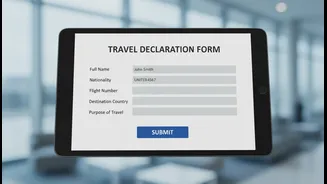
of 2,000 Thai Baht (approximately ₹5,700-₹5,900), which must be paid in cash. If your trip is longer than 15 days, you must apply for a 60-day tourist e-Visa online before you travel. Another key change is the mandatory Thailand Digital Arrival Card (TDAC). All foreign travellers must complete this online form within 72 hours before arriving, which generates a QR code that will be scanned by immigration. The old paper-based TM.6 arrival card is no longer in use.
Practical Impact: The 'Proof of Funds' Check
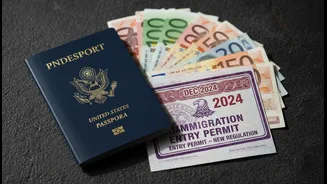
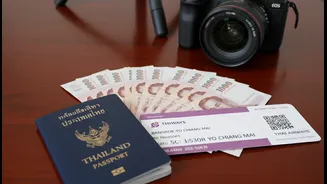
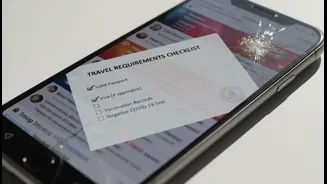
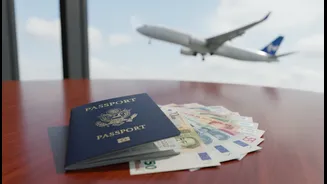
One of the most discussed changes is the stricter enforcement of showing proof of funds. While this isn't a new rule, recent advisories from the Indian Embassy in Bangkok and the Tourism Authority of Thailand highlight that immigration officers may ask travellers to prove they have sufficient money for their trip. For those using the Visa on Arrival facility, the recommended amount is at least 10,000 THB per person (around ₹29,000) or 20,000 THB per family (around ₹58,000). Some official guidance even suggests 20,000 THB per person. It's strongly advised to carry this amount in cash, as checks are random and at the discretion of the immigration officer. Failure to provide proof if asked could lead to delays or even refusal of entry. Beyond cash, you must also have a passport valid for at least six months, a confirmed return ticket, and proof of accommodation for your entire stay.
On the Ground: What to Expect at Immigration
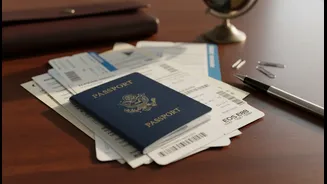
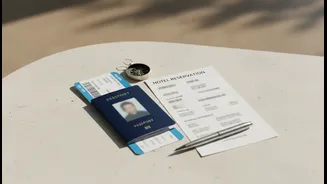
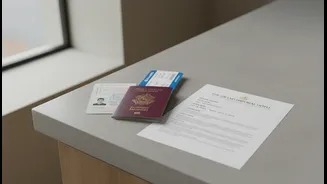
The practical impact for travellers is that you need to be more organised. With the end of the visa-free scheme, you can no longer assume a seamless walk through immigration. Be prepared for closer scrutiny of your documents. This means having your passport, TDAC QR code, hotel bookings, return flight confirmation, and cash ready for inspection. Families and groups should ensure each individual carries their own set of documents. The changes are part of Thailand's broader strategy to manage the high volume of tourism, which saw over 1.6 million Indian visitors in 2025, and to curb issues like visa overstays and unauthorised work. Travellers intending to work in Thailand are explicitly warned not to use a tourist visa or VoA, as this violates immigration law and can lead to serious penalties.
Remaining Questions: Navigating the Grey Areas
While the core rules are becoming clearer, some ambiguity remains. A significant point of uncertainty earlier in 2026 was when the visa-free scheme would officially end, as the change required publication in the Royal Gazette. Reports from early July 2026 confirm the visa-free policy for Indians has indeed ended. However, there is still some conflicting information about the exact amount of funds to carry, with some sources citing 10,000 THB and others 20,000 THB per person. The most practical advice is to be prepared for the higher amount. The consistency of enforcement is another open question; checks for proof of funds are described as random, meaning not every tourist will be asked. Ultimately, the final decision to grant entry rests with the individual immigration officer at the checkpoint.