




The Mountain of Runs
For 24 years, Sachin Tendulkar wasn't just a batsman; he was a statistical marvel. His career totals are a testament to longevity, consistency, and unparalleled skill. He is the leading run-scorer in both Test and One-Day International (ODI) cricket,
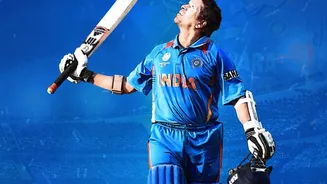
with 15,921 and 18,426 runs respectively. He played more Tests (200) and ODIs (463) than anyone in history. The crowning achievement remains the one that once felt like a myth: 100 international centuries. He reached this historic milestone on March 16, 2012, against Bangladesh, combining his 51 Test centuries with 49 in ODIs. Before him, no male cricketer had scored a double century in a one-day game, a barrier he broke in 2010. These numbers aren't just records; they form the very spine of cricket's modern history books.
The Weight of a Billion Dreams
Beyond the sheer volume of runs, Tendulkar's legacy is defined by the context in which he scored them. From his debut as a 16-year-old in 1989, he became the symbol of a rising India. In the 1990s, as India's economy opened up, Tendulkar became the face of a new, confident nation. His presence at the crease was a source of national hope. When he walked out to bat, streets emptied and a nation held its breath. This immense pressure was a constant companion. The phrase "Sachin is out" often signalled a collective loss of hope for Indian fans. He was the gleaming receptacle into which the steaming expectations of the Indian public were poured. He carried this weight with a quiet dignity that only added to his legend.
A Master of the Craft
Tendulkar was a technician of the highest order. His batting was built on a foundation of perfect balance, a classical technique, and an innovative mind. The straight drive, executed with minimal follow-through, was his signature shot—a thing of beauty and power. Yet, he was also an innovator, developing shots like the uppercut to counter fast, rising deliveries. He reinvented himself multiple times throughout his career, adapting to injuries, changing formats, and the relentless analysis of opponents. His evolution from an aggressive opener who changed the face of ODI batting in the 90s to a more measured, cerebral accumulator of runs in his later years showcased his deep understanding of the game.
The Icon of a Generation
Tendulkar’s influence transcended the cricket field, making him a cultural icon whose popularity cut across class, region, and religion. He became a unifying figure in a diverse nation, a symbol of excellence and aspiration. His rise coincided with the boom of satellite television in India, which amplified his celebrity and turned him into a media and marketing phenomenon. But his image resonated so deeply because it was built on more than just skill; it was built on character. Known for his humility and sportsmanship, he became a role model for an entire generation of Indians, including many future cricket stars who grew up idolizing him.
An Enduring Legacy
Years after his emotional retirement in 2013, Tendulkar's influence remains palpable. He didn't just inspire a generation of players; he fundamentally shaped the ecosystem of modern cricket. His immense popularity was a key driver in making India the financial powerhouse of the sport, dramatically increasing the value of media rights and sponsorships. His career helped establish cricket as a viable and lucrative profession for millions of aspiring youngsters in India. Beyond the game, he has continued to be a public figure, lending his voice to social causes like health and hygiene through his work with UNICEF. He is the first sportsperson to be awarded the Bharat Ratna, India's highest civilian honour, a testament to his status not just as a great cricketer, but as a national treasure.