




Jupiter: The King in the Morning
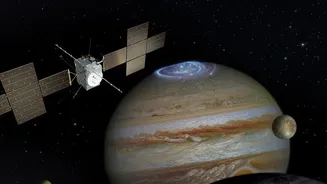
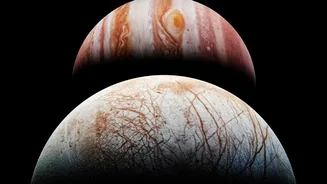
Jupiter, the largest planet in our solar system, will be a dominant and unmissable object in the pre-dawn sky throughout October. It will appear as a brilliant, steady, cream-coloured light in the eastern sky. Unlike stars, it won’t twinkle. The best
time to look for Jupiter is in the early morning hours, before the light of sunrise washes it away. It rises in the east-northeast a few hours after midnight and will climb higher as dawn approaches. While perfectly visible to the naked eye, a simple pair of binoculars or a small telescope will enhance the view, potentially revealing up to four of its largest moons, known as the Galilean moons. This month offers a fantastic opportunity to become familiar with the king of planets as it graces our morning.
The Main Event: A Lunar Encounter
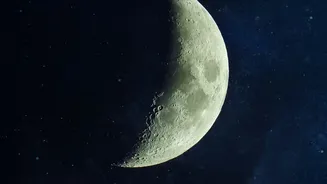
The highlight for many sky-watchers will be the close approach of the Moon and Jupiter. On the morning of October 6, 2026, a beautiful waning crescent Moon will pass very close to the giant planet. This pairing, or conjunction, makes finding Jupiter incredibly easy: just look for the brightest point of light near the crescent Moon in the eastern pre-dawn sky. For observers in some parts of the world, including North America, the Moon will actually pass in front of Jupiter in an event called a lunar occultation. While the full occultation won't be visible from India, the close pairing will still be a spectacular sight, offering a wonderful photo opportunity for early risers. Look east from about 3:00 AM until dawn for the best view of this celestial meeting.
Finding the Seven Sisters
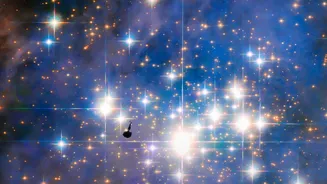
The Pleiades, also known as the Seven Sisters or M45, is one of the most beautiful and easily recognisable star clusters in the night sky. It looks like a tiny, shimmering dipper of stars. October marks the beginning of the prime viewing season for the Pleiades in the Northern Hemisphere, when it becomes visible in the evening sky and stays out for much of the night. To find it, look towards the constellation of Taurus. An easy way to locate it is to first find the famous constellation Orion, and then follow the line of his belt stars upwards and to the right, past the bright reddish star Aldebaran, until you see a small, sparkling patch of blue-white stars. While six or seven stars are typically visible to the naked eye, the cluster actually contains over a thousand. A pair of binoculars will reveal dozens more.
The Moon Meets the Pleiades
October 2026 offers another special lunar event, this time involving the Pleiades. On the night of October 27-28, the Moon will pass close to the famous star cluster. The Moon will be in its waning gibbous phase, meaning it will be quite bright. This brightness might make it a little harder to see the fainter stars of the cluster with the naked eye, so binoculars are highly recommended for this event. They will help cut through the moonlight and reveal the delicate beauty of the Seven Sisters huddled near our celestial neighbour. This event will be visible for most of the night, rising in the east in the evening.
Tips for Your Stargazing Night
To make the most of these celestial events, a little preparation goes a long way. First, try to find a location away from bright city lights. Light pollution washes out fainter objects like the Pleiades. Even moving to a local park or a darker rooftop can make a significant difference. Second, give your eyes time to adapt to the darkness; it takes about 20-30 minutes for them to become fully sensitive to faint light. Avoid looking at your bright phone screen. Finally, while all these objects are visible with the naked eye, binoculars are a stargazer's best friend. They will dramatically improve your view of Jupiter's moons and reveal the true, sprawling nature of the Pleiades cluster.