



The Science of Ripening
The transformation from a green, firm banana to a yellow, soft one is a fascinating natural process driven by a plant hormone called ethylene. As a 'climacteric fruit', a banana continues to ripen even after it's picked from the tree. Ethylene gas triggers
enzymes within the fruit to start breaking down complex starches and cell walls. The most important change is the conversion of starch into simple sugars like fructose, glucose, and sucrose. This is what makes a ripe banana noticeably sweeter than its green counterpart. Another enzyme, pectinase, works on breaking down pectin, the substance that keeps the fruit's structure firm, leading to that familiar soft, sometimes mushy, texture of a fully ripe banana.
The Sweetness Factor: Starch vs. Sugar
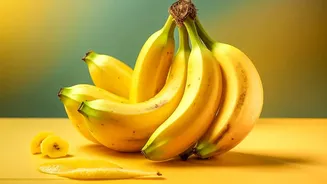
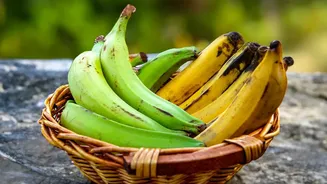
An unripe, green banana is not very sweet for a simple reason: its carbohydrate content is mostly made up of resistant starch. In fact, starch can constitute up to 80-90% of the carbohydrates in a green banana. As the banana ripens, enzymes convert this starch into simple sugars. A fully yellow banana with brown spots might have very little starch left, with most of it converted to sugar, making it an intensely sweet snack. This high sugar content is why very ripe bananas are a favourite for baking, as they provide natural sweetness and moisture to recipes like banana bread.
Texture and Mouthfeel
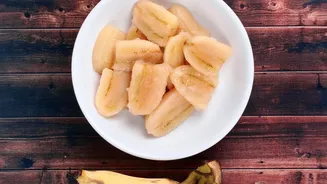
The texture difference is one of the most immediate things you'll notice. A green banana is firm, waxy, and can feel slightly dry or starchy in the mouth. This is due to its high concentration of resistant starch and intact pectin, which provides structural integrity. As the banana ripens and pectin breaks down, the texture softens dramatically. A perfectly ripe yellow banana is tender, while an overripe one with many brown spots becomes soft and mushy. This softer texture makes ripe bananas easier to digest for many people, as the complex carbs have already been broken down into more accessible sugars.
Digestive Health and Gut Benefits
This is where green bananas truly shine. Their high levels of resistant starch and pectin act as prebiotics. Since resistant starch isn't digested in the small intestine, it travels to the large intestine where it becomes food for your beneficial gut bacteria. This process can improve overall gut health, promote feelings of fullness, and aid in weight management. Because of this, unripe bananas have a lower glycemic index (GI), meaning they cause a slower, more gradual rise in blood sugar. Ripe bananas, with their higher simple sugar content, are digested more quickly, providing a rapid source of energy but also causing a faster spike in blood sugar.
Nutritional Profile and Antioxidants
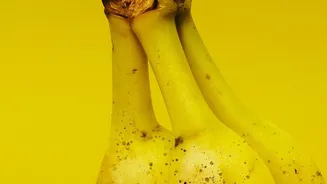
While the core nutrients like potassium, vitamin B6, and vitamin C are present at all stages of ripeness, their bioavailability and other compounds can change. Interestingly, as a banana ripens and develops brown spots, its antioxidant levels increase. These spots are a sign that chlorophyll has broken down, leading to higher levels of antioxidants that can help protect your body from oxidative stress. While some vitamins might slightly degrade as the banana becomes overripe, the boost in antioxidants is a significant benefit.
Which Banana Is Best for You?
The 'best' banana ultimately depends on your health goals and taste preferences. If you are managing blood sugar levels or looking to boost your gut health with prebiotics, the firm, less sweet green banana is your ideal choice. They are also excellent in savoury dishes, where they can be fried or used in curries much like a plantain. If you need a quick energy boost before a workout, want an easily digestible snack, or are looking for natural sweetness for smoothies and desserts, a ripe yellow banana is perfect. Those with brown spots are antioxidant powerhouses and are the top choice for baking.