
The Main Event: The Perseid Meteor Shower
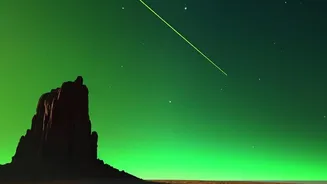
August’s undisputed headliner is the Perseid meteor shower, one of the best and brightest of the year. Active from mid-July to late August, the shower is expected to peak on the night of August 12 and into the early morning of August 13, 2026. This year’s
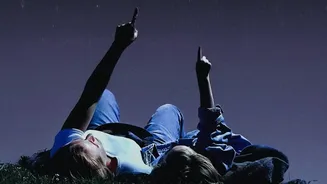
viewing conditions are practically perfect. The peak coincides with the New Moon, meaning the sky will be exceptionally dark, allowing even faint meteors to shine. The Perseids are famous for producing bright, fast-moving meteors and the occasional dazzling fireball. For the best experience, find a spot away from city lights, lie back on a blanket or chair, and simply look up. Give your eyes about 20-30 minutes to adjust to the darkness. The meteors will appear to radiate from the constellation Perseus but can be seen streaking across any part of the sky. In a dark location, you could see up to 75 meteors per hour.
Planet Spotting: A Parade of Worlds
August 2026 is a fantastic month for planet watchers. Several planets are making notable appearances. Throughout the month, super-bright Venus dominates the western sky shortly after sunset. In the early morning hours before sunrise, you can catch a parade of other worlds. Reddish Mars and yellowish Saturn are both easily visible to the naked eye. Around August 12, a six-planet alignment will stretch across the pre-dawn sky, featuring Saturn, Neptune, Mars, Uranus, Jupiter, and Mercury. While Neptune and Uranus require binoculars or a telescope, you can spot Mars and Saturn without any special equipment. Jupiter and Mercury will be very low on the eastern horizon, making them a bit more of a challenge to spot in the morning twilight.
Constellation Hunting for Newcomers
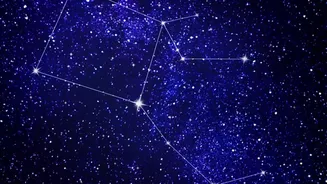
Finding constellations can feel daunting, but a few prominent patterns make it easy for beginners. High in the sky this month is the Summer Triangle, which isn't a single constellation but an asterism formed by three brilliant stars from three different constellations. Look for the brightest overhead star, which is Vega in the constellation Lyra. The other two corners are marked by Deneb (in Cygnus, the Swan) and Altair (in Aquila, the Eagle). Another easy-to-find shape is the distinctive hook of Scorpius, the Scorpion, which sits high in the southern sky in the early evening. Its brightest star, the reddish Antares, marks the scorpion's heart. Using a free stargazing app on your phone can be a great help in identifying these and other celestial patterns.
Don't Forget the Moon
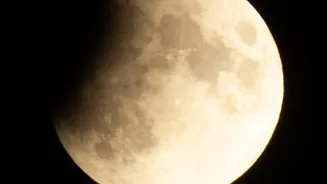
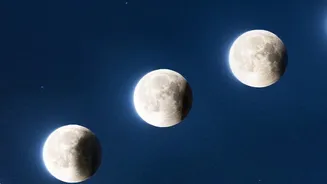
The Moon itself offers some beautiful sights this month. The New Moon on August 12 creates perfect conditions for the Perseids. But keep an eye out for two other major events. That same day, a total solar eclipse will occur, though it will only be visible from parts of Europe, not from India. More accessible for many will be the deep partial lunar eclipse on the night of August 27-28, during the Full Moon. At its peak, nearly the entire Moon will pass into Earth's dark shadow, potentially giving it a reddish hue often called a 'Blood Moon'. This event will be visible from the Americas and parts of Europe and Africa.
Tips for a Great Night Out
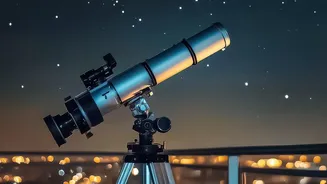
Getting the most out of your skywatching experience is simple. First, escape light pollution. The darker your location, the more you will see. Even a park or a field on the edge of town is better than a city centre. Second, be patient. It takes your eyes about 20-30 minutes to fully adapt to the dark, so avoid looking at your bright phone screen. If you need a light, use a red torch to preserve your night vision. Finally, get comfortable. A reclining chair, a blanket, and some warm clothes will make your stargazing session much more enjoyable. You don't need expensive gear to start; your eyes are the most important tool you have.