

The Sun's Mid-Life
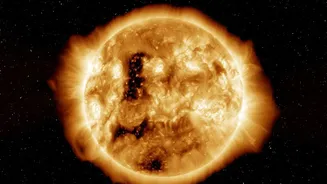
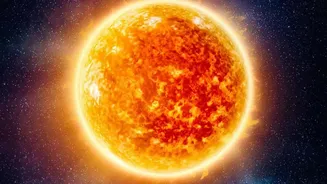
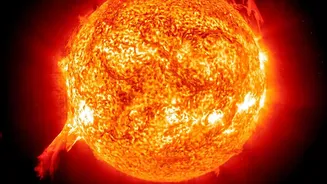
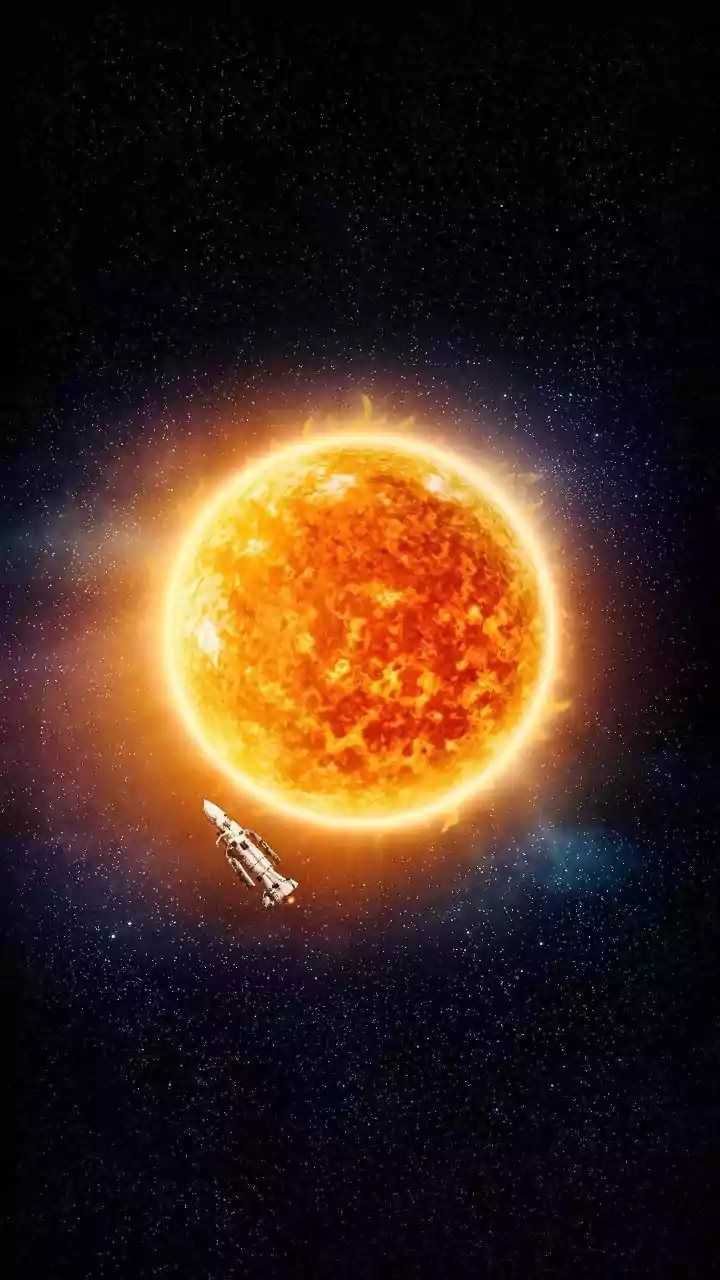
Right now, our sun is a middle-aged star, roughly 4.6 billion years old. It is in what is called its 'main sequence' phase, steadily fusing hydrogen atoms into helium in its core. This process releases a tremendous amount of energy, which we experience
as heat and light. This stable period is the longest part of a star’s life, and our sun is about halfway through it. For the next 5 billion years or so, it will continue to shine much as it does today, providing the energy that sustains life on Earth. But deep in its core, the fuel for this fusion reaction is slowly but surely running out, setting the stage for a radical and violent transformation that will reshape our entire solar system.
The Beginning of the End
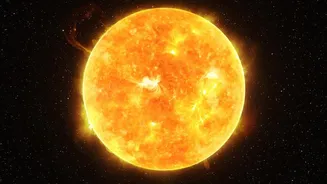
Once the hydrogen in the sun's core is exhausted, gravity will cause the core to contract and heat up. This increased temperature will ignite a shell of hydrogen surrounding the core, causing the sun's outer layers to expand dramatically. This marks the beginning of its transformation into a red giant. Over millions of years, the sun will swell to more than 200 times its current size, becoming a bloated, reddish star. Its surface will cool, but its sheer size means it will be far more luminous than it is today, drastically changing the environment of the entire solar system.
Engulfing the Inner Worlds
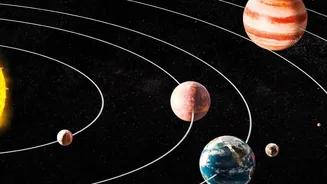
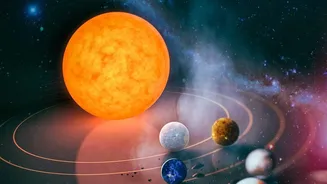
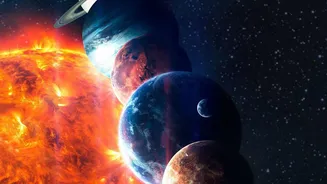
As the sun expands into a red giant, its outer atmosphere will extend far beyond its current boundaries. The first casualties of this expansion will be the innermost planets. Mercury and Venus, being closest to the sun, have no chance of escape; they will be vaporized and consumed by the star's fiery outer layers. For a long time, the fate of Earth was less certain. Some models suggested our planet might be pushed into a wider orbit by the sun's mass loss, allowing it to survive. However, more recent studies suggest that the drag from the sun's expanded atmosphere will slow Earth's orbit, causing it to spiral inward to its doom. While not definitively settled, the consensus is leaning towards Earth being engulfed along with its celestial neighbours.
A Brief, Beautiful Display
After the red giant phase, the sun will have exhausted its available fuel. The helium in its core will have fused into carbon and oxygen, but the sun is not massive enough to ignite these heavier elements. The dying star will then puff its outer layers of gas and dust out into space. This ejected material will form a vast, glowing shell known as a planetary nebula. For a few tens of thousands of years, the remnants of our sun will illuminate this cloud of its own making, creating a beautiful, intricate structure visible across the galaxy. It is a star's final, fleeting moment of grandeur before it fades into darkness.
The Long, Cold Twilight
At the centre of the planetary nebula, the sun's core will remain. This incredibly dense, Earth-sized remnant is called a white dwarf. Initially, it will be extremely hot, but with no fusion to power it, it will simply cool down over billions and billions of years, eventually becoming a cold, dark cinder known as a black dwarf. The surviving planets of our solar system, including Mars, Jupiter, Saturn, Uranus, and Neptune, will continue to orbit this dead star. Their atmospheres will have been stripped away, and their surfaces will be frozen in a permanent, starless night. The solar system as we know it will be a dark, silent, and frigid graveyard orbiting the ghost of the star that once gave it life.