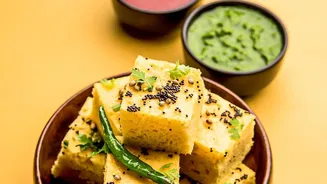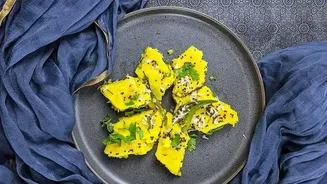



Dhokla from Gujarat
A trip to Western India is incomplete without savouring Dhokla. This iconic Gujarati snack is a soft, spongy, and savoury steamed cake made from a fermented batter of gram flour (besan). The fermentation process not only gives it a delightful tangy flavour
but also makes it light and easy to digest. Once steamed, it's often tempered with mustard seeds, sesame seeds, and curry leaves, and garnished with fresh coriander. Because it's steamed rather than fried, Dhokla is incredibly low in oil, making it a popular choice for a healthy breakfast or a light evening snack. It’s a perfect example of how traditional Indian food can be both delicious and nutritious without being heavy.
Pesarattu from Andhra Pradesh
From the south comes Pesarattu, a protein-packed crepe from Andhra Pradesh that looks like a dosa but is distinctly different. The name itself comes from two Telugu words: 'pesara' (moong dal) and 'attu' (dosa). The batter is made by soaking and grinding whole green moong beans with ginger, cumin seeds, and green chillies. Unlike a traditional dosa, the batter requires no fermentation and can be used almost immediately. Cooked on a hot griddle with just a hint of oil until crisp, it's a wonderfully wholesome and gluten-free option. Often served with a side of ginger chutney, this nutritious snack keeps you full and energised.
Litti from Bihar
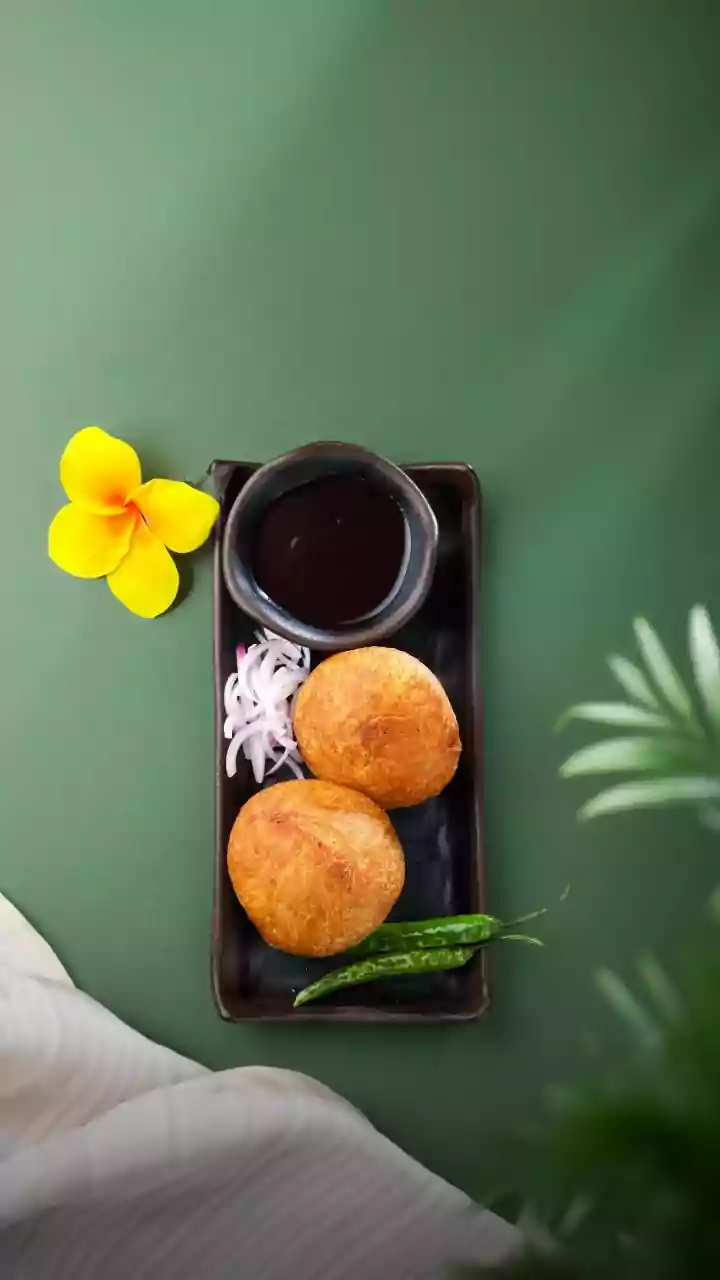
Travel east to Bihar to find Litti, a rustic and robust snack that is traditionally roasted over coal or cow-dung embers. Modern preparations often involve baking them in an oven, which keeps the oil content minimal. Litti consists of whole wheat dough balls stuffed with a flavourful mixture of roasted gram flour (sattu), herbs, and spices like ajwain and mango pickle masala. The roasting process gives it a smoky aroma and a firm, satisfying texture. Litti is traditionally served drenched in ghee, but you can easily control the amount you use. It's often paired with 'chokha', a mash of roasted eggplant, potatoes, and tomatoes, creating a complete and hearty meal.
Siddu from Himachal Pradesh
Hailing from the picturesque hills of Himachal Pradesh, Siddu is a comforting steamed bread that is perfect for cooler weather. It is a local delicacy, especially popular in the Kullu, Manali, and Shimla regions. Made from a leavened wheat flour dough, Siddu is stuffed with various fillings, with savoury versions often containing a paste of walnuts, poppy seeds, or urad dal. The dough is left to rise for a few hours before being filled and steamed for about 20 minutes until cooked through. This steaming method ensures the snack is soft, fluffy, and completely oil-free. It is typically served hot with a generous dollop of ghee and a side of green chutney, offering a warm and nourishing treat.
Kothimbir Vadi from Maharashtra
A beloved Maharashtrian tea-time snack, Kothimbir Vadi translates to coriander slices ('kothimbir' for coriander and 'vadi' for slices or cubes). It's made from a thick batter of gram flour (besan) and a generous amount of fresh coriander leaves, along with spices. The mixture is first steamed in a pan until it sets into a firm cake. This steamed cake can be enjoyed as is for the healthiest, no-oil version. For a slightly crispier texture, the steamed pieces are often pan-fried with very little oil until golden brown on the outside, while remaining soft on the inside. This two-step process offers a delicious way to enjoy a crunchy yet healthy snack.