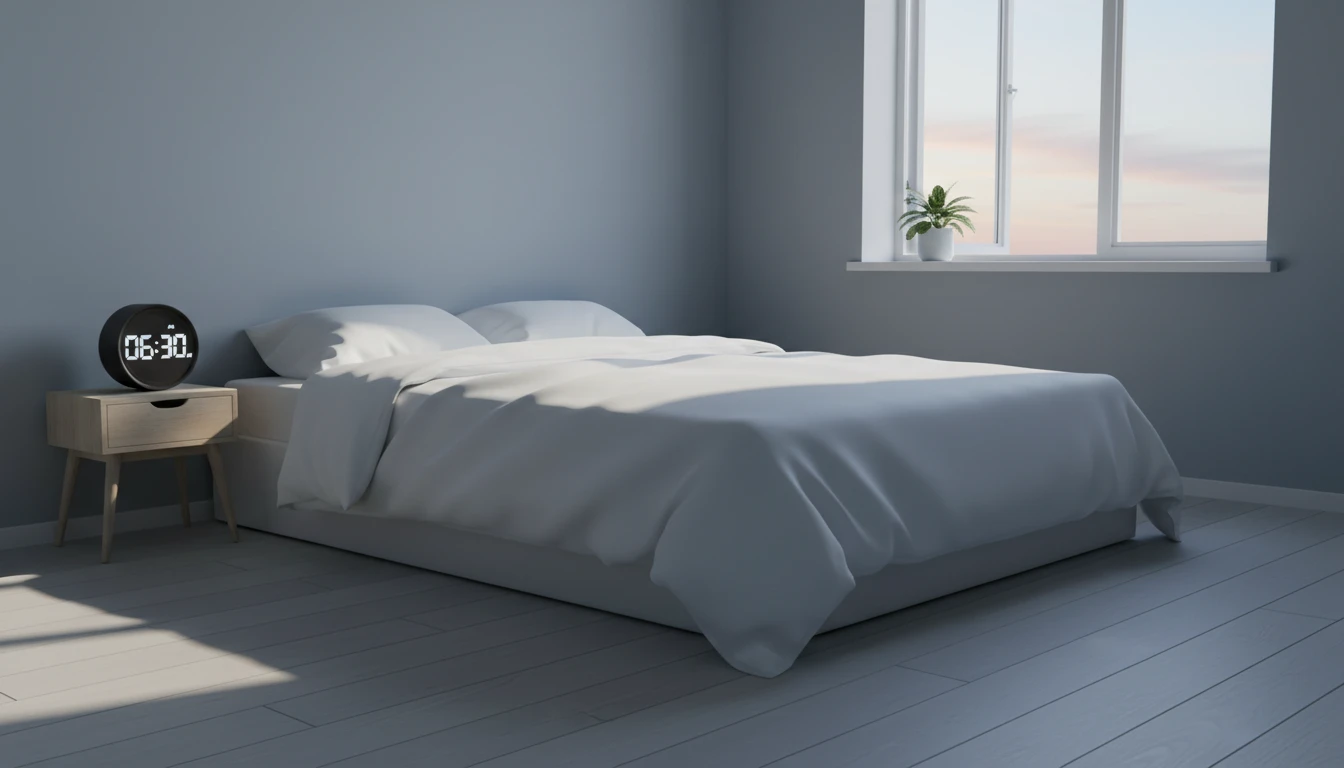









Understanding the Sleep Struggle
Shift work directly conflicts with your body's natural 24-hour cycle, or circadian rhythm, which is programmed to be awake during the day and asleep at night. This internal clock is heavily influenced by light, so working nights and sleeping days forces
your body into an unnatural state. Adding a long commute to this equation further complicates matters. Studies show that time spent commuting often directly replaces sleep time. More than just losing hours, the stress of a long journey can keep your nervous system on high alert, leaving you feeling tired but wired and unable to easily shift into a calm state needed for sleep. This combination can lead to chronic fatigue and other health issues.
Anchor Your Sleep Schedule
The most powerful tool against a chaotic schedule is consistency. For night shift workers, this means trying to keep the same sleep and wake times every day, even on days off. While this might seem socially isolating, it’s the most effective way to help your body clock adapt. If that’s not realistic, aim to keep your sleep schedule consistent for each type of shift you work. Another effective strategy is the 'split sleep' model. If you can’t manage a full seven or eight hours in one block, try sleeping for a shorter period of 4-5 hours right after your shift, then taking a longer 2-3 hour nap later before your next shift begins. This can be more manageable and just as restorative.
Master Your Environment
To sleep well during the day, you must trick your brain into thinking it's night. This means creating a sleep sanctuary that is as dark, quiet, and cool as possible. Invest in blackout curtains to block sunlight, use an eye mask, and consider earplugs or a white noise machine to drown out daytime sounds like traffic and household activity. Just as important is managing light exposure when you are supposed to be awake or winding down. Wear dark, wraparound sunglasses on your commute home to block morning sunlight, which sends a powerful 'wake up' signal to your brain. Conversely, expose yourself to bright light at the start of your shift to promote alertness.
Turn Your Commute into a Wind-Down
Instead of viewing your long commute as wasted time, reframe it as a dedicated buffer between your work life and home life. Use this time to de-stress and signal to your body that the day is ending. Avoid taking stressful work calls or listening to agitating news programs. Instead, opt for calming music, engaging podcasts, or an audiobook. If you use public transport, short, 20-minute power naps can help reduce fatigue without causing grogginess, but avoid longer naps that can interfere with your main sleep period. The goal is to arrive home feeling less activated and more prepared for rest.
Time Your Food and Fitness
What and when you eat plays a significant role in regulating your energy and sleep. Try to have a substantial, healthy meal before you leave for work. During your shift, opt for light snacks rather than heavy meals, as your digestion is less efficient at night. Caffeine can be a useful tool if used strategically—consume it early in your shift but avoid it for at least six hours before you plan to sleep. Similarly, while regular exercise is excellent for sleep quality, avoid vigorous workouts close to bedtime. A better time to exercise would be after you wake up, as it can boost energy and help regulate your body clock.