


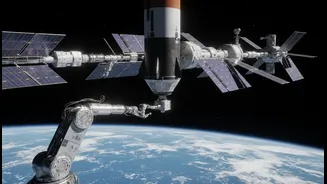



The New Benchmark: Full Reusability
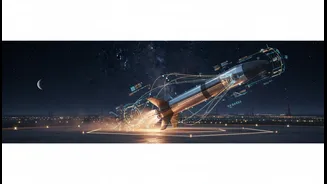
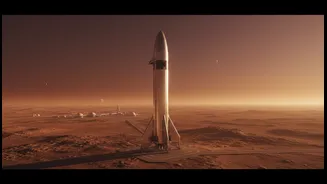
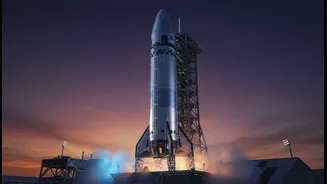
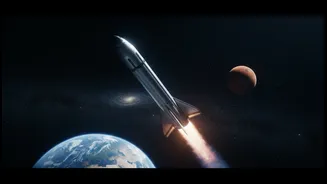
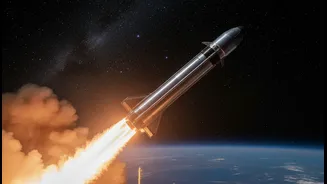
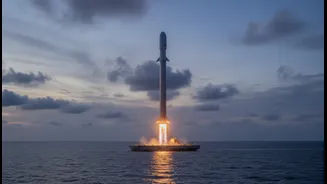
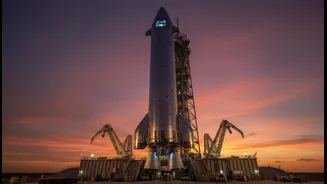
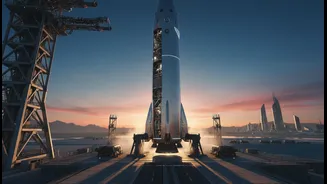
The core innovation of SpaceX’s Starship isn't just its colossal size, but its design philosophy: treating a rocket like an airplane. Unlike its predecessor, the Falcon 9, which recovers and reuses its first stage booster, Starship is designed to be a fully
reusable transportation system. This means both the Super Heavy booster and the Starship upper stage are built to return to the launch site, be captured, and prepared for another flight in a short period. This leap from partial to full reusability is the breakthrough forcing the industry's hand. Previously, even with a reusable first stage, the smaller second stage of the rocket—a complex and expensive piece of hardware—was discarded on every mission. By saving the entire vehicle, the cost of a launch is radically reduced to little more than propellant and operational overheads.
An Economic Shockwave
The ability to reuse an entire launch vehicle dozens, or even hundreds, of times fundamentally alters the business of space. Before reusability, a single rocket launch cost tens or hundreds of millions of dollars because the hardware was thrown away each time. Recovering the first stage, as Falcon 9 does, has already slashed costs and dramatically increased launch frequency. Starship aims to take this an order of magnitude further. With drastically lower costs per kilogram to orbit, ambitions like massive satellite constellations and permanent bases on the Moon and Mars shift from science fiction to viable business plans. This economic pressure means that any nation or company with space ambitions can no longer afford to build disposable rockets if they wish to remain competitive.
Europe's Race to Respond
For years, Europe’s space access was reliably served by the Ariane family of rockets. However, the rise of SpaceX exposed a strategic vulnerability. In response, the European Space Agency (ESA) and its industrial partners are accelerating plans for their own reusable technologies. While Ariane 6, the current flagship, is an expendable rocket, concepts for its successors are heavily focused on reusability. For instance, Germany's Aerospace Center (DLR) has proposed concepts like the RLV C5, a partially reusable heavy-lift vehicle that uses a winged, gliding booster. This approach differs from Starship's powered landing but shares the same goal: driving down launch costs. The urgency is clear, as European leaders now openly acknowledge they must catch up to avoid being priced out of the market they once helped create.
China's Parallel Ambition
Not to be outdone, China has made reusable rocketry a national priority, and its progress has been rapid. In July 2026, China successfully demonstrated the recovery of an orbital-class booster, a milestone that puts it in an exclusive club with American companies. Chinese state-owned and commercial companies are developing a suite of reusable launch vehicles, including rockets from the Long March series. Their approach shows clear inspiration from SpaceX, pursuing powered vertical landings for first-stage boosters. While still behind in terms of operational experience and flight-proven reuse, China's technical achievements signal its intent to compete directly in the global launch market, offering low-cost access to space for its own ambitious programs and for international customers.
The Commercial Space Scramble
Beyond government agencies, commercial players are also joining the reusability revolution. Rocket Lab, once a proponent of small, expendable rockets, is developing its larger Neutron rocket, designed from the ground up for reusability. Its unique 'Hungry Hippo' fairing design is integrated with the first stage, which is intended to land back on Earth, making the entire stage's structure part of the recovery process. Similarly, Blue Origin's New Glenn rocket is designed with a reusable first stage, competing in the same heavy-lift category. This wave of new, reusable vehicles is a direct response to the market realities established by SpaceX. The message is clear: in the modern space race, the finish line isn't just reaching orbit—it's being able to do it over and over again, cheaply.