






The Classic 'Wash-and-Go'
The 'wash-and-go' is the foundation of many curly hair routines, but the name is a bit misleading. It isn't simply washing and walking out the door, but a method of styling hair in its soaking wet state to achieve maximum curl definition. After cleansing
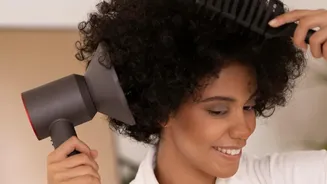
and conditioning, do not towel dry your hair. While it is still dripping wet, apply your styling products—typically a leave-in conditioner followed by a gel or mousse. The key is to apply products evenly by raking them through or using the 'praying hands' method. You can then scrunch your hair gently towards the scalp to encourage curl clumps to form. Allow your hair to air-dry or use a diffuser on low heat. The goal is to avoid touching it as it dries, which prevents frizz and allows the product to create a 'cast' that holds your curl pattern.
The Art of 'Plopping'
If you struggle with gravity stretching out your wet curls, 'plopping' is a game-changing drying technique. It involves wrapping your hair in a cotton T-shirt or a microfiber towel to help absorb excess water without causing frizz. After applying your stylers to wet hair, lay the fabric on a flat surface. Flip your hair forward, allowing your curls to pile onto the center of the fabric. Then, wrap the fabric around your head like a turban and secure it. This method 'plops' the curls on top of your head, allowing them to dry in a scrunched, accordion-like position, which enhances definition and volume. Leave the plop on for 15-30 minutes before either air-drying or diffusing the rest of the way. This technique is particularly effective for those with wavy to loose curls that are easily weighed down.
Perfecting 'Finger Coiling'
For perfectly uniform, spiral curls, finger coiling is an incredibly effective, though more time-consuming, technique. On clean, detangled, and wet hair, take a small section of hair that naturally clumps together. Apply a curl cream or gel for slip and hold. Starting near the root, wrap the section of hair around your index finger, twisting it from root to tip. As you twist, you can gently slide your finger down the hair shaft. When you release the hair, it should form a defined coil. Repeat this process across your entire head or just in areas where you want more definition. It’s a fantastic way to train stubborn curls, reduce frizz, and ensure a consistent pattern throughout your hair. You can let the coils air-dry or use a diffuser to set them in place.
The Protective 'Pineapple'
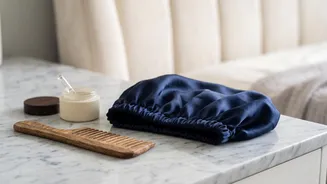
Extending the life of your styled curls is just as important as creating them. The 'pineapple' method is a simple way to protect your hair while you sleep. The technique involves gathering your hair into a very loose, high ponytail on the very top of your head, resembling the leafy crown of a pineapple. It's crucial to use a gentle hair tie, like a satin scrunchie, to avoid creating dents or causing breakage. This method keeps your curls from getting crushed and tangled as you toss and turn at night. By keeping the bulk of your hair off your pillow, you significantly reduce friction, which is a primary cause of frizz. In the morning, simply take down the ponytail, give your hair a gentle shake, and refresh any flattened curls with a bit of water or curl refreshing spray.
The 'LOC/LCO' Moisture Method
Curly hair is naturally prone to dryness, which makes moisture retention essential. The LOC and LCO methods are popular techniques for layering products to lock in hydration for longer. LOC stands for Liquid, Oil, Cream, and LCO stands for Liquid, Cream, Oil. The 'Liquid' is always first—this is water or a water-based leave-in conditioner applied to freshly washed hair to hydrate it. The next steps depend on your hair's porosity. For high porosity hair that loses moisture quickly, the LOC method is often preferred; the 'Oil' seals in the water, and the 'Cream' provides a final layer of moisture and styling hold. For low porosity hair, where products can sit on top, the LCO method may be more effective; the 'Cream' provides moisture, and a lighter 'Oil' seals it all in without feeling heavy.