





Mumbai: The Epicentre of Grandeur
No discussion of Ganesh Chaturthi is complete without Mumbai. The city transforms into a massive festival ground, where devotion is displayed with unparalleled grandeur. Public pandals compete to create the most elaborate themes, with idols reaching staggering
heights. The most famous of these, Lalbaugcha Raja, attracts millions of devotees, who wait in queues for hours for a fleeting glimpse. The festival culminates on Anant Chaturdashi, when massive processions carry thousands of idols to beaches like Girgaon Chowpatty for the visarjan (immersion), a spectacular and emotional farewell. The energy, scale, and sheer passion make Mumbai's celebration an unforgettable experience.
Pune: The Birthplace of Tradition
If Mumbai is about scale, Pune is about history and tradition. It was here that freedom fighter Lokmanya Tilak transformed the private, household festival into a Sarvajanik Ganeshotsav (public festival) in 1893 to foster community unity against British rule. This legacy is honoured through the 'Manache Ganpati,' five traditional mandals that hold the highest honour and lead the immersion procession. These are not necessarily the largest idols but are the most revered, including the Kasba Ganpati, considered the presiding deity of the city. Pune's celebrations are deeply rooted in culture, featuring classical music and intellectual discourses alongside the devotional fervour.
Hyderabad: A Towering Spectacle
Hyderabad offers a celebration defined by colossal scale, centred around the legendary Khairatabad Ganesh. Starting from a humble 1-foot idol in 1954, it grew annually to become one of India's tallest Ganeshas, often soaring over 60 feet. The making of this gigantic idol is a months-long affair involving artisans from across states. Another unique Hyderabadi tradition is the Balapur ladoo auction. The giant sweet offering made to the Balapur Ganesha is auctioned on the final day, with the winner believed to receive a year of prosperity; bids often run into many lakhs.
Goa: A Celebration of Nature
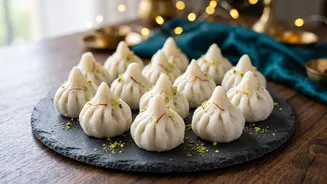
In Goa, the festival, locally known as 'Chavath', is an intimate, family-oriented affair that beautifully integrates nature. The most unique feature is the 'matoli'—a wooden canopy hung above the Ganesha idol, decorated with a vibrant assortment of local, seasonal fruits, flowers, and vegetables. This tradition is a tribute to the bounty of the land and serves as an informal lesson in the region's biodiversity. The celebrations are more serene, with families coming together, preparing traditional sweets like Nevri and Modaks, and singing hymns accompanied by the ghumot, a traditional percussion instrument.
Bengaluru: The Eco-Conscious Capital
Bengaluru has emerged as a frontrunner in celebrating Ganesh Chaturthi with a strong environmental conscience. Amidst growing concerns about water pollution from Plaster of Paris (PoP) idols, the city has championed the use of eco-friendly Ganeshas made from clay, red soil, and other natural materials. Many idols even contain seeds, which can be planted after the immersion, symbolising a cycle of life. Community groups and resident welfare associations actively promote home immersion in buckets or mobile tanks, blending devotion with a powerful message of sustainability.
Chennai: A Coastal Farewell
In Tamil Nadu, where the festival is called Vinayagar Chaturthi, Chennai hosts a celebration with its own distinct southern charm. While household pujas are common, the city is also known for its large, vibrant public pandals. The main event is the grand visarjan procession, where thousands of idols are taken to the coast for immersion. Marina Beach becomes a focal point, drawing huge crowds who come to witness the final send-off as idols of all shapes and sizes are carried into the waters of the Bay of Bengal. The atmosphere is a mix of loud music, devotional chanting, and a uniquely coastal festive spirit.
Kanipakam: The Miracle of the Growing Idol
Unlike other cities known for temporary pandals, Kanipakam in Andhra Pradesh offers a permanent, temple-based flavour of devotion. The Sri Varasiddhi Vinayaka Swamy Temple is home to a 'Swayambhu' (self-manifested) idol that was discovered in a well. Local legend holds that the idol is continuously growing in size. The festival here, known as Brahmotsavam, lasts for 21 days starting from Ganesh Chaturthi. Devotees flock to the temple to witness the unique deity that remains partially submerged in the well water, offering a profoundly different and spiritually charged experience of the festival.