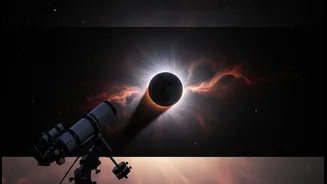




The Reality: A Rare European Spectacle
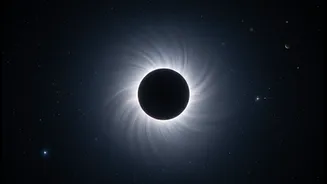
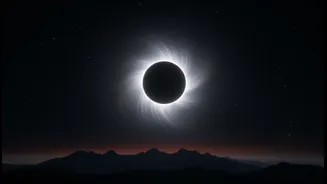
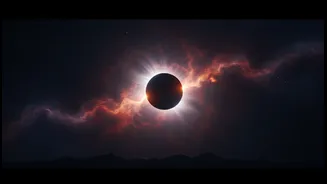
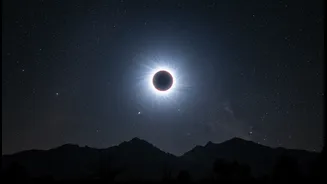
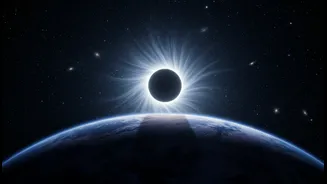
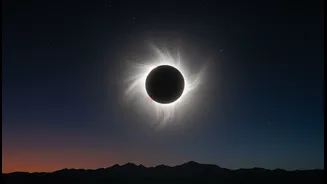
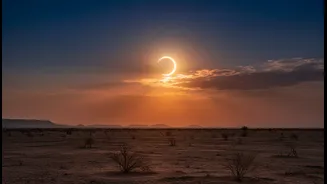
First, the basics. A total solar eclipse occurs when the Moon passes directly between the Sun and Earth, completely blocking the Sun's face. The event on August 12, 2026, is particularly significant because it will be the first total solar eclipse visible
from mainland Europe since 1999. The path of totality—the narrow track where the full eclipse can be seen—will begin over a remote part of Russia, cross Greenland, western Iceland, and the Atlantic Ocean, before reaching northern Spain and a tiny corner of Portugal in the evening. For many in Europe, this will be a rare and deeply impressive celestial event. Much of the rest of Europe, northwestern Africa, and parts of North America will witness a partial eclipse.
Hype vs. Fact: Will It Be Visible From India?
This is the most critical question for Indian sky-gazers, and the answer is, unfortunately, no. The path of totality is thousands of kilometres away, confined to the Arctic, North Atlantic, and parts of Europe. Official visibility maps from agencies like NASA do not include India in the viewing area for either the total or partial phases of this eclipse. Some calculations suggest a minuscule partial eclipse, with less than 14% of the sun covered, might be theoretically visible right at sunset from the absolute northernmost tips of Ladakh, but this would be practically unobservable. For all intents and purposes, the August 2026 eclipse will not be visible from the Indian subcontinent.
Hype vs. Fact: Will Darkness Last for Hours?
A common piece of eclipse hyperbole involves exaggerated claims about the duration of darkness. The reality is much briefer, though no less spectacular for those in the right place. The maximum possible duration of totality for this eclipse is just 2 minutes and 18 seconds, and this occurs off the coast of Iceland. For most observers on land in Spain or Iceland, totality will last between one and two minutes. While the sky will darken dramatically to a deep twilight within the path of totality, it is a fleeting experience, not a prolonged period of night-like blackness. The entire event, from the first moment the Moon touches the Sun's disk to the last, will last several hours, but the 'total' phase is very short.
Hype vs. Fact: Are Eclipses Dangerous Omens?
For centuries, eclipses were viewed with fear, often considered bad omens or triggers for disasters. Today, science provides a clear and predictable explanation. A solar eclipse is a natural alignment of the Sun, Moon, and Earth that we can calculate with immense precision, often centuries in advance. There is no scientific evidence linking solar eclipses to earthquakes, volcanic eruptions, or any other terrestrial disasters. They are simply a beautiful, and predictable, display of celestial mechanics. The real danger is not from the eclipse itself, but from looking at it incorrectly.
Context: The Real Danger and How to View Safely
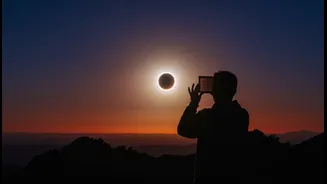
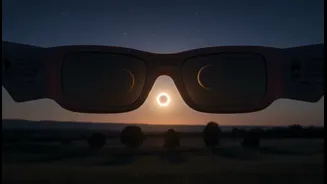
The one piece of advice that is not hype is the warning about eye safety. Looking directly at the Sun, even when it is partially covered, can cause permanent eye damage, a condition known as solar retinopathy. It is never safe to look at a partial solar eclipse without proper protection. You must use certified solar viewing glasses (often called 'eclipse glasses') or a handheld solar viewer that meets the ISO 12312-2 international standard. Regular sunglasses are not safe. The only time it is safe to look at the eclipse without protection is during the brief moments of totality, when the Sun is completely blocked. As soon as the Sun begins to reappear, you must put your protective eyewear back on immediately.
Context: What Makes This Eclipse Genuinely Special
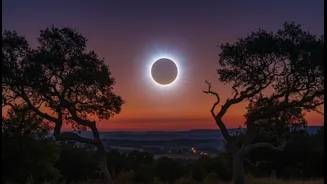
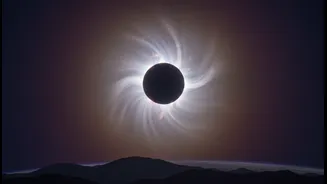
While some claims are overblown, this eclipse does have unique features. For viewers in Spain, totality will occur just before sunset, creating a 'sunset eclipse'. This offers the potential for breathtaking photographs of the Sun's corona—its wispy outer atmosphere only visible during totality—hanging low over the horizon. Furthermore, the eclipse coincides with the peak of the annual Perseid meteor shower. This means that after the sun sets and the sky fully darkens, observers in clear-sky locations will be treated to a second celestial show, with shooting stars streaking across the night.