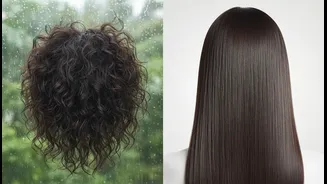








Why Your Hair Frizzes
The main reason your hair rebels during the monsoon is humidity. Hair absorbs moisture from the air, which causes the outer layer, or cuticle, to swell and lift. This creates a rough, puffy, and unmanageable texture we call frizz. Indian hair, which is often
thicker and more porous, is especially quick to absorb this excess moisture, making frizz a common seasonal battle. Rainwater itself can also contain pollutants that strip natural oils, leaving hair dry and brittle over time.
The Anti-Frizz Hair Routine
Start with a smarter wash routine. Over-washing strips the natural oils that protect your hair from humidity. Aim to wash your hair just two to three times a week with a gentle, sulphate-free shampoo. Always follow with a conditioner to smooth the hair cuticle and lock in moisture. Once a week, use a deep conditioning mask to repair damage and provide an intense dose of hydration. For styling, work a lightweight, anti-frizz serum through the mid-lengths and ends of damp hair to create a barrier against humidity. When detangling, always use a wide-toothed comb on wet hair, as it's more fragile and prone to breakage.
Why Your Skin Feels Sticky
Just like with hair, high humidity is the primary culprit for sticky skin. When humidity levels rise, your skin's oil glands go into overdrive, producing excess sebum. This excess oil mixes with sweat, dirt, and pollutants, which don't evaporate easily in the damp air. This sticky film can clog pores, leading to common monsoon woes like acne, blackheads, and a dull complexion. Many people make the mistake of over-washing to combat the grease, but this can strip the skin's protective barrier, ironically causing it to produce even more oil.
Your Guide to Fresh, Clear Skin
Switch to a gentle, gel-based cleanser to remove oil and grime without over-drying your skin. Look for ingredients like salicylic acid or niacinamide to help control oil and keep pores clear. One of the biggest monsoon myths is that oily skin doesn't need moisturizer. Dehydrated skin actually produces more oil to compensate. The key is to choose a lightweight, water-based, or gel moisturizer that is 'non-comedogenic', meaning it won’t clog pores. Ingredients like hyaluronic acid provide hydration without a greasy feel. Sunscreen is also non-negotiable, even on cloudy days, as up to 80% of UV rays can penetrate clouds. Opt for a gel-based or matte-finish sunscreen to avoid adding extra shine.
Smarter Habits for the Season
A few small lifestyle changes can make a big difference. Avoid heavy, creamy foundations that can trap sweat and oil. Instead, opt for minimal makeup or lightweight, water-based products. Try not to touch your face frequently, as this can transfer bacteria and trigger breakouts. For your hair, protective styles like braids or buns can keep it contained and less exposed to the damp air. And never tie up wet hair, as damp strands are at their weakest and most susceptible to breakage. Letting hair air-dry whenever possible is a gentler alternative to heat styling, which can inflict further damage.