




The Goal: A Place Among the Stars
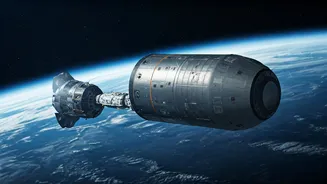
The Gaganyaan project is ISRO's ambitious endeavor to demonstrate human spaceflight capability by launching a crew of three astronauts into a 400 km orbit for a three-day mission and bringing them back safely to Earth. Success would make India the fourth
nation in the world—after the Soviet Union/Russia, the United States, and China—to possess independent human spaceflight capability. This is more than just a technological milestone; it represents a monumental leap in India's scientific and engineering prowess, promising to create thousands of jobs and inspire a new generation. However, the journey from vision to reality is extraordinarily complex, demanding a long and methodical approach.
Safety First, No Compromises
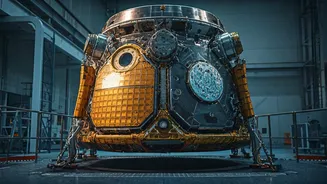
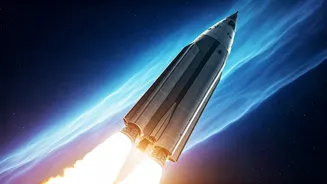
When human lives are at stake, there is no room for error. This is the guiding principle of the Gaganyaan mission, and the primary reason for its deliberate pace. ISRO's top priority is developing and testing a host of new, human-centric technologies. This includes a 'human-rated' launch vehicle (HLVM3), a modification of the reliable LVM3 rocket, engineered to be fail-safe. A critical component is the Crew Escape System, designed to jettison the crew module to safety in case of an emergency during launch or ascent. Recent statements from ISRO's chairman confirm that while progress is steady, the schedule ultimately hinges on these safety assessments and technical readiness, with a series of uncrewed flights planned to validate every system.
Robots and Rehearsals
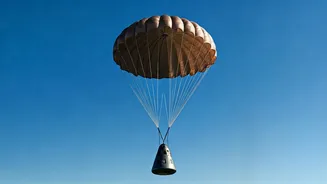
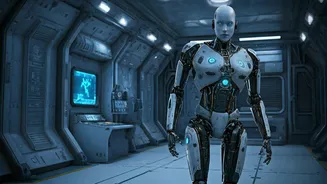
Before any astronaut steps into the capsule, a series of robotic dress rehearsals must be perfectly executed. ISRO plans for at least three uncrewed test flights to precede the main event. The first of these, Gaganyaan-1, is slated for the latter half of 2026. This mission will carry Vyommitra, a humanoid robot, to simulate the human body's functions and test the life support systems inside the crew module. These uncrewed missions are designed to prove the performance of the rocket, the aerodynamics of the spacecraft, and the crucial procedures for re-entry and recovery from the sea. Each successful test builds confidence and brings ISRO one step closer to the crewed launch, which recent reports suggest may now be targeted for 2027 or later.
Training the Astronauts of Tomorrow
While the hardware is being perfected, a select group of individuals is preparing for the journey of a lifetime. The first batch of astronaut-designates, chosen from the Indian Air Force, have undergone extensive training, including in Russia, which has partnered with India on aspects like life support systems. A dedicated astronaut training facility is being established in Bengaluru to handle everything from physical fitness to simulator training. Looking beyond the first mission, ISRO is already planning to open its astronaut cadre to civilians, including specialists from STEM fields, for future missions. This signals a long-term vision for a sustained Indian presence in space, eventually leading to the planned Bharatiya Antariksh Station.
The Challenges That Demand Patience
The list of technical hurdles is long and formidable. Creating a self-sustaining, Earth-like environment within the tight confines of the crew module is a major challenge. This includes managing oxygen, water, food, and waste. Engineers must also account for the threat of space debris in low Earth orbit, which could pose a risk to the spacecraft. The launch vehicle itself must achieve a reliability of 98% or higher, a demanding standard for any rocket. Recent reports indicate that while thousands of ground tests have been completed, a few key technologies, like the full environmental control and life support system (ECLSS), are still being perfected. Each of these elements must be flawless before a crew can be sent to orbit.