



The Problem With a Single Light
Relying on one light source is a common mistake that creates a host of problems. A solitary overhead light casts shadows on your work surface every time you lean forward. A single, poorly placed desk lamp can create harsh glare on your computer screen.
This high-contrast environment forces your eyes to constantly readjust, leading to eye strain, headaches, and a surprising drain on your energy. Studies have shown that poor lighting can kill productivity. When your space is unevenly lit, with bright spots and dark corners, your visual system is working overtime, leaving you feeling tired and unfocused long before the day is done.
The Solution: Strategic Layered Lighting
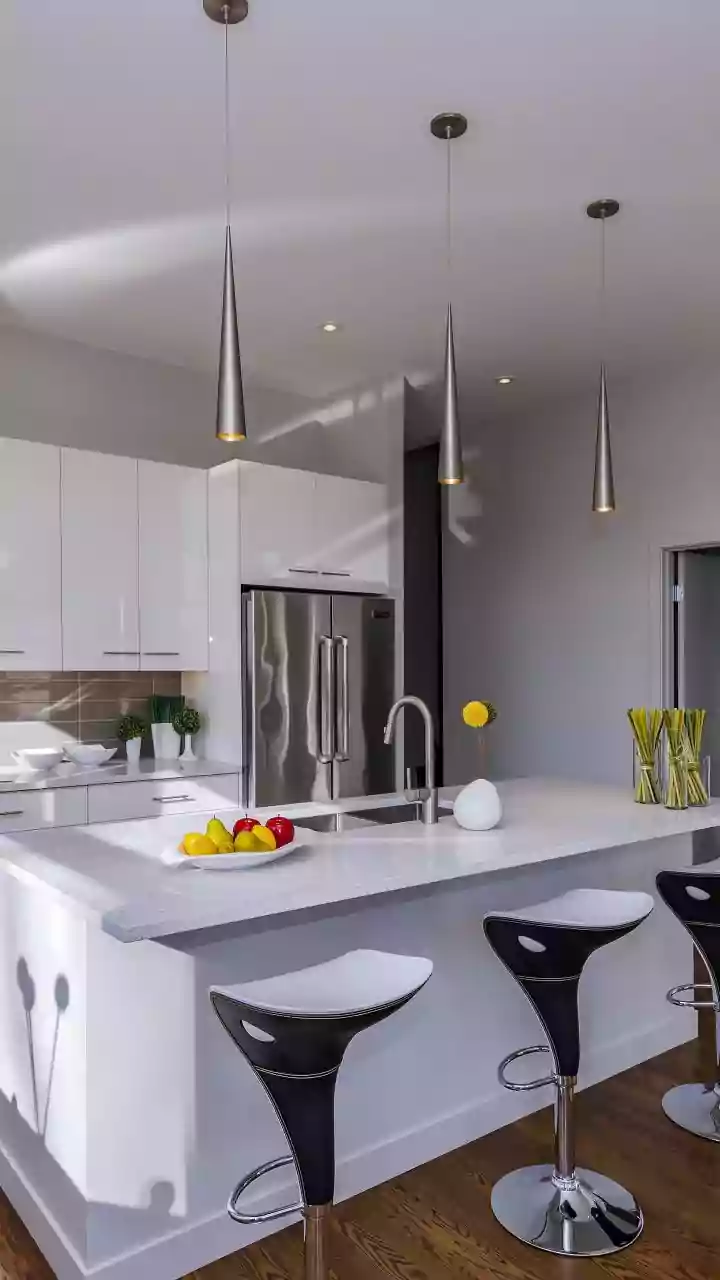
The secret to effective and comfortable workspace lighting isn't more brightness, but better-quality, layered light. Interior designers use a three-layer approach to illuminate a room, and the same principles are essential for a functional work corner. These layers are Ambient, Task, and Accent lighting. Each one serves a distinct purpose, and when combined, they create a balanced, flexible, and visually comfortable environment that supports your well-being and focus throughout the workday. This approach eliminates harsh shadows and reduces the stark contrasts that cause eye fatigue.
Layer 1: Build a Base with Ambient Light
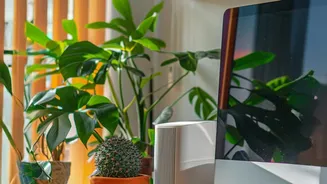
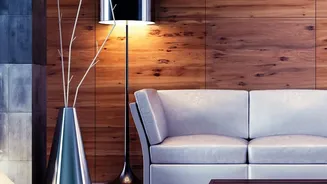
Ambient, or general, lighting is the foundation. Its job is to provide soft, even, room-filling light that allows you to navigate the space safely and comfortably. This is your main level of light that reduces harsh shadows and prevents the uncomfortable feeling of working in a dark cave illuminated only by your screen. Natural light from a window is the ideal source of ambient light, known to boost mood and productivity. If that's not an option, create it with ceiling fixtures, recessed lights, or even an upward-facing floor lamp (a torchiere) placed in a corner to bounce light off the ceiling for a diffused glow.
Layer 2: Focus with Task Lighting
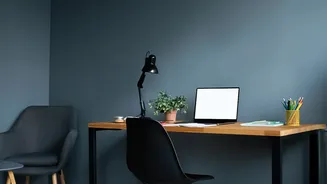
This is the most critical layer for any work-related activity. Task lighting provides focused, direct illumination for specific jobs like reading, writing, or typing. An adjustable desk lamp is the classic example. A good task light should be brighter than your ambient light but positioned to eliminate glare on your screen and shadows on your keyboard. Ideally, you should be able to direct the light exactly where you need it. For optimal focus, experts recommend a cooler light temperature, between 4000K and 5000K, which mimics natural daylight and promotes alertness.
Layer 3: Add Depth with Accent Lighting
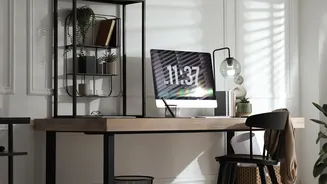
Often overlooked in a home office, accent lighting is the finishing touch that makes a space feel more dynamic and less sterile. Its purpose is purely aesthetic: to highlight features like a piece of art, a bookshelf, or an architectural detail. But it also serves a functional purpose in a workspace by providing visual relief. These small pockets of light give your eyes a place to rest when you look away from your screen, which can help reduce overall eye strain. This can be as simple as a small, warm lamp on a nearby shelf or LED strips behind your monitor to reduce the stark contrast between your bright screen and a dark wall.