







It's a familiar feeling: you finish a long day at your desk, and your motivation to hit the gym is low. But you don't need hours to counteract a day of sitting. A short, focused gym session can be incredibly effective if you know how to use it.
Plan Your Attack Before You Go
The most
significant waste of time at the gym is not having a plan. Wandering from machine to machine deciding what to do next can eat up precious minutes. Before you even leave work, take 5-10 minutes to decide exactly what you're going to do. A full-body workout is often the most efficient approach for a short session. The American Council on Sports Medicine recommends weight training for every major muscle group at least twice a week, a goal that a full-body routine helps you meet. By scheduling your workout and knowing your exercises in advance, you can walk in and get straight to work, turning a 30-minute window into a powerful, productive session.
The Smart Warm-Up to Counteract Sitting
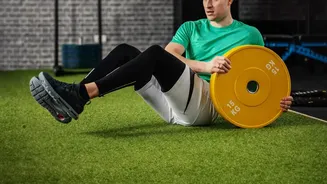
After sitting all day, certain muscles like your hip flexors and chest become tight, while others like your glutes and upper back become weak or inactive. A smart, dynamic warm-up shouldn't just be about getting your heart rate up; it should actively reverse these postural problems. Instead of just jogging on the treadmill, spend 5 minutes on targeted movements. Focus on hip flexor stretches, such as a kneeling lunge, to open up your hips. Add in some thoracic spine rotations (seated twists) and arm circles to mobilize your upper back and shoulders. This not only prepares you for the workout but helps improve posture and reduce stiffness.
Prioritize Compound Movements
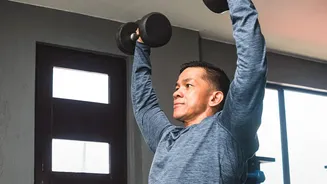
If time is your biggest constraint, compound exercises are your best friend. These are multi-joint movements that work several muscles or muscle groups at once, giving you the most bang for your buck. Think squats, deadlifts, push-ups, pull-ups, and overhead presses. A squat, for example, engages your quads, hamstrings, glutes, and core all in one go. In contrast, an isolation exercise like a bicep curl only works a single muscle. By building your short workout around 3-4 compound lifts, you can effectively train your entire body in a fraction of the time it would take with isolation moves.
Increase Intensity with Supersets and Circuits
To get more done in less time, you need to increase your workout density. Two great ways to do this are supersets and circuit training. A superset involves doing two exercises back-to_back with little to no rest. You can pair exercises for opposing muscle groups (like a set of pushups followed immediately by a set of rows) or for the same muscle group to increase intensity. A circuit involves performing three or more exercises in a row with minimal rest between them before taking a longer break. Both methods keep your heart rate elevated, improving cardiovascular endurance while you build strength and saving valuable time you would have spent resting.
Focus On Your Neglected Muscles
A sedentary job often leads to a hunched posture with rounded shoulders and a weak posterior chain (the muscles on the back of your body). Dedicate part of your workout to specifically targeting these areas. Exercises like deadlifts, glute bridges, and bent over rows are excellent for strengthening your glutes, hamstrings, and back muscles. Adding face pulls and band pull aparts can help strengthen the muscles in your upper back, pulling your shoulders back and improving your posture. Consciously activating these muscles not only leads to a more balanced physique but can also help alleviate the back pain associated with prolonged sitting.
A Quick and Functional Cool Down
Just as your warm up should be targeted, so should your cool down. After your workout, spend the final 3–5 minutes stretching the muscles that get tightest from sitting. This typically includes your hip flexors, hamstrings, and chest. Simple stretches like a standing hamstring stretch, a quad stretch, and a doorway chest stretch are highly effective. This doesn't need to be a long drawn out process. A few minutes of focused stretching can help improve flexibility, reduce muscle soreness, and leave you feeling looser and more mobile as you head home.