



A Human-Made Star
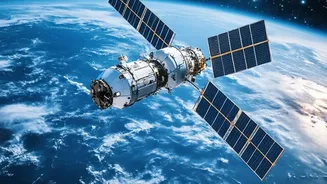
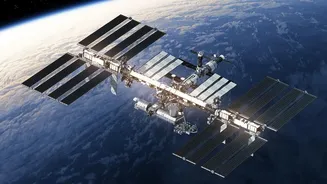
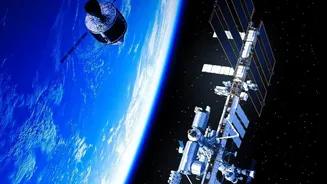
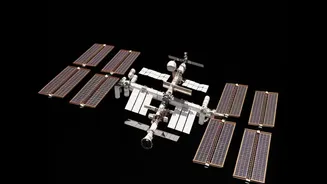
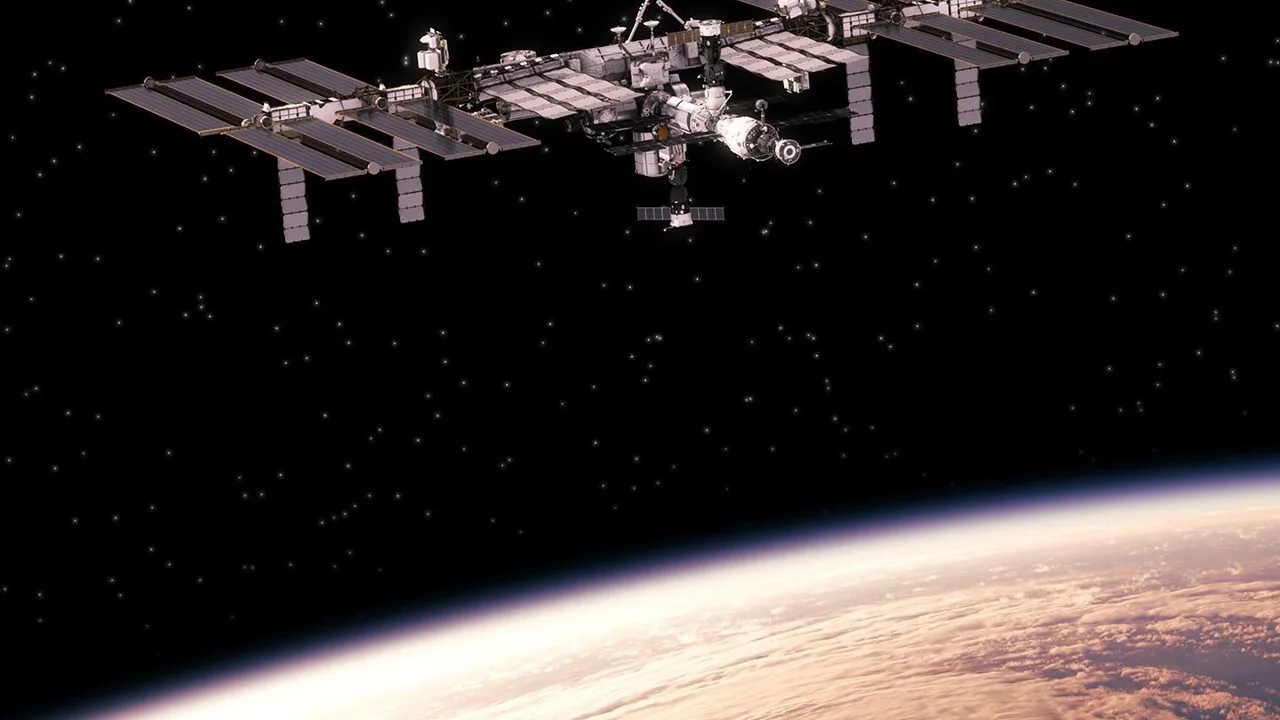
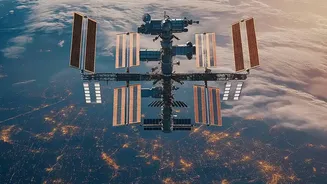
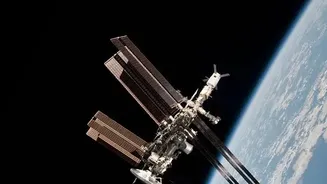
Before you start tracking, it helps to know what you’re looking for. The International Space Station (ISS) is the largest artificial object in orbit, circling the globe at over 28,000 kilometres per hour. Because of its massive solar panels, it reflects
sunlight brilliantly, making it the third brightest object in the sky after the sun and moon. Unlike an aeroplane, the ISS does not have blinking lights. Instead, it appears as a steady, fast-moving point of white light that travels across the sky in a matter of minutes. Spotting it is a powerful and tangible connection to human space exploration, a reminder of the incredible scientific outpost circling high above our heads every 90 minutes. The best viewing opportunities happen during the hours after sunset or before sunrise, when your spot on Earth is dark but the station, at its high altitude, is still bathed in sunlight.
The Official Source: NASA's Spot The Station
For a simple and reliable method, start with the source itself. NASA operates a free service called Spot The Station that takes all the guesswork out of the process. By visiting their official website, you can enter your city or specific location to see a list of upcoming sighting opportunities. Each listing provides the exact time the pass will begin, the maximum height it will reach in the sky, the direction it will appear from, and where it will disappear. For even greater convenience, you can sign up for email or text alerts. NASA will then automatically send you a notification a day or so in advance of a good viewing opportunity in your area. This service is perfect for casual observers who want a no-fuss way to be reminded when it's time to head outside and look up. The information is clear, direct, and comes straight from the people who manage the station.
Power in Your Pocket: Top Tracking Apps
For those who prefer an on-the-go solution, a dedicated smartphone app is your best bet. Several excellent options are available for both iOS and Android devices that provide real-time tracking and more advanced features. ISS Detector is a fan favourite, offering not just ISS passes but tracking for other satellites and comets. It provides a simple countdown to a pass and uses your phone’s compass to show you exactly where to look. Heavens-Above, another long-standing and respected name in satellite tracking, has a powerful app that provides detailed star charts, pass predictions, and a wealth of astronomical data. Other popular choices include GoSatWatch and SkyView Lite, which often feature augmented reality (AR) modes. These AR features overlay the path of the ISS onto your phone's camera view, making it incredibly easy to pinpoint its trajectory against the real-world sky.
Websites for the Enthusiast
If you want to dive deeper, several websites offer more comprehensive data than the basic apps. The web version of Heavens-Above is a goldmine for amateur astronomers and satellite spotters. It generates highly detailed star charts showing the station’s path relative to constellations, which can be fantastic for astrophotography planning. You can also generate predictions for a wide range of satellites, not just the ISS. Another powerful tool is Calsky, which provides an exhaustive calculator for all sorts of celestial events. While its interface can be less intuitive for beginners, the level of detail it offers is unparalleled. These web-based tools are ideal for planning a viewing session in advance, especially if you're looking for specific types of passes or want to coordinate a viewing with other astronomical events.
Tips for a Perfect Sighting
Once you have your pass time, a little preparation will make the experience much better. First, give your eyes time to adjust to the dark; about 15 minutes away from bright screens or lights will dramatically improve what you can see. Pick a viewing spot with a clear, unobstructed view of the horizon, especially in the direction the station is predicted to appear. Double-check the path—a typical alert might say, 'Appears in SW, disappears in NE.' Knowing this helps you orient yourself. While you can't see the station's shape with the naked eye, binoculars can enhance the experience by making the bright light more vivid and helping you follow its smooth, swift journey across the heavens. Finally, be patient. The given time is when the pass begins, so be ready a minute or two beforehand. The silent, brilliant arc across the sky is well worth the wait.