




A New Era of Lunar Exploration
The Moon is experiencing a renaissance. Decades after the Apollo missions, a fresh wave of international and, crucially, commercial interest is targeting our celestial neighbour. This isn't just about planting flags; it's about science, resource utilisation,
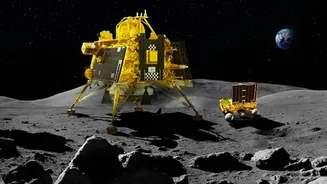
and building a sustainable economic presence beyond Earth. With NASA fostering a commercial marketplace through its Commercial Lunar Payload Services (CLPS) program, the demand for landers, experiments, and rovers is set to grow exponentially. More than 90 lunar missions are planned globally between 2026 and 2035, signalling a shift from one-off missions to a production-line approach to space exploration. This new paradigm has opened the door for agile and innovative private companies to play a significant role.
The 'Frugal Innovation' Advantage
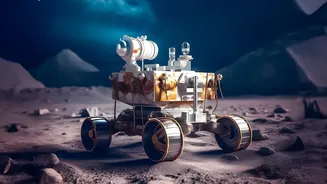
India’s space program, led by the Indian Space Research Organisation (ISRO), has long been celebrated for its 'frugal engineering'—achieving remarkable feats at a fraction of the cost of other space-faring nations. This philosophy is now being adopted by the country's burgeoning private space sector. For Indian startups, building a 'budget' rover isn't about cutting corners on quality but about innovating on cost. This is achieved by designing systems in-house, using commercially available components where possible, and leveraging India’s strong domestic manufacturing and software engineering capabilities. The goal is to produce reliable, lightweight, and capable rovers that can be sold as payloads to commercial lander missions around the world, making lunar surface exploration more accessible and affordable for a wider range of customers.
The Startups Leading the Charge
While the Indian startup scene is dynamic, the legacy of early pioneers like TeamIndus, which competed for the Google Lunar XPrize, has inspired a new generation. That team developed crucial expertise in spacecraft and rover design from scratch. Today, companies are building on that foundation. One prominent example is ORBITBeyond, which is establishing a major space systems centre in Bhubaneswar, Odisha. The company is explicitly designing and manufacturing lunar rovers for its own missions and for sale globally. Its Indian arm, OrbitBeyond India Pvt. Ltd., is the engineering and manufacturing hub, drawing on talent with experience from ISRO's Chandrayaan missions. This strategy allows them to not just assemble parts, but to own the design and intellectual property, positioning them as a serious player in the global supply chain.
Finding a Ride to the Moon
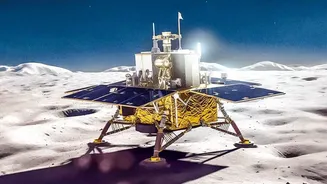
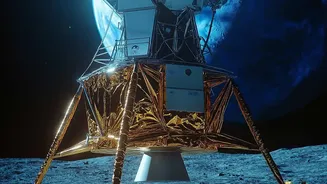
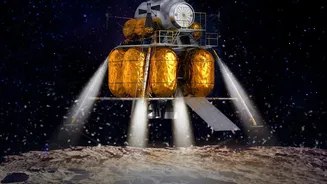
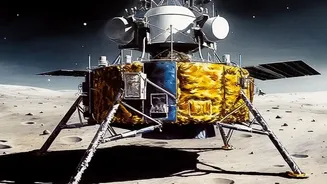
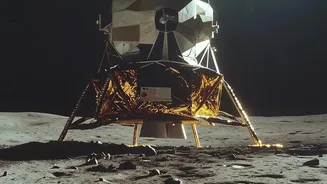
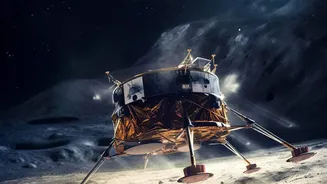
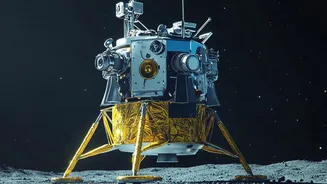
A rover is useless without a ride, and the business model for these Indian startups depends on the growing ecosystem of commercial lunar landers. Companies like the US-based Intuitive Machines and Astrobotic are developing landers to transport payloads to the Moon for NASA and other private customers. Indian rover manufacturers aim to secure a spot on these commercial flights. By offering a cost-effective, reliable rover, they provide lander companies with an attractive option to offer their own clients. The relationship can be symbiotic; the lander company gets a valuable scientific instrument to add to its manifest, and the rover startup gets its ticket to the lunar surface. The early groundwork for this model was laid when the TeamIndus lander design was adopted by US-based OrbitBeyond for a NASA CLPS contract proposal, showing the international viability of Indian designs.
Fueling India's Commercial Space Dream
This trend is a significant step in the evolution of India’s space industry. In a major strategic shift, ISRO is moving to focus on research and major exploratory missions, while handing over the manufacturing of rockets and satellites to the private sector. This policy is designed to energise the country's approximately 450 space startups and build a robust commercial space economy. Developing and exporting high-tech systems like lunar rovers moves these companies up the value chain from being component suppliers to system integrators. It aligns perfectly with India's long-term space ambitions, which include a new space station by 2035 and landing an Indian astronaut on the Moon by 2040. By creating world-class products for the global market, these startups are not just building businesses; they are building India's future in space.