






Plan Your Menu and Guest List Meticulously
The first step to a waste-free Sadhya is a solid plan. Begin by confirming your guest list. Knowing the exact number of adults and children helps you scale your cooking. Next, write down your menu. While a traditional Sadhya can have over 26 dishes, you don't
need to make every single one. Focus on the essentials: rice, sambar, avial, a couple of thorans, pachadi, pickles, and a payasam. Deciding on a manageable number of dishes prevents over-purchasing and over-cooking from the outset. You can even involve your guests; consider a potluck-style approach where different families prepare and bring a few dishes each, distributing the effort and reducing the chance of excess in any single household.
Master Portion Control in Cooking
Estimating quantities for a large feast is tricky. A common mistake is cooking enough of each of the 20+ dishes to feed every single guest. Instead, remember that people will only take small portions of each item. A good rule of thumb for a multi-dish meal like the Sadhya is to prepare about 75% of the rice you would normally cook for that number of people. For the side dishes, or 'kootan', assume that each person will have just a couple of spoonfuls. By making smaller quantities of each individual dish, you ensure there is plenty of variety without being left with mountains of leftovers of any one item.
Embrace Smart and Local Shopping
A well-prepared grocery list based on your planned menu and portions is your best defence against impulse buys. Before you shop, take inventory of your pantry. Shop for fresh, seasonal, and local produce where possible. Not only does this support local farmers and reduce the carbon footprint of your meal, but seasonal vegetables are also at their peak flavour and nutritional value. Buy perishables like vegetables and coconut only a day or two before the feast to ensure maximum freshness. Avoid buying pre-cut vegetables if you can, as they have a shorter shelf life. Stick to your list to avoid the temptation of stocking up on items you may not use.
Prep Smart and Stagger Your Cooking
A seamless Sadhya is all in the preparation. You can begin cooking a few days in advance. Items like inji puli and pickles can be made ahead as their flavours deepen over time. The day before, you can do most of your vegetable chopping and grating, storing them in airtight containers in the fridge. Some dishes like kalan or certain payasams can also be prepared a day in advance. On the day of the feast, focus on cooking the fresh items like thoran, avial, and rice. This staggered approach not only reduces stress but also prevents last-minute cooking chaos that can lead to mistakes and waste.
The Art of Serving on the Banana Leaf
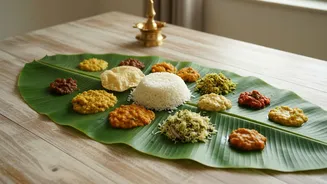
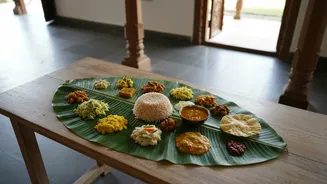
The traditional way of serving on a banana leaf is inherently sustainable. During the feast, encourage a mindful approach to serving. Start by placing just a small spoonful of each curry and side dish on the leaf. It is a sign of respect for the food to not waste any of it, so guests should be encouraged to take only what they think they can finish. You can always offer a second serving of their favourite dishes. This prevents the common problem of diners' leaves being overloaded with food they cannot complete. At the end of the meal, the banana leaves can be composted or fed to cattle, leaving zero waste behind.
Creative Leftover Management
Despite the best planning, leftovers can happen. Think of them not as a problem, but as an opportunity. The simplest way to manage leftovers is to have containers ready and offer them to your guests as they leave. For the food that remains, get creative. Leftover sambar can be a delicious side for idli or dosa the next morning. Rice can be turned into a flavourful lemon or tamarind rice. Some people even enjoy unique combinations like leftover payasam with a side of pickle. By thinking ahead about how you will use potential leftovers, you give every bit of food a second life and honour the effort that went into preparing it.