


Eyes on the Sky
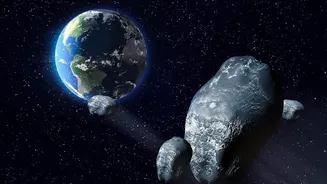
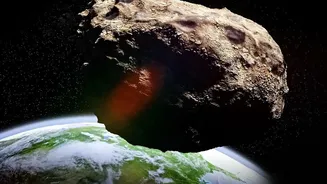
Our Solar System is a busy place, filled with millions of asteroids left over from its formation 4.6 billion years ago. While most keep to the main asteroid belt between Mars and Jupiter, some have orbits that bring them into Earth’s neighbourhood. These
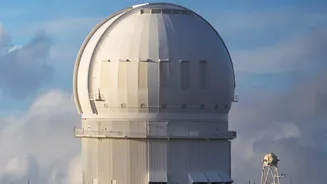
are known as Near-Earth Objects (NEOs). An asteroid designated 'potentially hazardous' is typically larger than 140 metres and comes within a certain distance of Earth's orbit. This classification doesn't mean it's on a collision course, but that it deserves close attention. Major survey programs, largely funded by NASA, are dedicated to finding these objects. Two of the most dominant forces in this field are the Catalina Sky Survey (CSS) in Arizona and the Pan-STARRS project in Hawaii, which together account for a vast majority of all new NEO discoveries.
The Technology of Detection
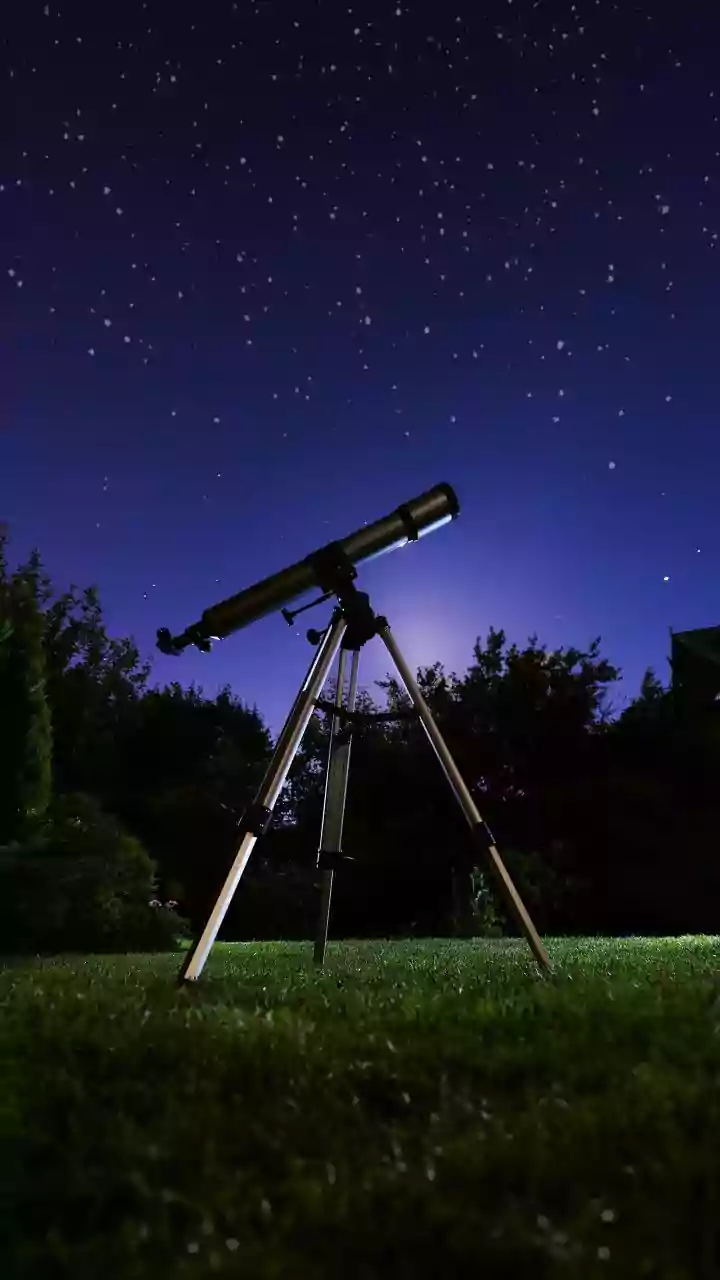
So, how do you find a relatively small, dark rock millions of kilometres away? It starts with powerful, wide-field telescopes equipped with massive digital cameras. These observatories repeatedly image large patches of the night sky. The process is elegantly simple in concept: they take several pictures of the same area, spaced a few minutes apart. This series of images is then played like a short animation. Against the static backdrop of distant stars and galaxies, any object moving relative to them—like an asteroid—will pop out. Sophisticated software automatically flags these moving points of light, distinguishing them from stationary stars and galaxies. This automated process, followed by human validation, is what allows these surveys to sift through incredible amounts of data every night.
From Faint Dot to Flight Path
Spotting a dot is just the first step. To know if it’s a threat, astronomers need to calculate its orbit. This requires multiple observations over time to measure the object's precise position against the sky, a practice known as astrometry. These measurements are sent to the Minor Planet Center, a global clearinghouse for all asteroid and comet observations. From there, organisations like NASA's Center for Near-Earth Object Studies (CNEOS) use the data to compute the asteroid's trajectory. A few observations allow for a preliminary orbit, but this initial path has a large margin of error. As more data comes in from telescopes around the world over subsequent nights and weeks, the orbit is refined, and the uncertainty shrinks. This allows scientists to project the asteroid’s path decades into the future and assess any potential impact risk with increasing confidence.
The Next Generation of Planetary Defence
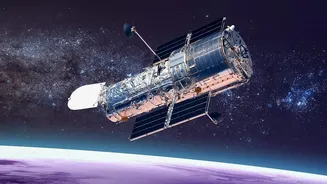
The field is on the verge of another great leap forward. The Vera C. Rubin Observatory, currently being commissioned in Chile, is set to revolutionise asteroid detection. With its enormous 8.4-metre mirror and the world's largest digital camera, it will survey the entire southern sky every few nights with unprecedented depth and speed. It’s expected to find millions of new asteroids, including a significant portion of the undiscovered potentially hazardous objects larger than 140 metres. Preliminary data from the observatory has already resulted in the discovery of thousands of new asteroids. While ground-based telescopes are the backbone of our warning system, they have a blind spot: objects approaching from the direction of the Sun are lost in its glare. To cover this gap, space-based infrared telescopes like the planned NEO Surveyor mission will play a crucial future role, spotting asteroids by their heat rather than reflected light.