





What is Vikram-1?
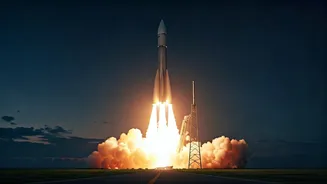
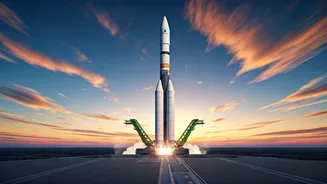
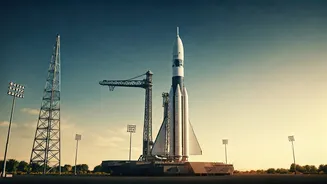
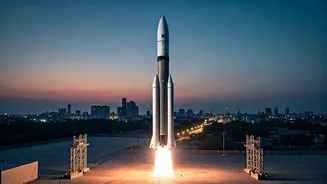
Vikram-1 is India's very first privately developed orbital-class rocket. Built by Hyderabad-based startup Skyroot Aerospace, it’s a seven-storey-tall vehicle designed to launch small satellites into Low Earth Orbit (LEO). Its upcoming maiden flight, named
'Mission Aagaman' (meaning 'The Arrival'), is scheduled for a launch window between July 12 and August 4, 2026, from the Satish Dhawan Space Centre in Sriharikota. Unlike the sub-orbital Vikram-S which flew in 2022, Vikram-1 is built for the much harder task of achieving orbit. It is constructed using a lightweight all-carbon composite structure and features advanced technologies like 3D-printed engines. The rocket is designed to carry payloads up to 350 kg to an orbit of around 450 km, catering to the booming global market for small satellite launches.
A 'Made in India' Milestone
The significance of Vikram-1 goes far beyond its technical specifications. For decades, space exploration in India was the exclusive domain of the Indian Space Research Organisation (ISRO). Vikram-1’s launch marks the end of that state monopoly and the true beginning of India’s commercial space age. Co-founder and CEO of Skyroot Aerospace, Pawan Kumar Chandana, stated that the moment Vikram-1 lifts off, India's private space industry will cross a threshold it has never crossed before. This mission is a powerful symbol of the 'Atmanirbhar Bharat' and 'Make in India' initiatives, demonstrating that Indian private enterprise, founded by former ISRO scientists, can build world-class space technology from the ground up. The support from IN-SPACe, the government body created to facilitate private space ventures, has been crucial in making this milestone possible.
The Dawn of India's 'Space 2.0'
Vikram-1 is not an isolated achievement; it's the leading edge of a massive transformation. Since the space sector was opened to private participation in 2020, over 200 space-tech startups have emerged in India. Companies like Skyroot, Agnikul Cosmos, Pixxel, and Dhruva Space are building everything from new launch vehicles to satellite constellations and data analytics platforms. This has created a vibrant ecosystem, often called 'Space 2.0'. Projections estimate India's space economy will grow from about $8.4 billion today to $44 billion by 2033. This rapid expansion is turning India into a serious contender in the global space market, which was previously dominated by a handful of countries and their legacy corporations. The goal is to capture a larger share of the global pie by offering reliable and cost-effective launch solutions.
Your Future Could Be in the Stars
For students, this is the most exciting part. The rise of a private space industry means an explosion of new career opportunities that go far beyond the traditional roles at ISRO. While there will always be a need for aerospace engineers and physicists, the new space economy requires a much wider range of skills. Modern space companies are hiring software developers, AI and machine learning experts, data analysts, robotics engineers, cybersecurity professionals, and even business managers and designers. The growth of satellite services and space data applications creates jobs in fields like agriculture, urban planning, and climate monitoring. This is a sector that is actively seeking talent. Universities are responding by adding space-focused courses, and companies are eager for skilled graduates who can contribute to this high-tech revolution.