






What's Changing on Your Food Packets?
The Food Safety and Standards Authority of India (FSSAI) is rolling out a new system called Front-of-Pack Labelling, or FoPL. Instead of having to hunt for the fine print on the back, you’ll see crucial nutrition information right on the front. The goal
is to give you a quick, at-a-glance understanding of what you're buying, especially concerning nutrients that can be harmful in excess: added sugar, added fat, and salt. This initiative is a response to rising health concerns and aims to empower you, the consumer, to make more informed decisions instantly.
Decoding the New Red Hexagon Warning
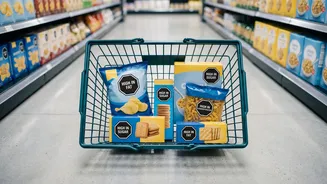
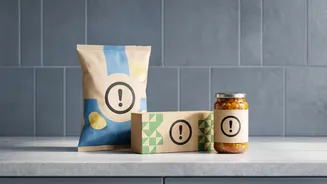
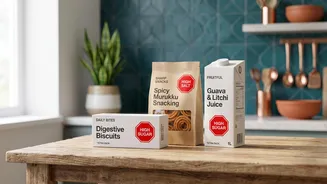
The centerpiece of the new rules is a simple but effective warning symbol. Expect to see a red hexagon on the top-left of packages for foods that are high in added sugar, added fat, or salt. Inside this hexagon, it will clearly state "High Sugar," "High Fat," or "High Salt." If a product crosses the threshold for more than one of these, all applicable warnings will be listed inside a single hexagon. This design, inspired by systems proven effective in other countries, is intended to be an unmissable red flag, helping you quickly identify less healthy options.
What Does 'High In' Actually Mean?
The new warnings are not arbitrary. FSSAI has set specific limits for what qualifies as 'high'. These thresholds for added sugar, added fat, and salt are based on the latest Dietary Guidelines for Indians, developed by the ICMR-National Institute of Nutrition. It’s important to note the word 'added'. The rules focus on sugars and fats that are added during processing, not those that occur naturally in ingredients like fruit or milk. This is because added sugars and fats often provide 'empty calories' without the nutritional benefits of their naturally occurring counterparts.
Will Every Packaged Food Have a Warning?
No, not every product will carry these labels. The FSSAI has proposed exemptions for several categories of food. These include single-ingredient products and foods that are inherently high in fat or sugar, like ghee, honey, jaggery, and pure vegetable oils. Basic staples such as milk and milk products, fresh fruits and vegetables, eggs, and flour will also be exempt. The logic is to target processed foods where unhealthy levels of sugar, fat, and salt are added, rather than basic kitchen ingredients or whole foods.
From Confusion to Clarity at the Supermarket
So, how does this help you in a practical sense? Imagine you are choosing between two brands of breakfast cereal or biscuits. One has a red hexagon warning for "High Sugar," while the other doesn't. You can immediately tell which is the healthier option for your family without needing a degree in nutrition science. This system makes comparison easy and transparent. The aim is to shift the power into your hands, allowing you to quickly assess a product's health impact in the few seconds you spend deciding whether to put it in your cart. It encourages a more conscious way of shopping, one that prioritises health without adding complexity.