

The Allure of Art Deco Glamour
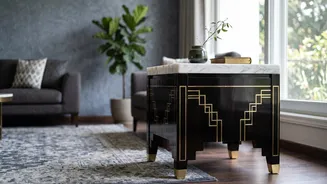
Art Deco is a design style that celebrates progress, luxury, and bold geometry. Emerging in the 1920s, it’s defined by strong lines, symmetrical patterns, and rich materials. Think of the iconic sunburst motifs, sharp chevrons, and streamlined silhouettes
that evoke the optimism of the Machine Age. Metals like chrome, brass, and gold are fundamental to this look, meant to catch the light and add a layer of opulence. But today’s take on Art Deco isn't about creating a museum-like replica of a 'Great Gatsby' set. The modern approach is more subtle, weaving in key elements to add a touch of drama without overwhelming a contemporary home.
The 'More is More' Misconception
The biggest challenge with Art Deco is finding the right equilibrium. When every surface gleams and multiple statement pieces compete for attention, the visual rhythm gets lost and starts to feel noisy. A room overloaded with shine can feel flashy rather than sophisticated. The goal is to avoid a look that feels 'themed' or overly matched, which can quickly become dated. Instead of covering every surface in metallics, the modern interpretation uses them as a deliberate accent language. One or two well-chosen metallic pieces can do more to anchor the style than a room full of competing shine. This restraint allows the beauty of each element to stand on its own.
Choose Your Finish Wisely
Not all metallics are created equal. While high-shine polished chrome and gold are classic Art Deco choices, they can also be overpowering. For a softer, more modern feel, consider brushed or matte finishes. Brushed brass, for instance, offers the warmth of gold without the reflective glare, making it easier to integrate into a neutral space. Don't be afraid to mix different metals. The old rule of sticking to either gold or silver is long gone. Combining warm metals like brass and bronze with cooler tones like nickel or chrome can create a dynamic, layered look. A good rule of thumb is to choose one dominant metal to make up about 70% of the accents and use one or two others for the remaining 30%.
The Power of Strategic Placement
Where you place your metallic accents is just as important as the finish you choose. Instead of large, imposing furniture, think smaller and more strategically. Upgrading hardware is an excellent starting point; swapping standard cabinet pulls, doorknobs, and light switches for brass or chrome options is a low-commitment way to introduce the style. Lighting is another powerful tool. A single, sleek chandelier with metallic details or a pair of geometric wall sconces can serve as a stunning focal point. Mirrors with bold, metallic frames not only nod to the Deco style but also help make a space feel larger and brighter. The key is to distribute the metallic elements throughout the room, perhaps using a 'triangle method' where you place accents at three different points to create visual flow.
Balance Metals with Texture and Colour
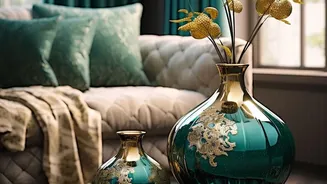
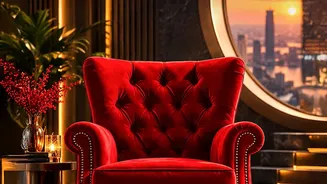
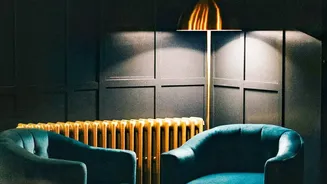
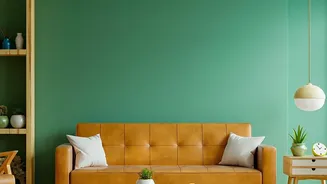
To prevent metallic accents from feeling cold or stark, it's crucial to balance them with softer textures and rich colours. Art Deco loves luxury, so pair your metals with materials like velvet, silk, or rich leather. These fabrics add warmth and tactile comfort, preventing the room from feeling too harsh. A plush velvet sofa with a chrome-legged coffee table is a perfect example of this balance. The colour palette is also key. While the stereotype is black and gold, historical Art Deco also used deep jewel tones like emerald green and sapphire blue, or even softer, muted colours like sea-green and terracotta. Using a deep, grounding colour on the walls can make gold or brass accents pop in a sophisticated way, allowing them to provide glamour without shouting for attention.