



Let’s Talk About A ‘Year’
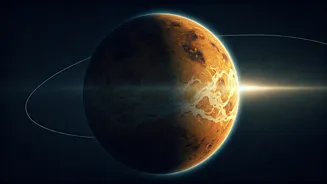
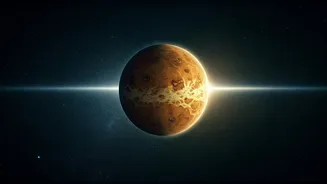
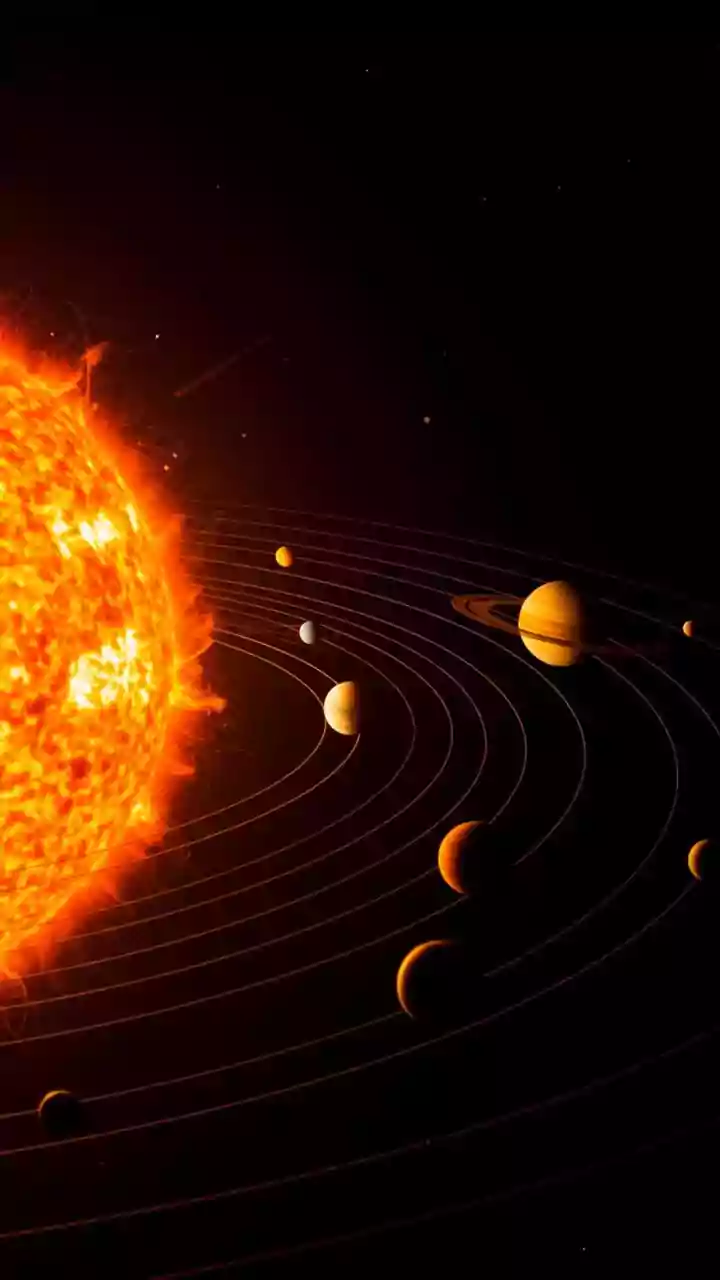
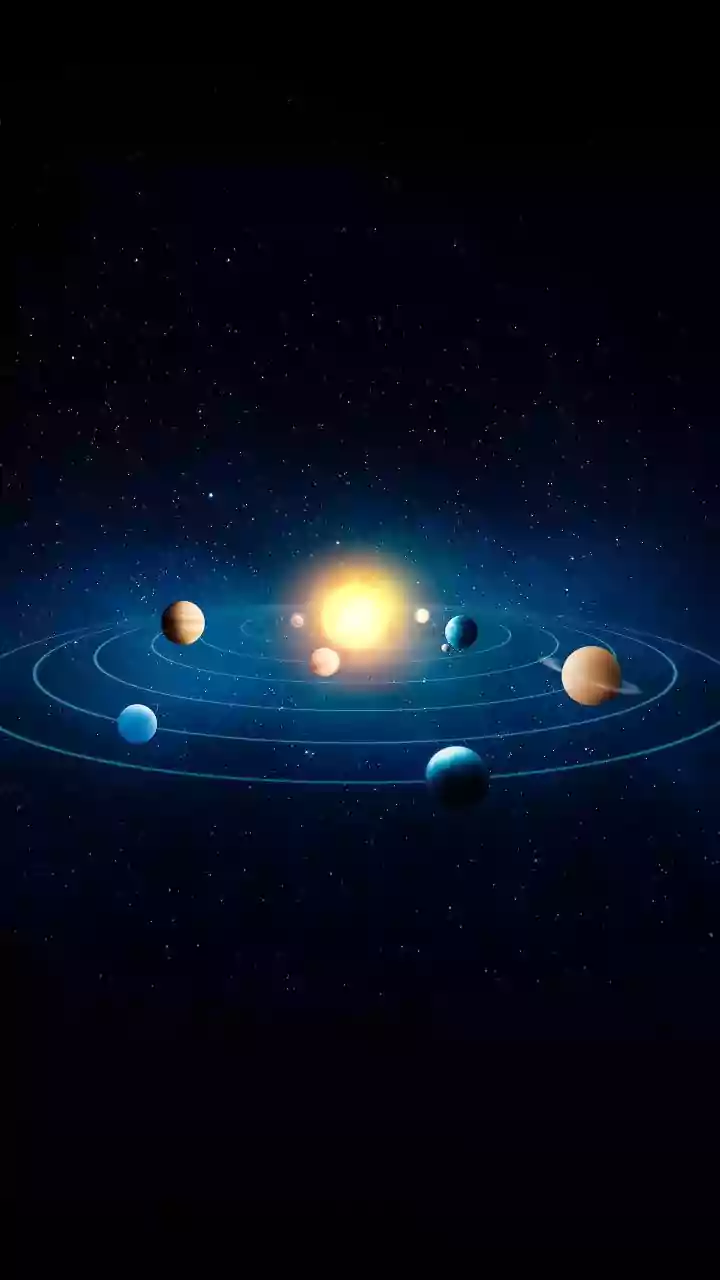
First, let's get our terms straight. A ‘year’ on any planet is simply the time it takes to complete one full orbit around the Sun. For Earth, that’s roughly 365 days. Venus, being the second planet from the Sun, has a smaller orbit to travel. It zips
around the Sun in just under 225 Earth days. So, if you could live on Venus, your birthday would come around much faster. A Venusian year is significantly shorter than an Earth year. So far, so normal. This part is easy to understand and follows the basic rules of our solar system: the closer you are to the Sun, the faster you orbit it.
Now, About That ‘Day’…
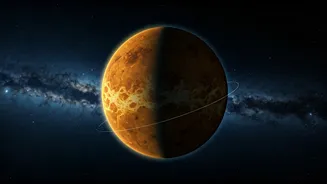
This is where things get truly strange. A ‘day’ is the time it takes for a planet to complete one full rotation on its own axis. Earth does this in 24 hours. Venus, however, is the laziest spinner in the solar system. It rotates so incredibly slowly that a single rotation takes about 243 Earth days. Just let that sink in. It takes 243 days for Venus to spin around just once. This isn't just slow; it's a cosmic crawl. This sluggish rotation is one of the planet's greatest mysteries and the key to its mind-bending timekeeping.
The Bizarre Result
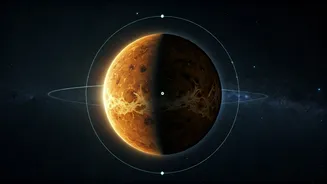
Now, let’s put those two numbers together. A Venusian year (its trip around the Sun) is 225 Earth days. A Venusian day (one rotation) is 243 Earth days. This means a single day on Venus is longer than an entire year on Venus. It completes its full journey around the Sun before it has even finished spinning around once. Imagine celebrating New Year’s Eve, and then having to wait another 18 Earth days for the planet to finally complete its 'day'. It’s a concept so alien that it’s difficult to even picture. On Venus, you could be born, live through an entire planetary year, and die of old age before the 'sun' (if you could see it) even sets once.
But Wait, It Gets Weirder
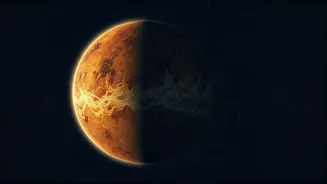
As if that weren't strange enough, Venus also spins backwards. All planets in our solar system (except Uranus, which is on its side) orbit the Sun and rotate on their axis in the same direction—counter-clockwise. But Venus rotates clockwise, a phenomenon known as retrograde rotation. This has a very strange effect on its 'solar day'—the time from one sunrise to the next. Because the planet is slowly spinning backwards while it moves forwards in its orbit, a solar day on Venus is about 117 Earth days long. So, you’d experience roughly 58 days of daylight followed by 58 days of darkness. You'd see the Sun rise in the west and set in the east, after a 'day' that lasts for months.
Why Is Venus So Strange?
Scientists aren't entirely sure why Venus is such an oddball. The leading theory for its slow, backward spin is that it was struck by a massive asteroid or planetoid early in its history. Such a cataclysmic impact could have been powerful enough to reverse its original rotation and dramatically slow it down. Another compelling theory suggests that the planet's incredibly thick, heavy atmosphere—90 times denser than Earth's—has created a strong tidal effect, acting as a brake on the planet's surface over billions of years, slowing its spin to the current crawl. It’s possible a combination of these factors is responsible.
Earth's Twisted Sister
Venus is often called Earth’s 'twin' because it's similar in size, mass, and composition. But it’s more like a twisted sister, a vision of a paradise that turned into a hellscape. Its thick carbon dioxide atmosphere has created a runaway greenhouse effect, leading to surface temperatures of over 465°C—hot enough to melt lead. The atmospheric pressure is crushingly intense, equivalent to being a kilometre deep in Earth’s oceans. Its bizarre rotation is just one more feature of a planet that serves as a powerful reminder of how delicate the conditions for life are, and how differently a world so similar to our own can evolve.