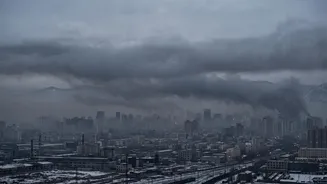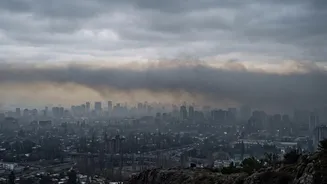





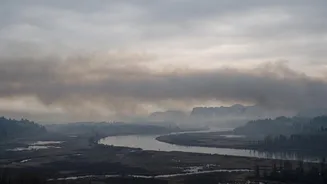
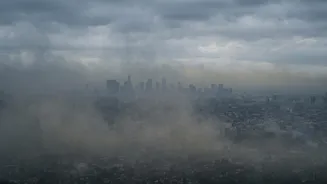
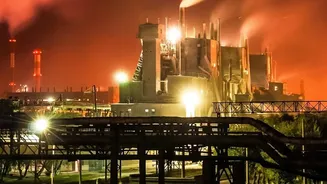
Ever wonder why the air in our cities sometimes feels thick and heavy, especially during winter? It's not just about emissions. Two specific weather phenomena are working together, creating an invisible trap that elevates health risks for everyone.
The First Culprit: Atmospheric Stagnation
Imagine
the air over a city simply deciding to stay put. That, in essence, is atmospheric stagnation. It's a weather condition where a large mass of air remains over a region for an extended period, sometimes for days. This happens when winds are very light or calm, and there's no weather system strong enough to push the air mass along. Typically associated with high-pressure systems, stagnation means that whatever is emitted into the air—from vehicle exhaust, industrial smokestacks, or construction dust—has nowhere to go horizontally. The air isn't being 'cleansed' or refreshed, so pollutants begin to accumulate steadily in the place where they are produced.
The Second Culprit: Temperature Inversions
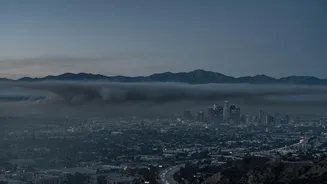
Normally, the air near the ground is warmer and gets cooler as you go up in altitude. This allows warm, polluted air to rise and disperse. A temperature inversion flips this script entirely. During an inversion, a layer of warmer air sits on top of a layer of cooler air near the ground. This warmer layer acts like an invisible lid or a cap, preventing the cooler, denser air below from mixing vertically. This phenomenon is particularly common during calm, clear nights, especially in winter, when the ground cools rapidly after sunset, cooling the air just above it. This setup creates a highly stable atmosphere where vertical air movement is suppressed.
A Dangerous Combination for Cities
When atmospheric stagnation and a temperature inversion happen at the same time, it creates a perfect storm for dangerously poor air quality. Stagnation stops pollutants from being carried away by winds, while the inversion traps them from rising. The result is a bubble of highly concentrated, polluted air locked over a city. This combination is especially potent in urban areas due to the sheer volume of daily emissions and the 'urban heat island' effect, which can influence local weather patterns. Furthermore, the unique geography of some cities, such as those situated in valleys or plains, can enhance this trapping effect, turning a regional weather event into a severe local health crisis.
What Exactly Gets Trapped?
The trapped air becomes a toxic soup of harmful pollutants. The most concerning of these are fine particulate matter (PM2.5) and ground-level ozone (O3). PM2.5 consists of microscopic particles from sources like vehicle exhaust, industrial burning, and agricultural fires that are small enough to be inhaled deep into the lungs. Ground-level ozone is not emitted directly but is formed when other pollutants like nitrogen oxides (NOx) and volatile organic compounds (VOCs) react in the presence of sunlight. During these stagnation and inversion events, concentrations of these and other pollutants like carbon monoxide and sulfur dioxide can skyrocket.
The Elevated Risks to Our Health
This build up of ground level pollutants poses significant health risks. Exposure to high levels of PM2.5 and ozone is linked to a range of serious issues, from respiratory problems like aggravated asthma and bronchitis to cardiovascular stress. These conditions can lead to increased emergency room visits and, in severe cases, premature death. Children, the elderly, and individuals with pre existing heart or lung conditions are particularly vulnerable to the effects of poor air quality. The infamous Great Smog of London in 1952, which caused thousands of deaths, was the result of a prolonged temperature inversion trapping industrial pollution.
The Indian Context: A Familiar Challenge
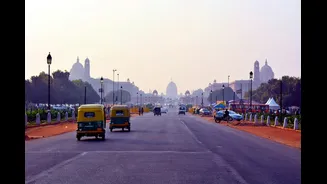
For many in India, this is a familiar story, especially during the winter months. Cities across the Indo Gangetic Plain, including Delhi, are highly susceptible to these meteorological conditions. The region s geography, combined with post monsoon crop burning and high urban emissions, regularly leads to periods of severe air pollution. Studies have shown that even when annual emission levels decrease slightly, these seasonal atmospheric events can cause extreme pollution spikes, with Delhi sometimes recording zero clean air days during winter. This highlights that tackling urban air quality in India isn t just about controlling emissions, but also understanding and preparing for the weather patterns that trap them.