




Can artificial intelligence make cancer a 'relic of the past' within a decade? That's the audacious claim from Dario Amodei, CEO of AI leader Anthropic. The prediction highlights a bold new frontier, but how much of it is hype versus reality?
An 'Age of Miracles'
The prediction
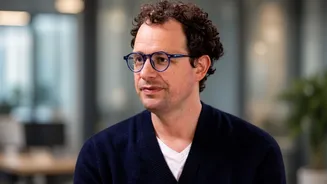
comes from Dario Amodei, the chief executive of Anthropic, a major competitor to OpenAI and the creator of the AI model Claude. During a recent IPO roadshow, Amodei suggested that AI could make conditions like cancer, Alzheimer's, and heart disease 'relics of the past' in less than a decade. He believes AI can compress what would have been 50 to 100 years of medical progress into just five to 10 years, heralding an 'age of miracles'. This isn't a new idea for Amodei, who has argued for years that AI's biggest impact will be in accelerating biological research. He is not alone; leaders at Google DeepMind and OpenAI have made similar ambitious statements, framing disease as a problem that sufficient computing power might solve.
How AI Could Accelerate Cures
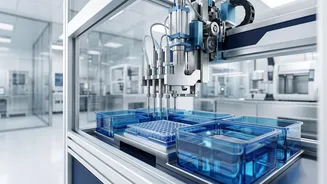
The core idea is that AI can supercharge the slowest parts of medical research. One of the most promising areas is drug discovery. Traditionally, finding a new drug is a painstaking process of trial and error, taking over a decade and costing billions. AI models, however, can process immense volumes of biological data to identify new potential drug targets on proteins, predict how molecules will interact, and design new drug candidates in a fraction of the time. Google DeepMind's AlphaFold, for example, has already predicted the 3D structures of over 200 million proteins, a breakthrough that helps scientists understand how to target them with drugs. Anthropic itself has partnered with biotech firms to speed up development for treatments targeting cancer and other diseases.
Smarter Detection and Personalized Care
Beyond creating new drugs, AI is already making an impact in detecting cancer earlier and more accurately. Studies in 2026 have shown that AI-assisted mammography can catch more breast cancers than human radiologists alone, without increasing false alarms. Other AI models are being trained to spot signs of pancreatic cancer on CT scans months before a clinical diagnosis would typically be made. The technology also holds the key to truly personalized medicine. AI can analyze a patient's specific genetic data and tumour characteristics to match them with the most effective clinical trial or treatment, moving away from a one-size-fitsall approach.
The Reality Check
Despite the optimism, the medical and pharmaceutical communities urge caution. Jeff Leiden, the executive chairman of Vertex Pharmaceuticals, called such timelines 'complete BS', noting that after evaluating dozens of AI companies, none had independently produced a working drug. The primary reason is that biology is messy. 'Biological truth cannot be computed', one researcher argues. Unlike math, biology requires physical experiments. A drug that looks promising on a computer must still go through years of lab work, animal testing, and multiphase human clinical trials to prove it is safe and effective—a process AI cannot currently bypass. In fact, no AIdesigned drug has reached full clinical adoption yet. There are also massive challenges around data quality, algorithmic bias, and regulatory approval.
A Goal, Not a Guarantee
Even Amodei has recently acknowledged that the 'AI will cure cancer' line has become a cliché that many find deceptive. His recent statements seem to reframe the 10year timeline as a 'stretch goal'—an ambition that, even if missed, will drive massive progress along the way. Experts agree that AI is a powerful tool that will revolutionize medicine; they just disagree on the speed. Many see AI not as a magic bullet but as an 'AI coscientist' that can generate hypotheses and analyze data, while humans provide the final judgment. The journey toward an AIpowered medical future will undoubtedly yield breakthroughs in treatment and diagnosis, making medicine faster, cheaper, and more effective. A complete cure for a complex family of diseases like cancer in just a decade, however, remains a monumental task.